Wen Xingxing, Ding Shan, Cai Hui, Wang Junyi, Wen Lu, Yang Fan, Chen Gang
School of Pharmacy, Guangdong Pharmaceutical University, Guangzhou, People’s Republic of China
Guangdong Provincial Key Laboratory of Advanced Drug Delivery, Guangdong Pharmaceutical University, Guangzhou, People’s Republic of China
Int J Nanomedicine. 2016 Nov 10;11:5959-5969. doi: 10.2147/IJN.S116867. eCollection 2016.
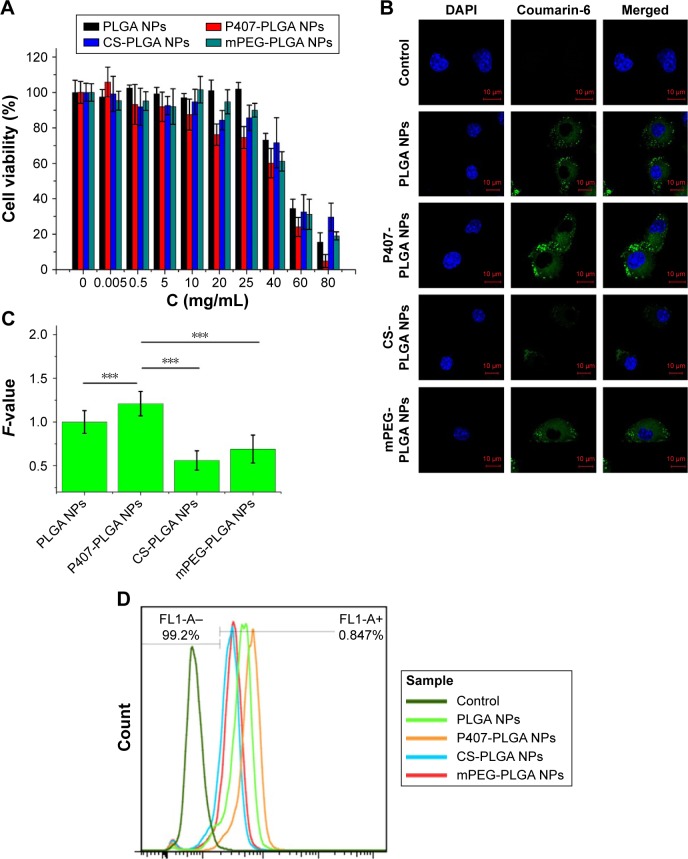
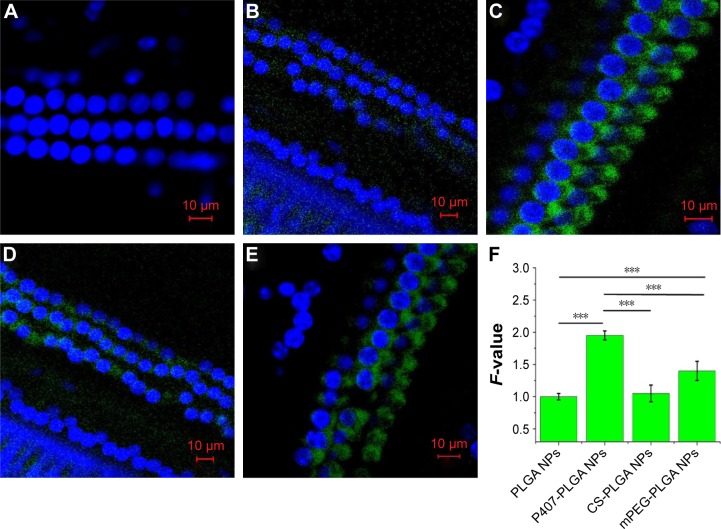
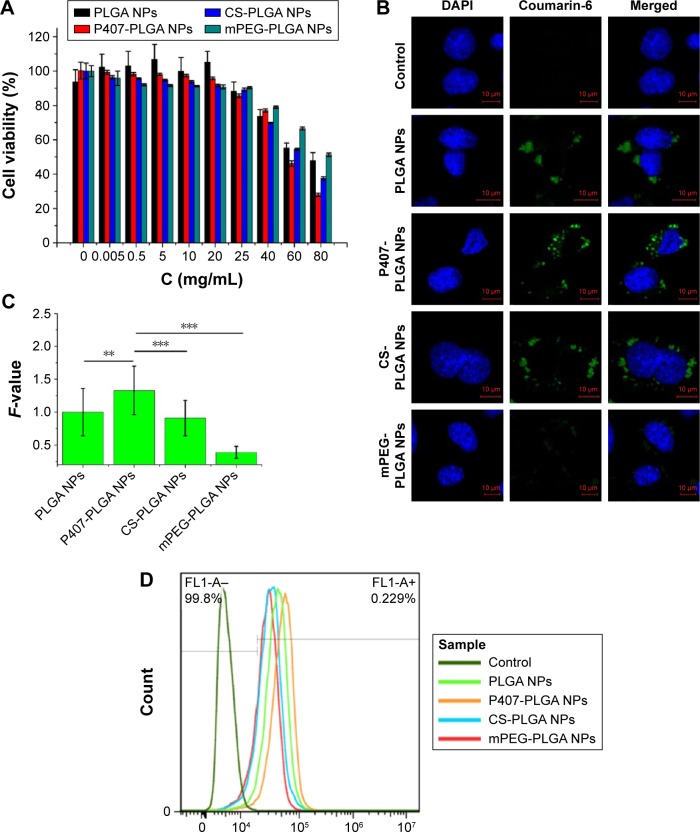
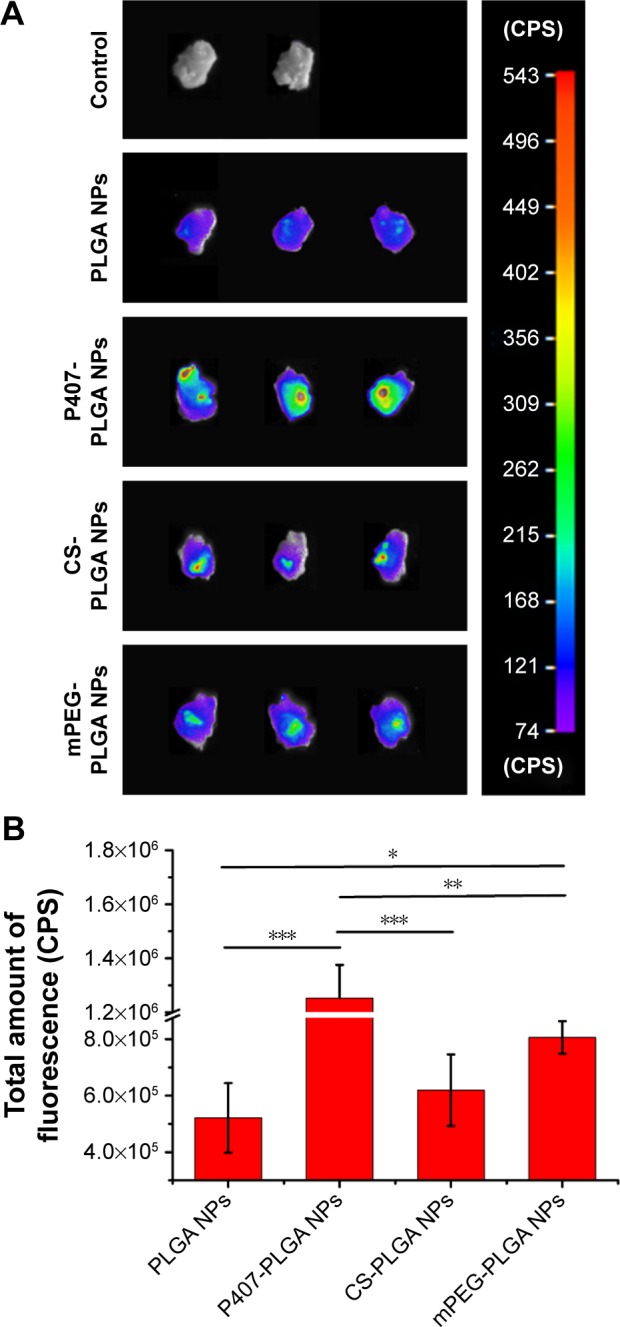
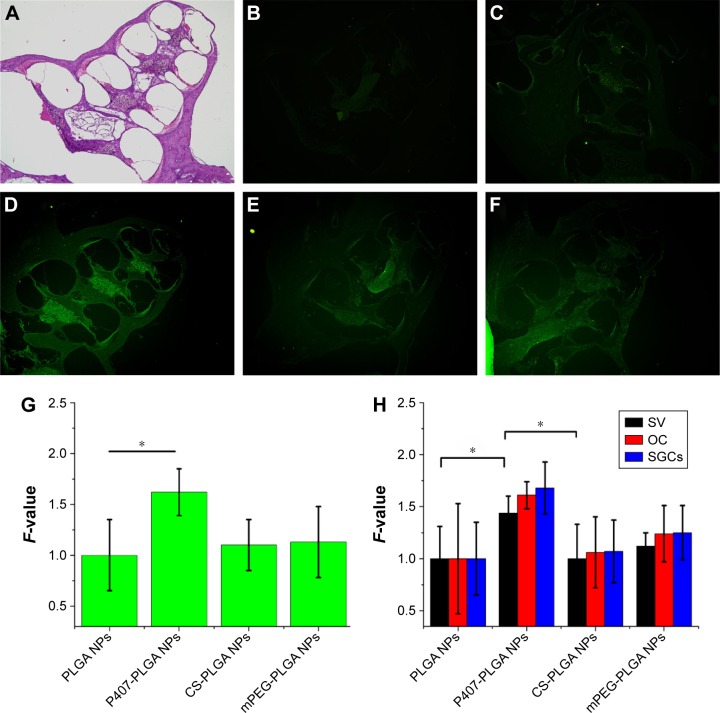
Targeted drug delivery to outer hair cells (OHCs) in the cochlea by nanomedicine strategies forms an effective therapeutic approach for treating hearing loss. Surface chemistry plays a deciding role in nanoparticle (NP) biodistribution, but its influence on such distribution in the cochlea remains largely unknown. Herein, we report the first systematic comparison of poly(lactic/glycolic acid) nanoparticles (PLGA NPs) with or without surface modification of hydrophilic molecules for optimizing the delivery to OHCs both in vitro and in vivo. NPs that were surface modified with poloxamer 407 (P407), chitosan, or methoxy poly(ethylene glycol) and the unmodified NPs were highly biocompatible with L929 and House Ear Institute-organ of Corti 1 cells as well as cochlear tissues. Interestingly, among all the examined NPs, P407-PLGA NPs showed the greatest cellular uptake and prominent fluorescence in cochlear imaging. More importantly, we provide novel evidence that the surface-modified NPs reached the organ of Corti and were transported into the OHCs at a higher level. Together, these observations suggest that surface modification with hydrophilic molecules will allow future clinical applications of PLGA NPs, especially P407-PLGA NPs, in efficient hearing loss therapy.
通过纳米医学策略将药物靶向递送至耳蜗外毛细胞(OHCs)是治疗听力损失的一种有效治疗方法。表面化学在纳米颗粒(NP)的生物分布中起决定性作用,但其对耳蜗中这种分布的影响在很大程度上仍不清楚。在此,我们首次系统比较了有无亲水分子表面修饰的聚(乳酸/乙醇酸)纳米颗粒(PLGA NPs),以优化其在体外和体内向OHCs的递送。用泊洛沙姆407(P407)、壳聚糖或甲氧基聚(乙二醇)进行表面修饰的NP以及未修饰的NP与L929细胞、House Ear Institute - 柯蒂氏器1细胞以及耳蜗组织具有高度生物相容性。有趣的是,在所有检测的NP中,P407 - PLGA NPs在耳蜗成像中显示出最大的细胞摄取和显著的荧光。更重要的是,我们提供了新的证据表明表面修饰的NP到达了柯蒂氏器并以更高的水平转运到OHCs中。总之,这些观察结果表明,用亲水分子进行表面修饰将使PLGA NPs,特别是P407 - PLGA NPs,在未来听力损失的有效治疗中得以临床应用。