Yan Fei, Duan Wanlu, Li Yekuo, Wu Hao, Zhou Yuli, Pan Min, Liu Hongmei, Liu Xin, Zheng Hairong
Paul C. Lauterbur Research Center for Biomedical Imaging, Institute of biomedical and Health Engineering, Shenzhen Institutes of Advanced Technology, Chinese Academy of Sciences, Shenzhen, China;; Department of Ultrasonography, The Third Affiliated Hospital of Southern Medical University (Academy of Orthopedics Guangdong Province), Guangzhou, China.
Department of Ultrasound, Guangzhou General Hospital of Guangzhou Military Command, Guangzhou, China.
Theranostics. 2016 Oct 1;6(13):2337-2351. doi: 10.7150/thno.14937. eCollection 2016.
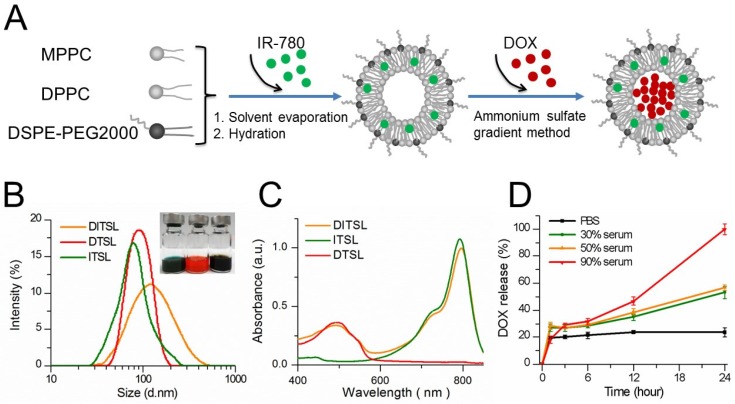
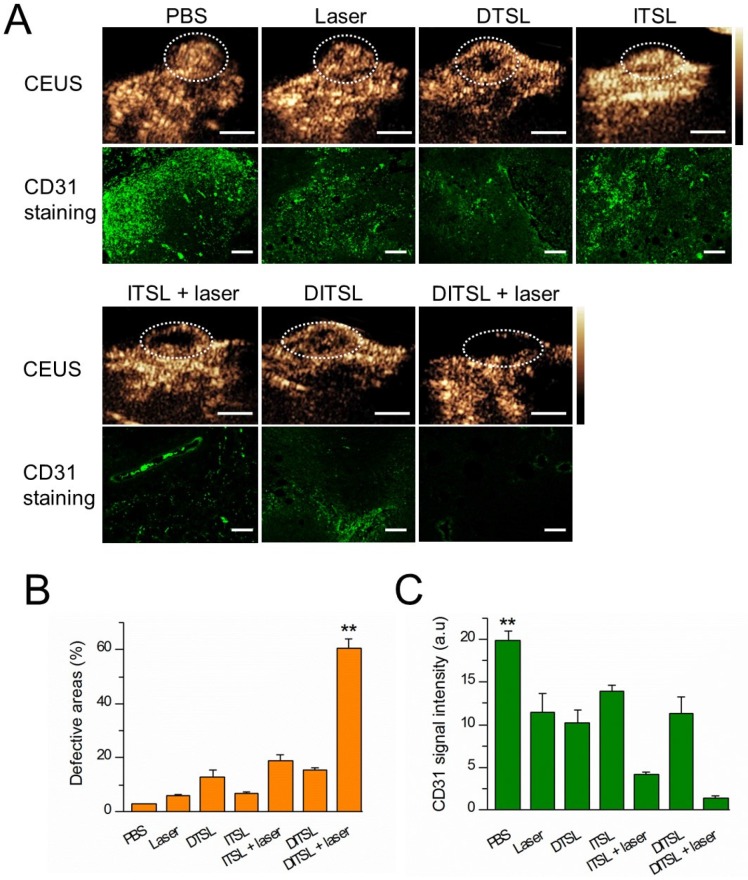
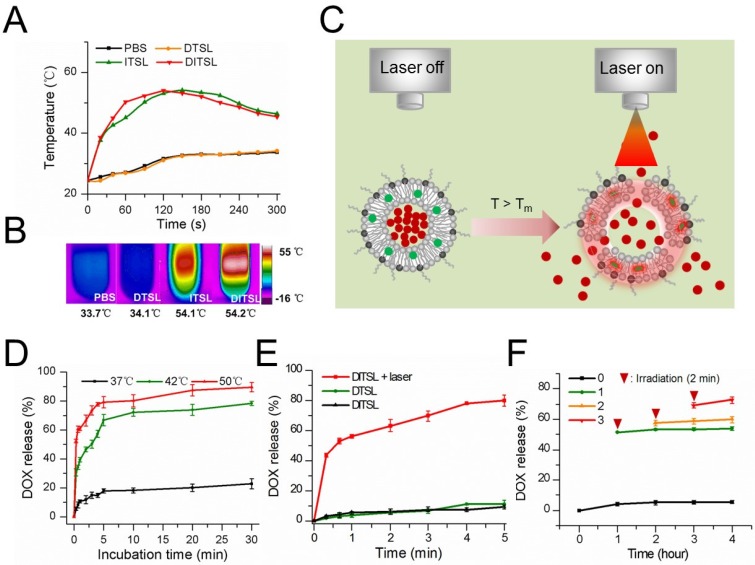
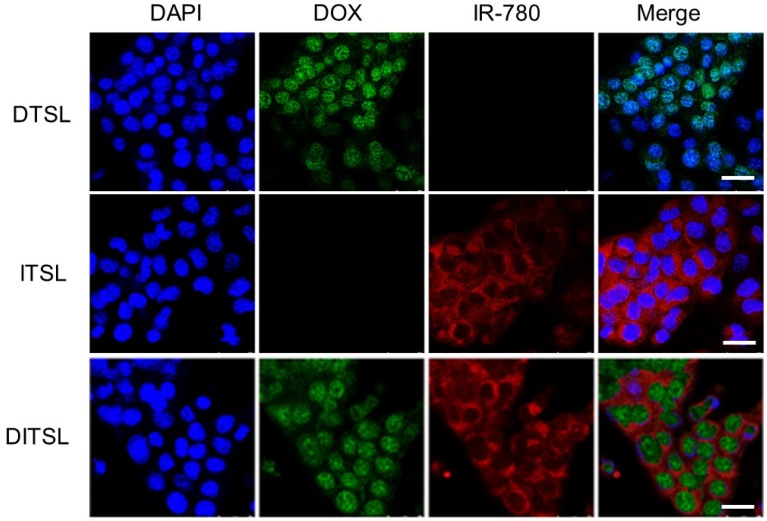
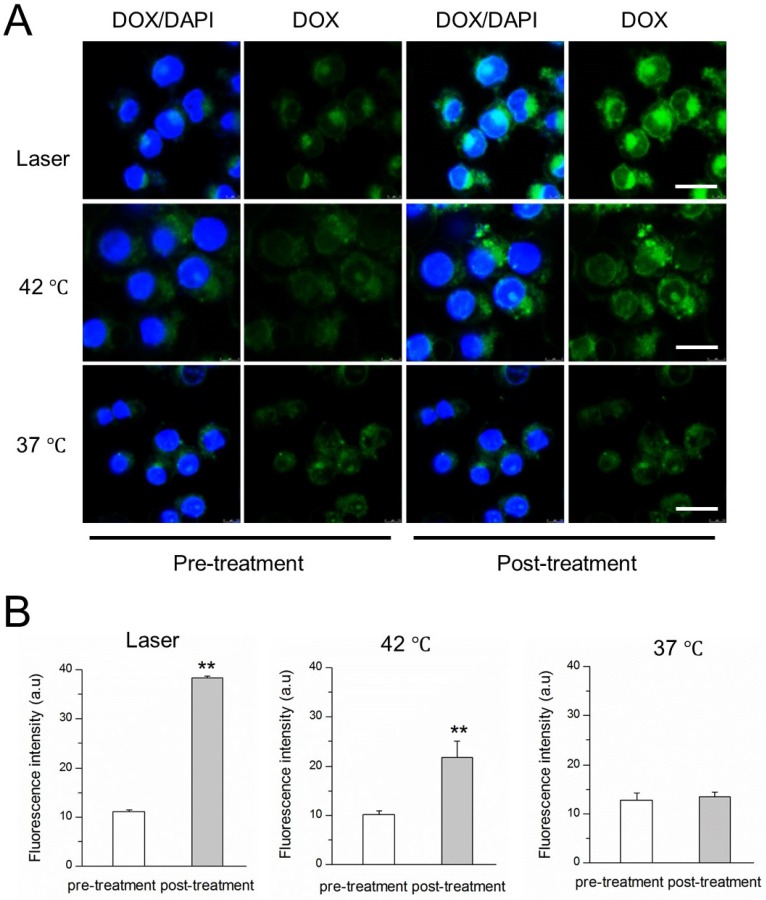
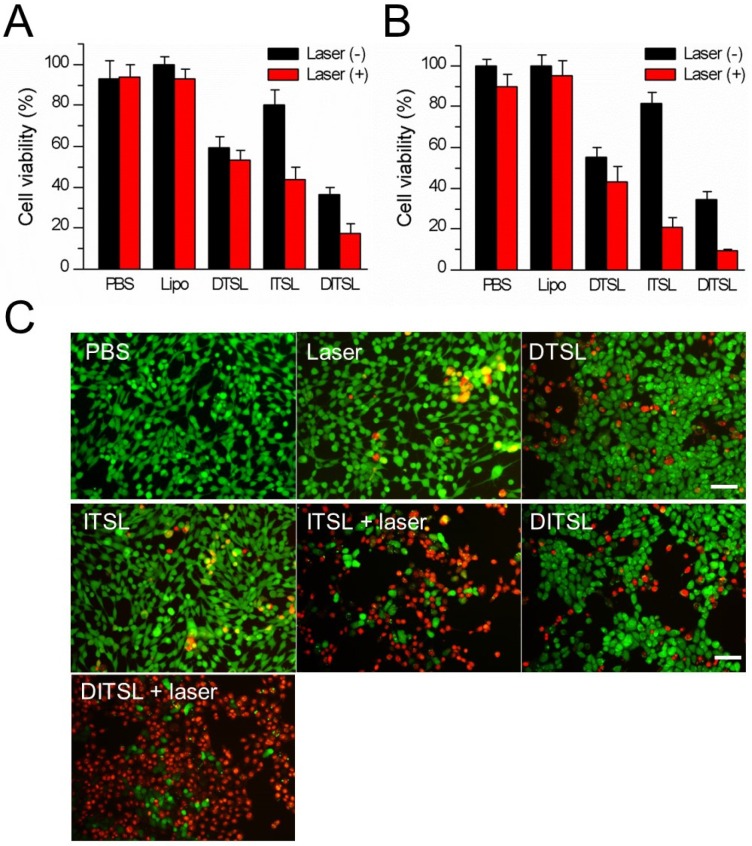
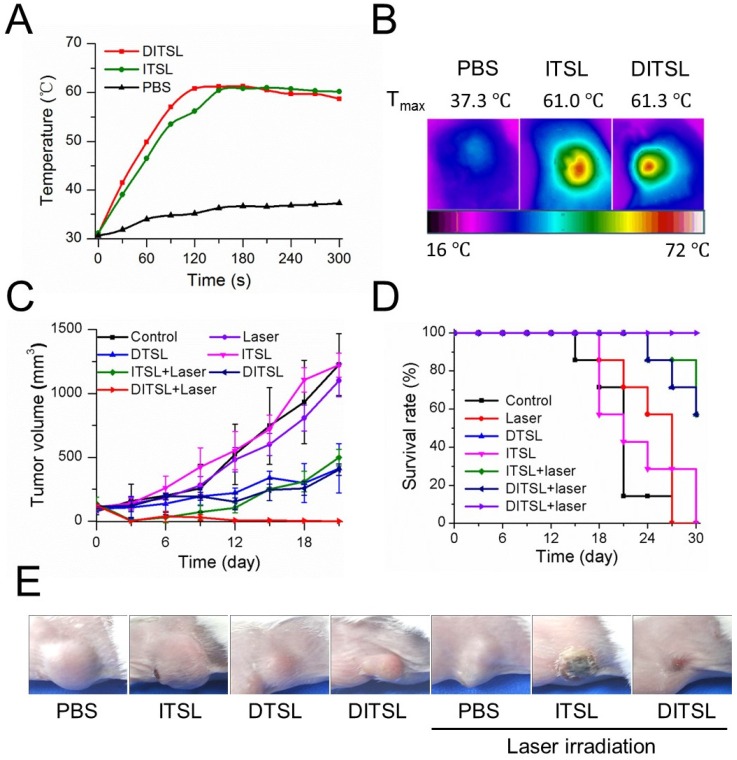
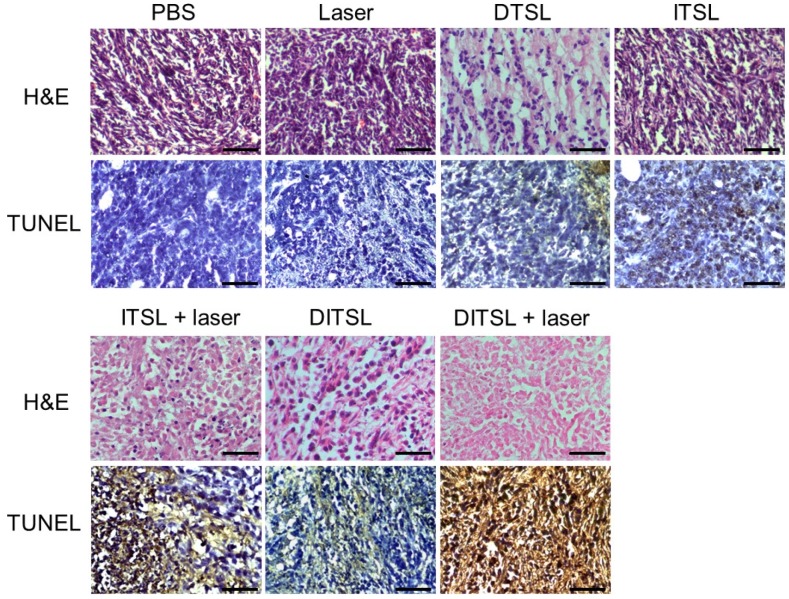
NIR laser-induced photothermal therapy (PTT) through near-infrared agents has demonstrated the great potential in solid tumor ablation. However, the nonuniform heat distribution over tumors from PTT makes it insufficient to kill all tumor cells, resulting in tumor recurrence and inferior outcomes. To improve the tumor treatment efficacy, it is highly desirable to develop the combinational treatment of PTT with other modalities, especially with chemotherapeutic agents. Here we report a smart DOX/IR-780-loaded temperature-sensitive-liposome (DITSL) which can achieve NIR-laser-controlled drug release for chemo-photothermal synergistic tumor therapy. In this system, the liposoluble IR-780 was incorporated into the temperature-sensitive lipid bilayer and the soluble chemotherapeutic doxorubicin (DOX) was encapsulated in the hydrophilic core. The resulting DITSL is proved to be physiologically stable and can provide a fast and laser irradiation-controllable DOX release in the PBS and cellular conditions. We further employed this nanoparticle for tumor treatment, demonstrating significantly higher tumor inhibition efficacy than that of DOX-loaded temperature-sensitive-liposome (DTSL) or IR780-loaded temperature-sensitive-liposome (ITSL) in the in vitro cells and in vivo animals. Histological analysis further revealed much more apoptotic cells, confirming the advantageous anti-tumor effect of DITSL over DTSL or ITSL. Our study provides a promising strategy to realize chemo-photothermal synergistic combination therapy for breast tumors.
通过近红外试剂进行的近红外激光诱导光热疗法(PTT)在实体瘤消融方面已显示出巨大潜力。然而,PTT在肿瘤上产生的热分布不均匀,不足以杀死所有肿瘤细胞,导致肿瘤复发和疗效不佳。为了提高肿瘤治疗效果,非常需要开发PTT与其他疗法的联合治疗,尤其是与化疗药物联合。在此,我们报告一种负载阿霉素(DOX)/IR-780的温度敏感脂质体(DITSL),它可实现近红外激光控制的药物释放,用于化疗-光热协同肿瘤治疗。在该系统中,脂溶性IR-780被掺入温度敏感脂质双层中,而可溶性化疗药物阿霉素(DOX)被包裹在亲水核中。结果表明,所得的DITSL在生理上是稳定的,并且在PBS和细胞条件下能够实现快速且受激光照射控制的DOX释放。我们进一步将这种纳米颗粒用于肿瘤治疗,结果表明在体外细胞和体内动物实验中,其肿瘤抑制效果明显高于负载DOX的温度敏感脂质体(DTSL)或负载IR780的温度敏感脂质体(ITSL)。组织学分析进一步揭示了更多的凋亡细胞,证实了DITSL相对于DTSL或ITSL具有有利的抗肿瘤作用。我们的研究为实现乳腺癌的化疗-光热协同联合治疗提供了一种有前景的策略。