Li Xueqin, Shen Jun, Jiang Yunyao, Shen Ting, You Long, Sun Xiaobo, Xu Xudong, Hu Weicheng, Wu Haifeng, Wang Gongcheng
Department of Gerontology, Huai'an First People's Hospital, Nanjing Medical University, Huaian 223300, China.
Department of Neurology, Huai'an Hospital Affiliated of Xuzhou Medical College and Huai'an Second People's Hospital, Huaian 223300, China.
Int J Mol Sci. 2016 Nov 22;17(11):1938. doi: 10.3390/ijms17111938.
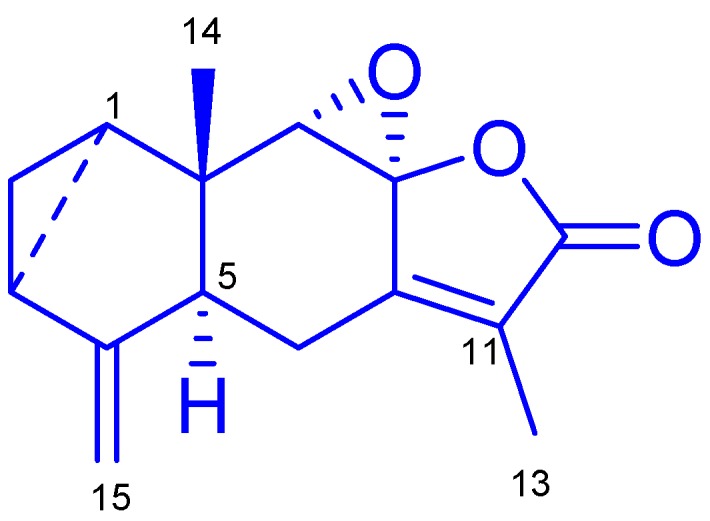
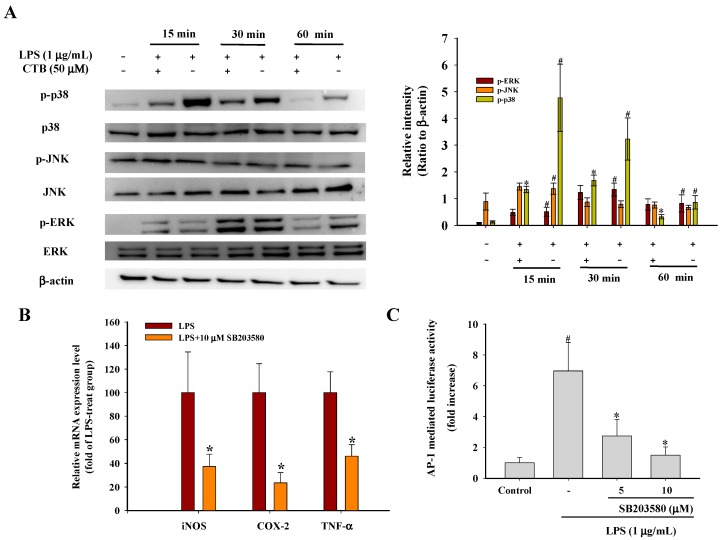
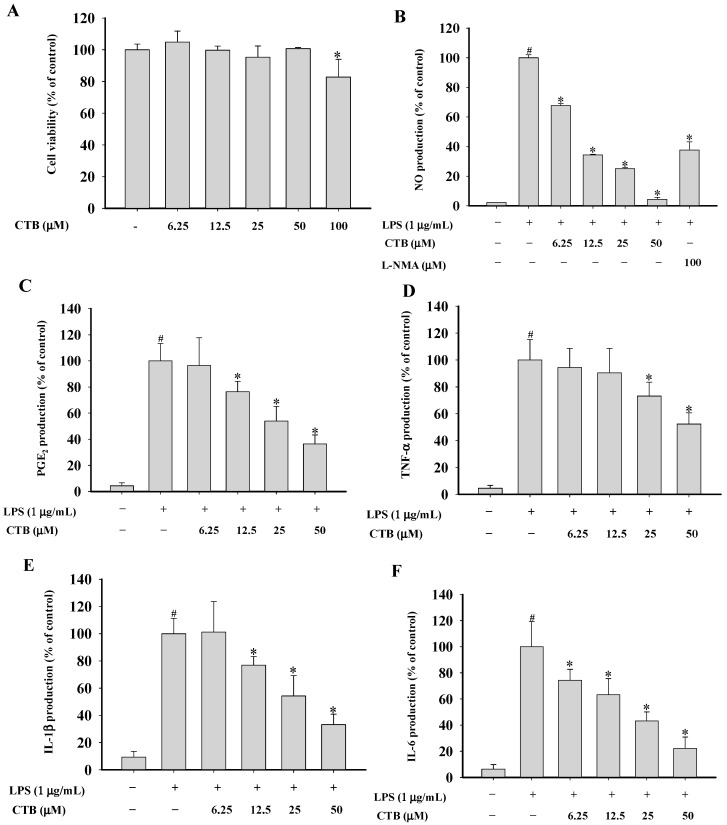
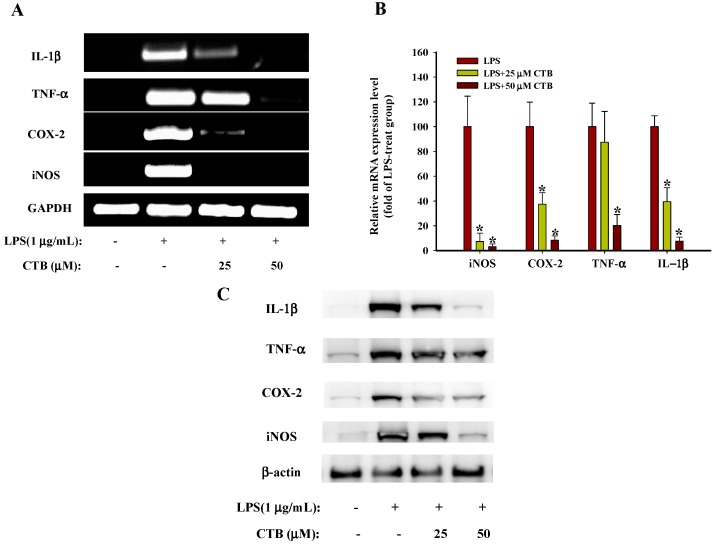
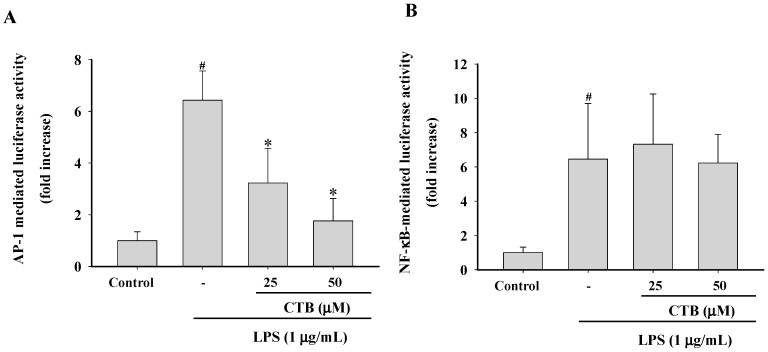
Chloranthalactone B (CTB), a lindenane-type sesquiterpenoid, was obtained from the Chinese medicinal herb , which is frequently used as a remedy for inflammatory diseases. However, the anti-inflammatory mechanisms of CTB have not been fully elucidated. In this study, we investigated the molecular mechanisms underlying these effects in lipopolysaccharide (LPS)-stimulated RAW264.7 macrophages. CTB strongly inhibited the production of nitric oxide and pro-inflammatory mediators such as prostaglandin E₂, tumor necrosis factor α (TNF-α), interleukin-1β (IL-1β), and IL-6 in RAW264.7 cells stimulated with LPS. A reverse-transcription polymerase chain reaction assay and Western blot further confirmed that CTB inhibited the expression of inducible nitric oxide synthase, cyclooxygenase-2, TNF-α, and IL-1β at the transcriptional level, and decreased the luciferase activities of activator protein (AP)-1 reporter promoters. These data suggest that inhibition occurred at the transcriptional level. In addition, CTB blocked the activation of p38 mitogen-activated protein kinase (MAPK) but not c-Jun N-terminal kinase or extracellular signal-regulated kinase 1/2. Furthermore, CTB suppressed the phosphorylation of MKK3/6 by targeting the binding sites via formation of hydrogen bonds. Our findings clearly show that CTB inhibits the production of inflammatory mediators by inhibiting the AP-1 and p38 MAPK pathways. Therefore, CTB could potentially be used as an anti-inflammatory agent.
氯代兰他酮B(CTB)是一种乌药烷型倍半萜,从一种常用于治疗炎症性疾病的中药材中提取得到。然而,CTB的抗炎机制尚未完全阐明。在本研究中,我们调查了其在脂多糖(LPS)刺激的RAW264.7巨噬细胞中发挥这些作用的分子机制。CTB强烈抑制LPS刺激的RAW264.7细胞中一氧化氮以及前列腺素E₂、肿瘤坏死因子α(TNF-α)、白细胞介素-1β(IL-1β)和IL-6等促炎介质的产生。逆转录聚合酶链反应分析和蛋白质免疫印迹进一步证实,CTB在转录水平抑制诱导型一氧化氮合酶、环氧化酶-2、TNF-α和IL-1β的表达,并降低激活蛋白(AP)-1报告基因启动子的荧光素酶活性。这些数据表明抑制作用发生在转录水平。此外,CTB阻断p38丝裂原活化蛋白激酶(MAPK)的激活,但不影响c-Jun氨基末端激酶或细胞外信号调节激酶1/2。此外,CTB通过形成氢键靶向结合位点来抑制MKK3/6的磷酸化。我们的研究结果清楚地表明,CTB通过抑制AP-1和p38 MAPK途径来抑制炎症介质的产生。因此,CTB有可能用作抗炎剂。