Wu Weiyun, He Yanting, Feng Xiao, Ye Shicai, Wang Hao, Tan Wenkai, Yu Caiyuan, Hu Juxiang, Zheng Rong, Zhou Yu
Department of Gastroenterology, Affiliated Hospital of Guangdong Medical University, Zhanjiang 524001, China.
Oncotarget. 2017 Jan 3;8(1):705-721. doi: 10.18632/oncotarget.13525.
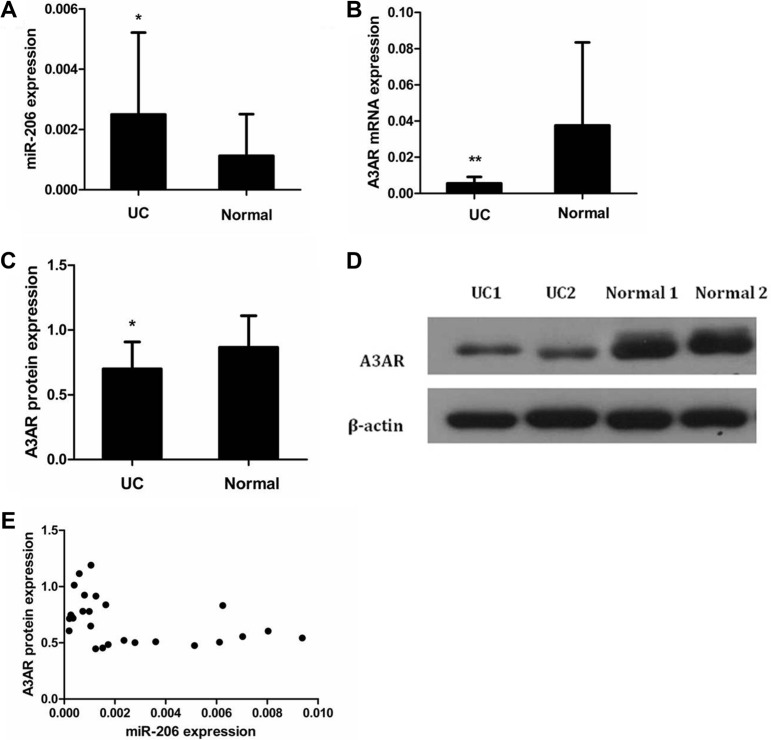
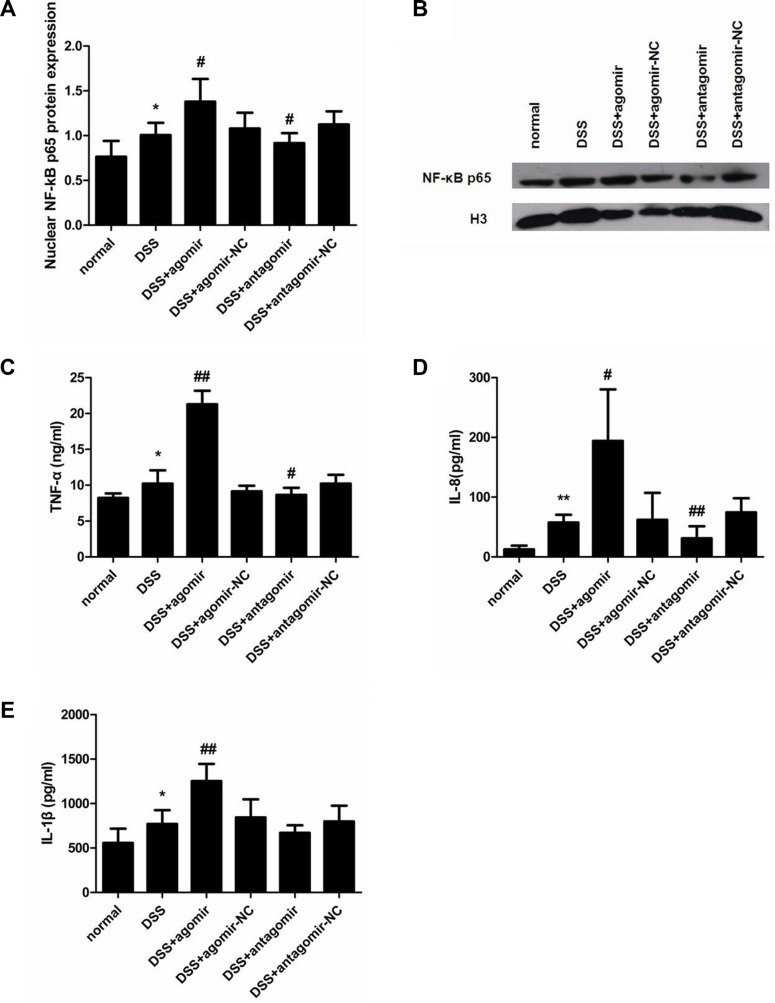
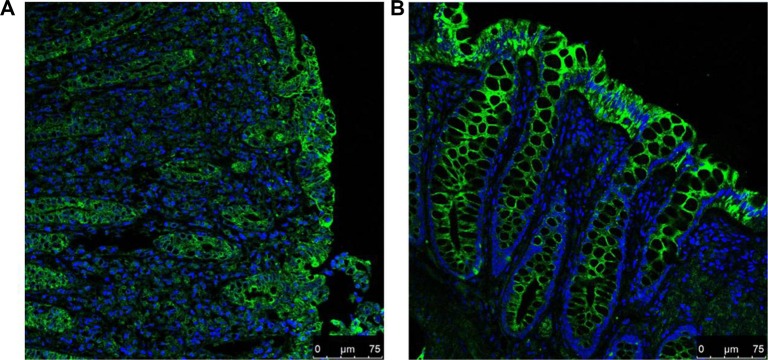
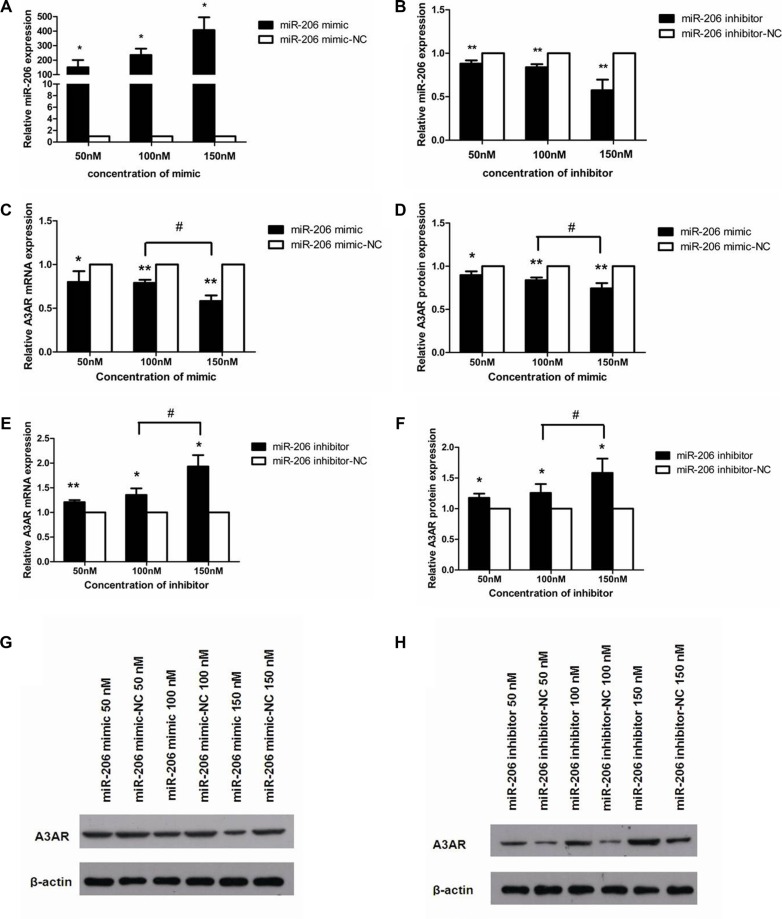
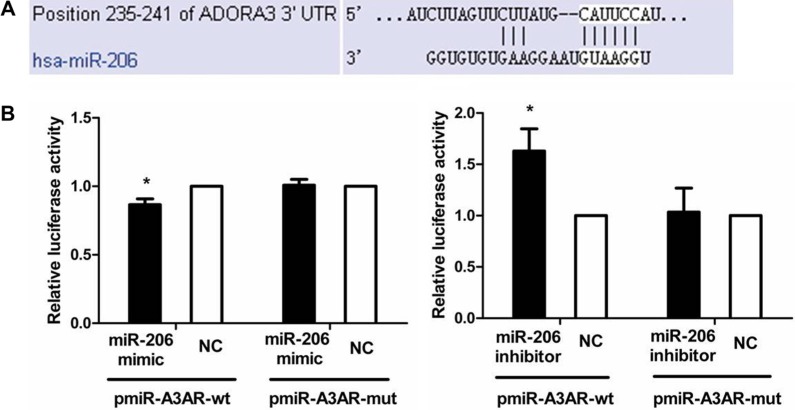
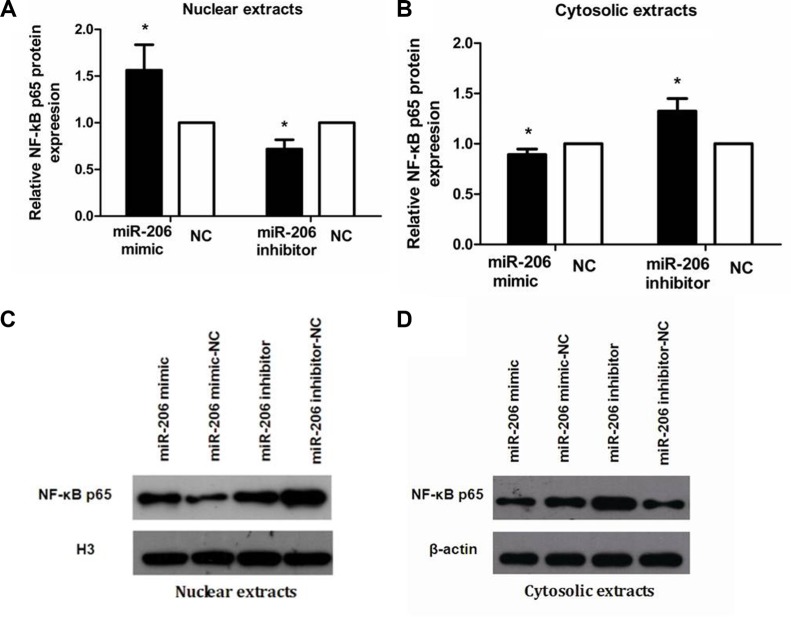
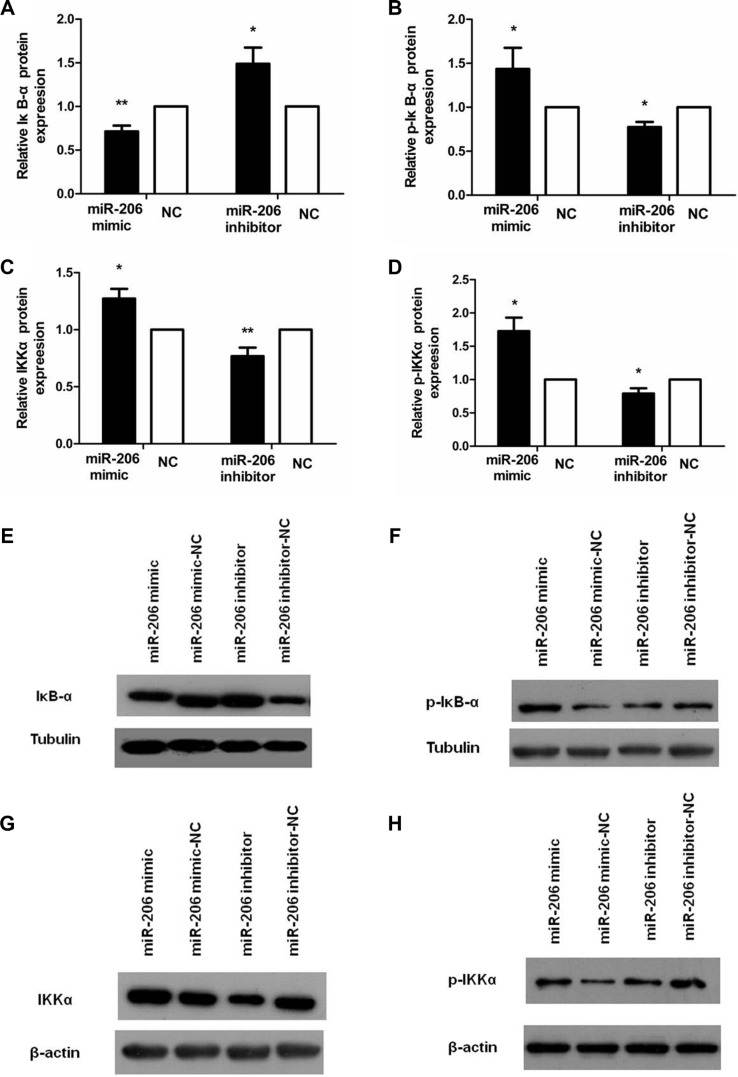
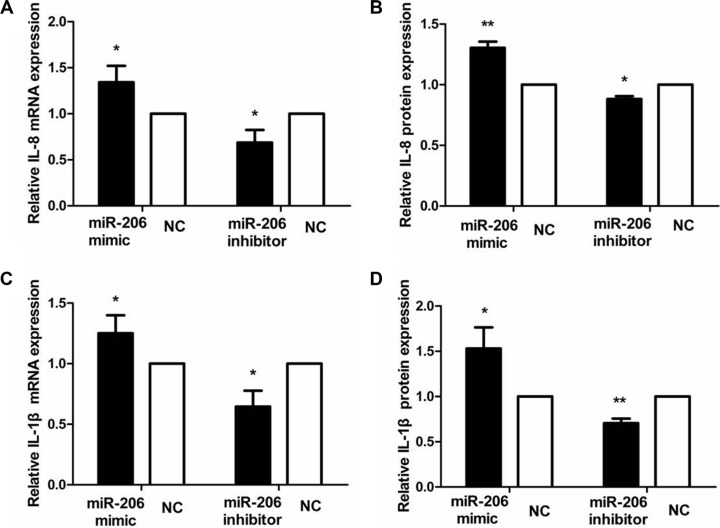
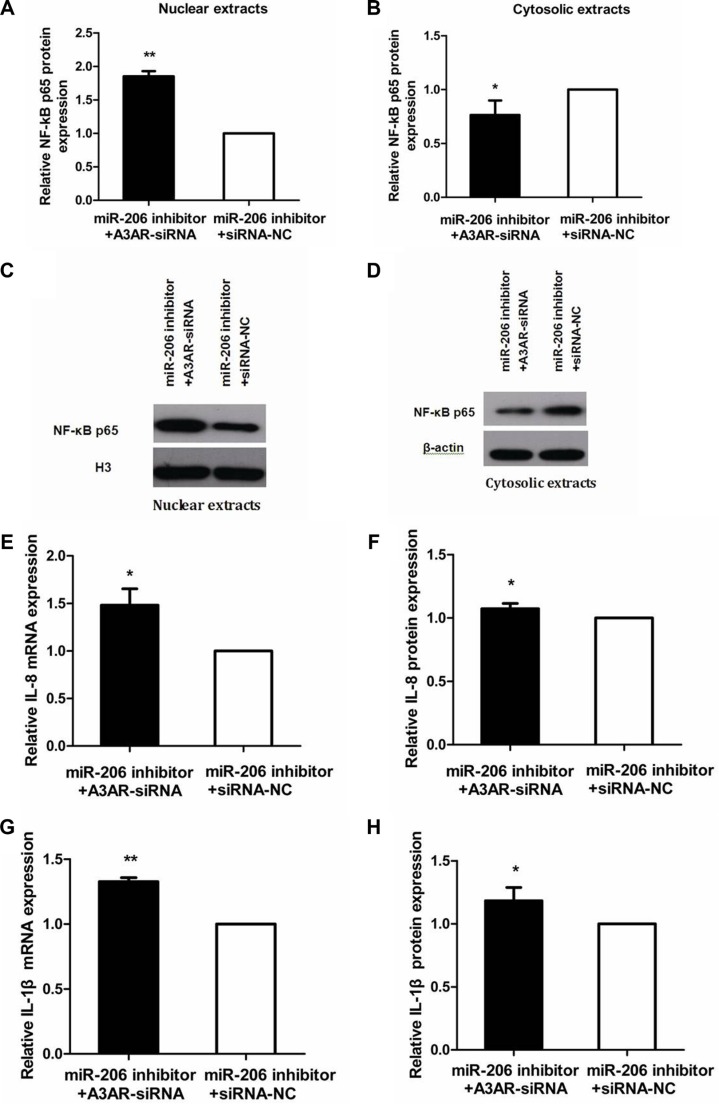
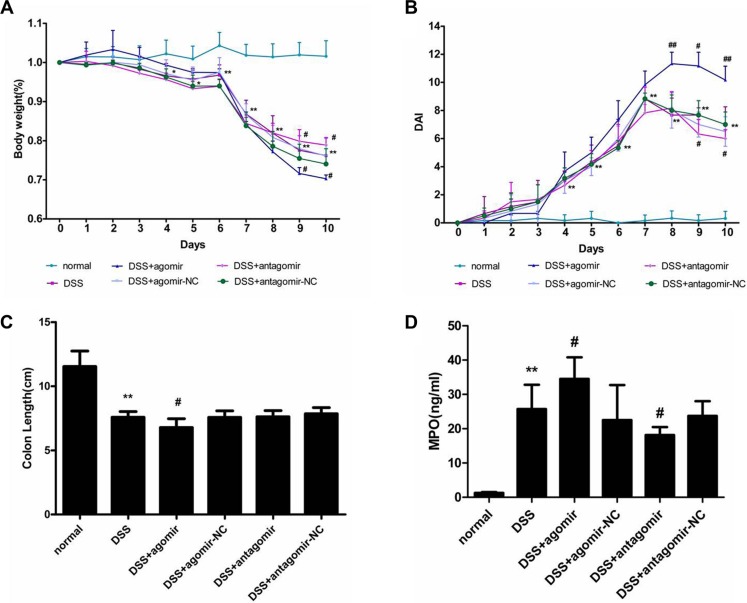
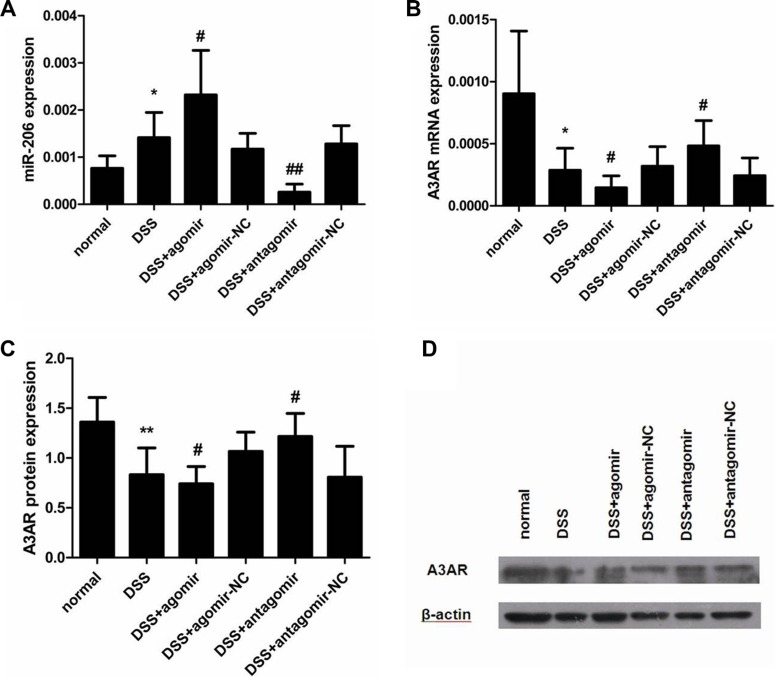
Increasing evidence suggests that miRNAs are widely dysregulated in ulcerative colitis (UC), potentially affecting UC pathogenesis, diagnosis, and therapy. microRNA (miR) -206 has been reported to be upregulated in UC; however, its function and role in UC remain unknown. Here, we elucidate the function of miR-206 in the pathogenesis of UC. In patients with active-UC, miR-206 and adenosine A3 receptor (A3AR) levels were significantly upregulated and downregulated, respectively, and were inversely correlated. A3AR was expressed in the colon mucosa (particularly in colon epithelial-cell membranes). In HT-29 cells, miR-206 downregulated A3AR mRNA/protein expression by directly targeting the A3AR 3'-UTR; miR-206 overexpression and knockdown respectively increased and decreased TNF-α-induced nuclear NF-κB/p65, p-IκB-α, IKKα, p-IKKα and IL-8/IL-1β secretion. However, A3AR-siRNA reversed the miR-206 inhibitory effect. Furthermore, miR-206 increased dextran sodium sulphate-induced colitis severity (i.e., increased bodyweight loss, DAI score, colon shrinkage, and MPO activity), which was partially ameliorated by miR-206-antagomir treatment. miR-206-agomir treatment potently suppressed A3AR expression and increased NF-κB signalling and downstream cytokine (TNF-α/IL-8/IL-1β) expression in the mouse colon, in contrast to miR-206-antagomir administration. Taken together, our results demonstrated that miR-206 has a proinflammatory role in UC by downregulating A3AR expression and activating NF-κB signalling.
越来越多的证据表明,微小RNA(miRNA)在溃疡性结肠炎(UC)中广泛失调,可能影响UC的发病机制、诊断和治疗。据报道,微小RNA(miR)-206在UC中上调;然而,其在UC中的功能和作用仍不清楚。在此,我们阐明miR-206在UC发病机制中的功能。在活动期UC患者中,miR-206和腺苷A3受体(A3AR)水平分别显著上调和下调,且呈负相关。A3AR在结肠黏膜中表达(特别是在结肠上皮细胞膜中)。在HT-29细胞中,miR-206通过直接靶向A3AR 3'-UTR下调A3AR mRNA/蛋白表达;miR-206过表达和敲低分别增加和减少肿瘤坏死因子-α(TNF-α)诱导的核因子κB(NF-κB)/p65、磷酸化IκB-α(p-IκB-α)、IKKα、磷酸化IKKα(p-IKKα)以及白细胞介素-8(IL-8)/白细胞介素-1β(IL-1β)的分泌。然而,A3AR小干扰RNA(A3AR-siRNA)逆转了miR-206的抑制作用。此外,miR-206增加了葡聚糖硫酸钠诱导的结肠炎严重程度(即体重减轻增加、疾病活动指数评分升高、结肠收缩和髓过氧化物酶活性增强),而miR-206拮抗剂治疗可部分改善这种情况。与miR-206拮抗剂给药相反,miR-206激动剂治疗有效抑制了小鼠结肠中A3AR的表达,并增加了NF-κB信号传导和下游细胞因子(TNF-α/IL-8/IL-1β)的表达。综上所述,我们的结果表明,miR-206通过下调A3AR表达和激活NF-κB信号传导在UC中发挥促炎作用。