Institute of Animal Nutrition, Sichuan Agricultural University, Key Laboratory for Animal Disease-Resistance Nutrition of China Ministry of Education, Key Laboratory of Animal Disease-Resistant Nutrition and Feed of China Ministry of Agriculture and Rural Affairs, Key Laboratory of Animal Disease-Resistant Nutrition of Sichuan Province, Chengdu, China.
Front Immunol. 2022 Apr 13;13:868229. doi: 10.3389/fimmu.2022.868229. eCollection 2022.
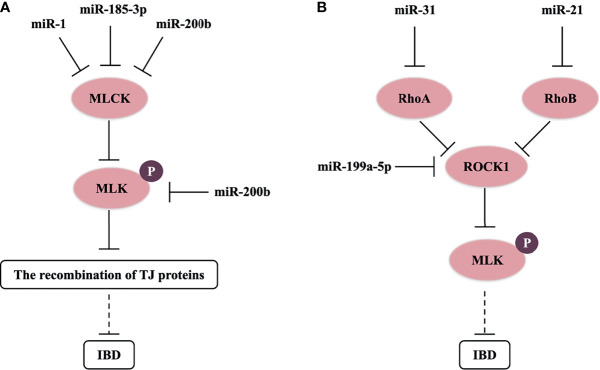
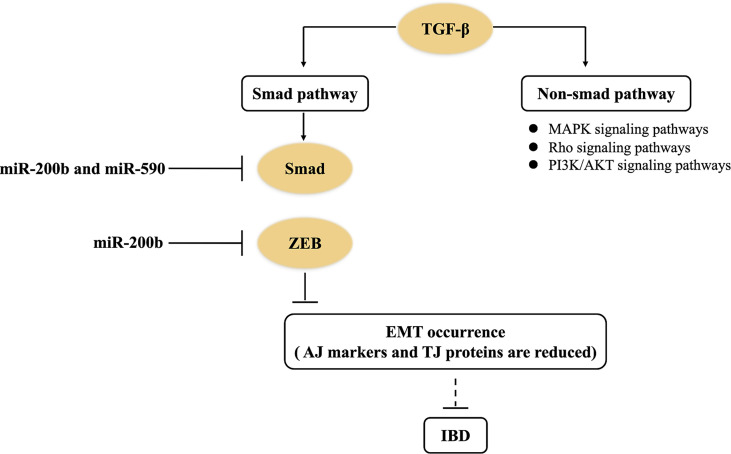
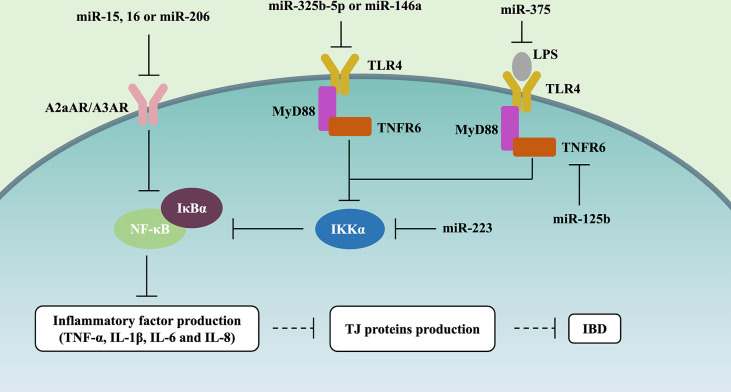
The most obvious pathological characterization of inflammatory bowel disease (IBD) is intestinal epithelium erosion and severe inflammation invasion. Micro-ribonucleic acids (miRNA or microRNA), single-stranded noncoding RNAs of ~22 nucleotides, have been considered as the potential therapeutic targets in the pathogenesis of IBD. Many previous studies have focused on the mechanisms that miRNAs use to regulate inflammation, immunity, and microorganisms in IBD. The review highlights in detail the findings of miRNAs in the intestinal epithelial barrier of IBD, and focuses on their gene targets, signaling pathways associated with IBD, and some potential therapies. It will be beneficial for the elucidation of the interaction between miRNAs and the intestinal epithelial barrier in IBD and provide a theoretical reference for preventing and treating IBD in the future.
炎症性肠病(IBD)最明显的病理学特征是肠道上皮细胞侵蚀和严重炎症浸润。微小 RNA(miRNA 或 microRNA)是一种约 22 个核苷酸的单链非编码 RNA,被认为是 IBD 发病机制中的潜在治疗靶点。许多先前的研究都集中在 miRNA 调节 IBD 中的炎症、免疫和微生物的机制上。该综述详细介绍了 miRNA 在 IBD 肠道上皮屏障中的研究发现,并重点介绍了其与 IBD 相关的基因靶点、信号通路以及一些潜在的治疗方法。这将有助于阐明 miRNA 与 IBD 肠道上皮屏障之间的相互作用,并为未来预防和治疗 IBD 提供理论参考。