McEnery Madison A P, Lu Sichang, Gupta Mukesh K, Zienkiewicz Katarzyna J, Wenke Joseph C, Kalpakci Kerem N, Shimko Daniel, Duvall Craig L, Guelcher Scott A
Department of Biomedical Engineering, Vanderbilt University, Nashville, TN, USA.
Department of Chemical and Biomolecular Engineering, Vanderbilt University, Nashville, TN, USA.
RSC Adv. 2016;6(111):109414-109424. doi: 10.1039/c6ra24642g. Epub 2016 Nov 8.
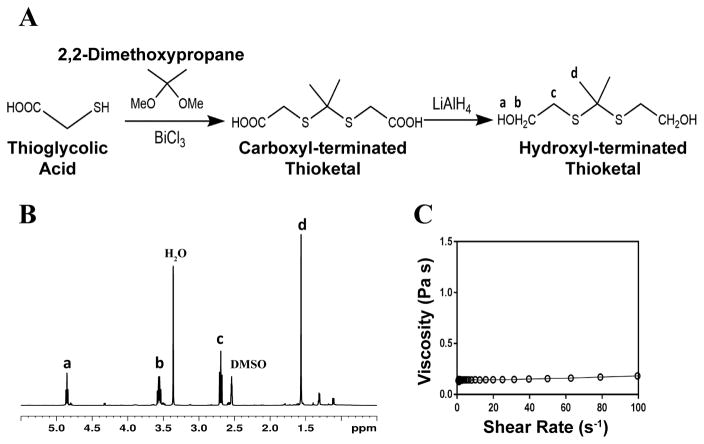
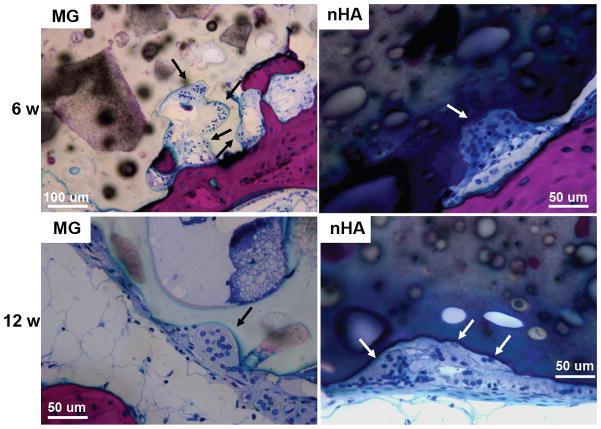
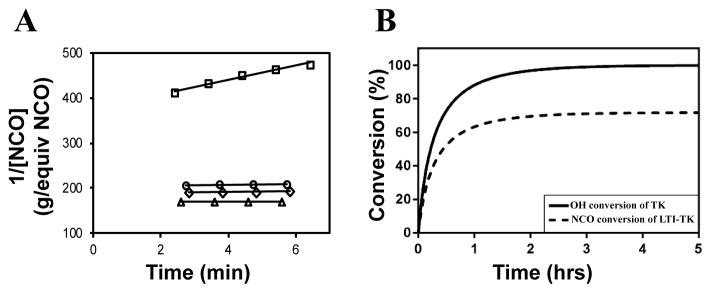
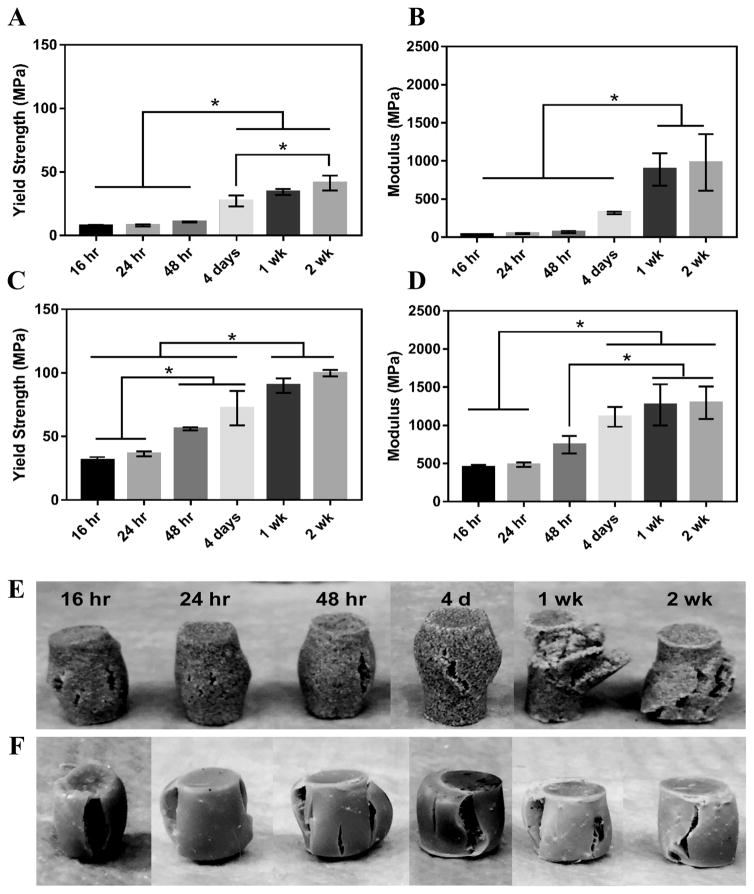
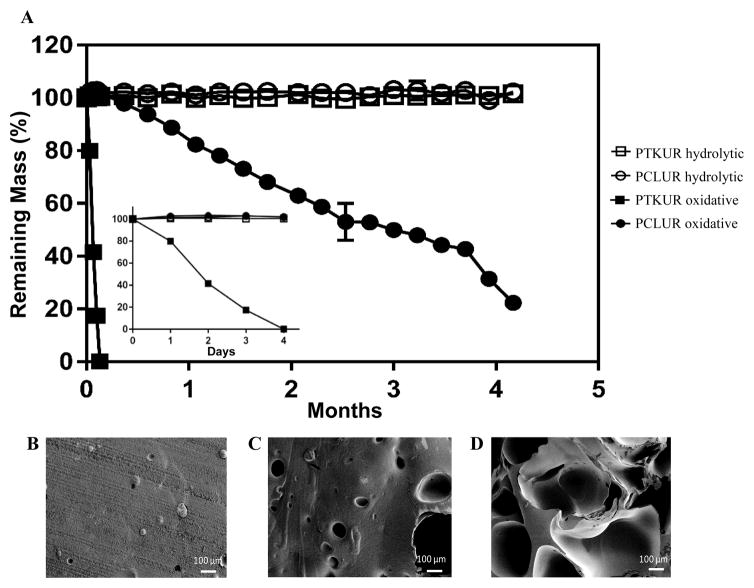
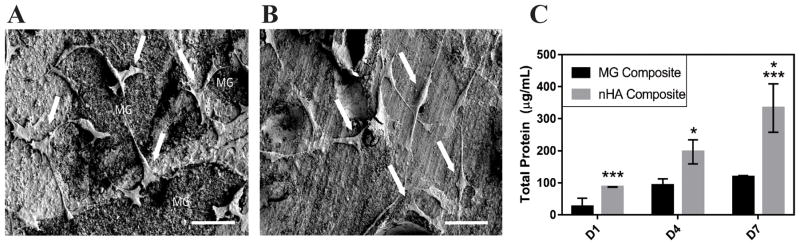
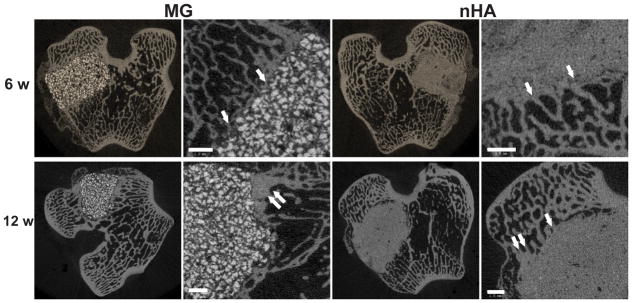
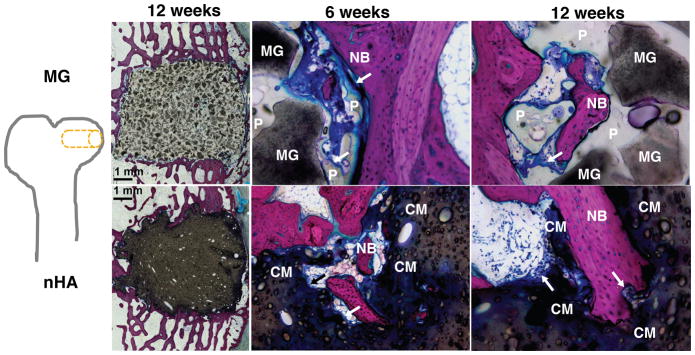
Synthetic bone cements are commonly used in orthopaedic procedures to aid in bone regeneration following trauma or disease. Polymeric cements like PMMA provide the mechanical strength necessary for orthopaedic applications, but they are not resorbable and do not integrate with host bone. Ceramic cements have a chemical composition similar to that of bone, but their brittle mechanical properties limit their use in weight-bearing applications. In this study, we designed oxidatively degradable, polymeric bone cements with mechanical properties suitable for bone tissue engineering applications. We synthesized a novel thioketal (TK) diol, which was crosslinked with a lysine triisocyanate (LTI) prepolymer to create hydrolytically stable poly(thioketal urethane)s (PTKUR) that degrade in the oxidative environment associated with bone defects. PTKUR films were hydrolytically stable for up to 6 months, but degraded rapidly (<1 week) under simulated oxidative conditions When combined with ceramic micro- or nanoparticles, PTKUR cements exhibited working times comparable to calcium phosphate cements and strengths exceeding those of trabecular bone. PTKUR/ceramic composite cements supported appositional bone growth and integrated with host bone near the bone-cement interface at 6 and 12 weeks post-implantation in rabbit femoral condyle plug defects. Histological evidence of osteoclast-mediated resorption of the cements was observed at 6 and 12 weeks. These findings demonstrate that a PTKUR bone cement with bone-like strength can be selectively resorbed by cells involved in bone remodeling, and thus represent an important initial step toward the development of resorbable bone cements for weight-bearing applications.
合成骨水泥常用于骨科手术,以帮助创伤或疾病后的骨再生。像聚甲基丙烯酸甲酯(PMMA)这样的聚合物骨水泥提供了骨科应用所需的机械强度,但它们不可吸收,也不能与宿主骨整合。陶瓷骨水泥的化学成分与骨相似,但其脆性机械性能限制了它们在承重应用中的使用。在本研究中,我们设计了具有适合骨组织工程应用机械性能的可氧化降解聚合物骨水泥。我们合成了一种新型硫酮二醇,将其与赖氨酸三异氰酸酯(LTI)预聚物交联,以制备在与骨缺损相关的氧化环境中降解的水解稳定聚(硫酮聚氨酯)(PTKUR)。PTKUR薄膜在长达6个月的时间内水解稳定,但在模拟氧化条件下迅速降解(<1周)。当与陶瓷微颗粒或纳米颗粒结合时,PTKUR骨水泥的工作时间与磷酸钙骨水泥相当,强度超过松质骨。在兔股骨髁插塞缺损植入后6周和12周,PTKUR/陶瓷复合骨水泥支持骨的贴壁生长,并与骨水泥界面附近的宿主骨整合。在6周和12周时观察到破骨细胞介导的骨水泥吸收的组织学证据。这些发现表明,具有类骨强度的PTKUR骨水泥可以被参与骨重塑的细胞选择性吸收,因此代表了开发用于承重应用的可吸收骨水泥的重要第一步。