Canadian Centre for Behavioral Neuroscience, University of Lethbridge , Lethbridge, AB, T1K 6T5 Canada.
eNeuro. 2016 Nov 17;3(6). doi: 10.1523/ENEURO.0167-16.2016. eCollection 2016 Nov-Dec.
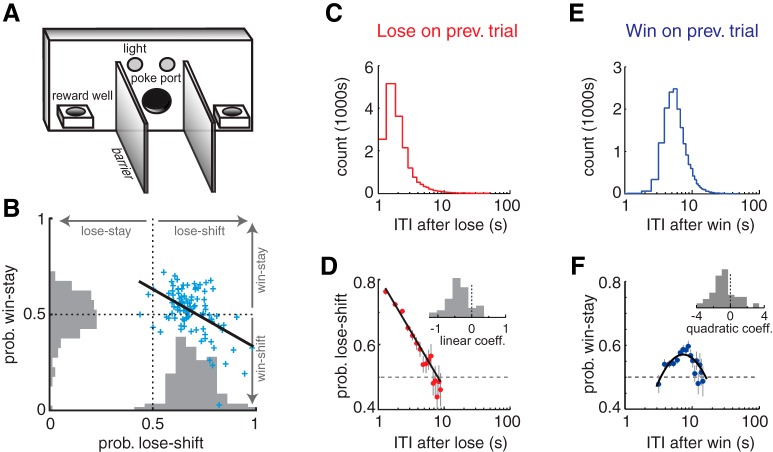
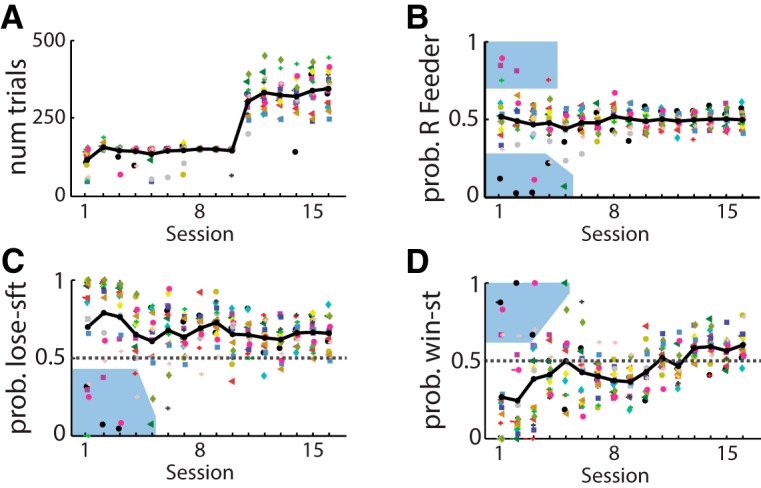
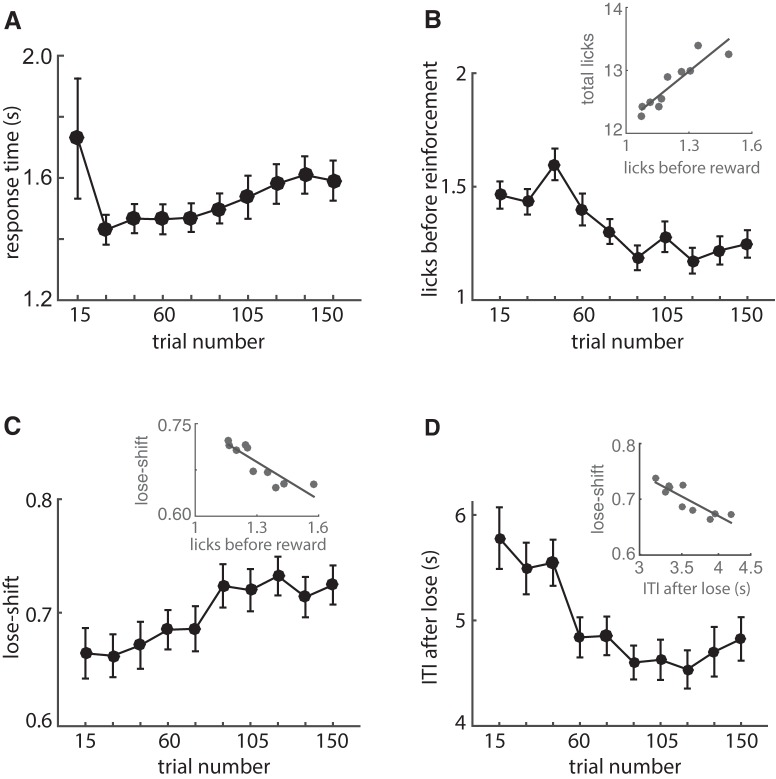
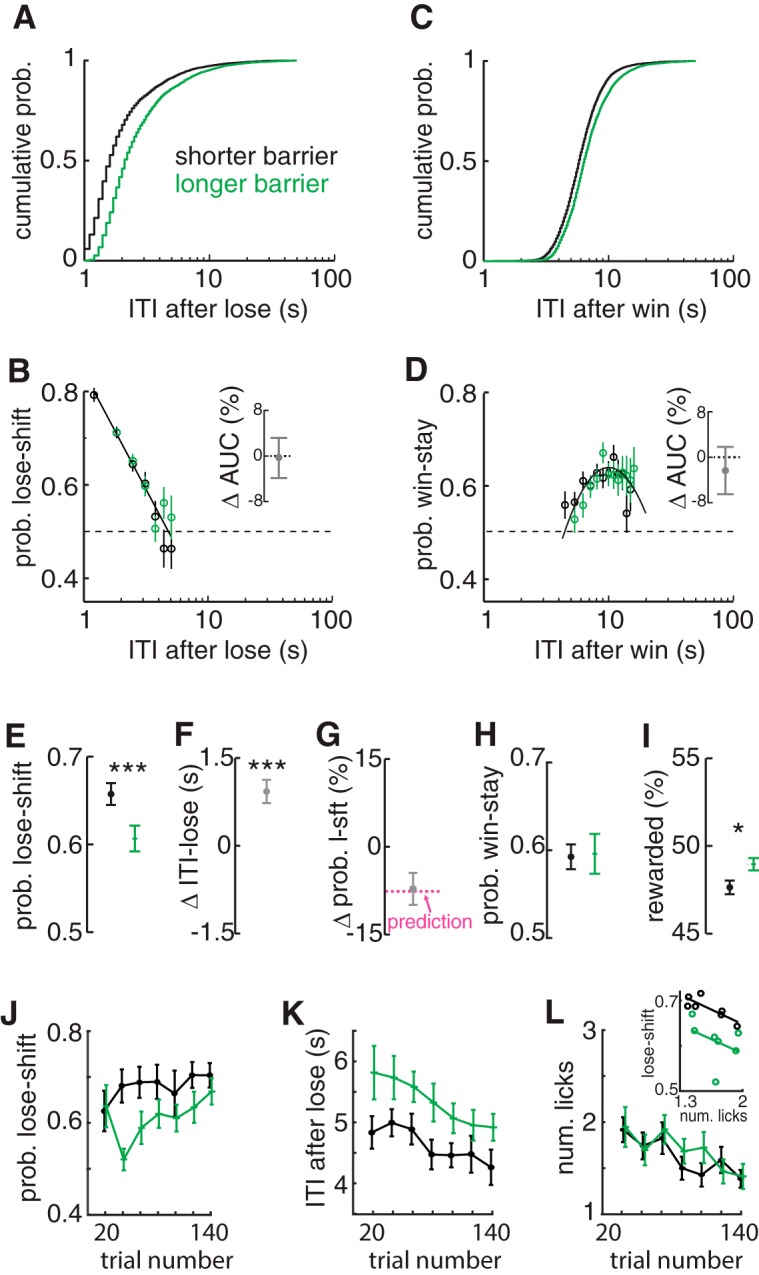
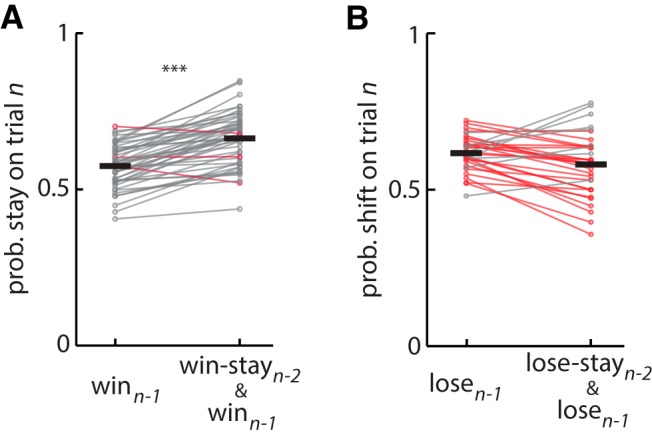
The propensity of animals to shift choices immediately after unexpectedly poor reinforcement outcomes is a pervasive strategy across species and tasks. We report here that the memory supporting such lose-shift responding in rats rapidly decays during the intertrial interval and persists throughout training and testing on a binary choice task, despite being a suboptimal strategy. Lose-shift responding is not positively correlated with the prevalence and temporal dependence of win-stay responding, and it is inconsistent with predictions of reinforcement learning on the task. These data provide further evidence that win-stay and lose-shift are mediated by dissociated neural mechanisms and indicate that lose-shift responding presents a potential confound for the study of choice in the many operant choice tasks with short intertrial intervals. We propose that this immediate lose-shift responding is an intrinsic feature of the brain's choice mechanisms that is engaged as a choice reflex and works in parallel with reinforcement learning and other control mechanisms to guide action selection.
动物在意外获得不佳的强化结果后立即改变选择的倾向是一种普遍存在于不同物种和任务中的策略。我们在这里报告,尽管是一种次优策略,但在大鼠的双选择任务中,支持这种损失转换反应的记忆在试验间间隔期间迅速衰退,并在整个训练和测试过程中持续存在。损失转换反应与获胜保持反应的普遍性和时间依赖性没有正相关关系,并且与任务上的强化学习预测不一致。这些数据进一步证明,获胜保持和损失转换是由分离的神经机制介导的,并表明损失转换反应对许多具有短试验间间隔的操作性选择任务中选择的研究构成了潜在的混淆。我们提出,这种即时的损失转换反应是大脑选择机制的固有特征,它作为一种选择反射而被激活,并与强化学习和其他控制机制并行工作,以指导动作选择。