Clinical Microbiology Division, Indian Institute of Integrative Medicine, Jammu Tawi-180 001, India.
Membrane Biology Laboratory, School of Life Sciences, Jawaharlal Nehru University, New Delhi-110 067, India.
Sci Rep. 2016 Nov 29;6:37867. doi: 10.1038/srep37867.
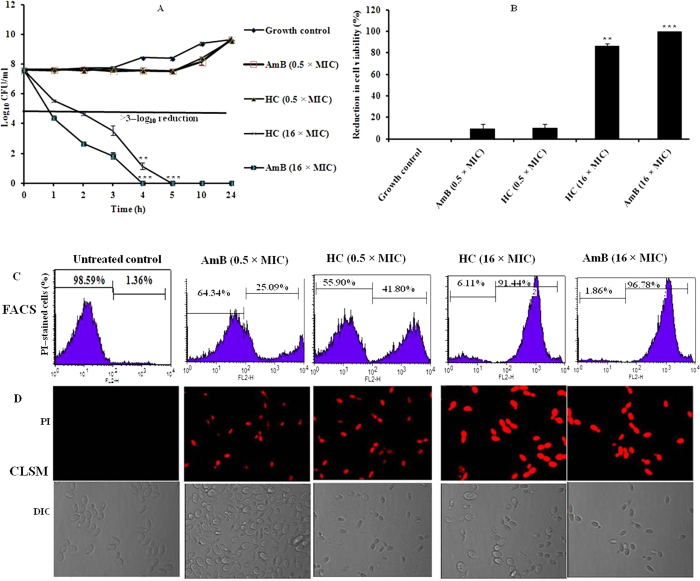
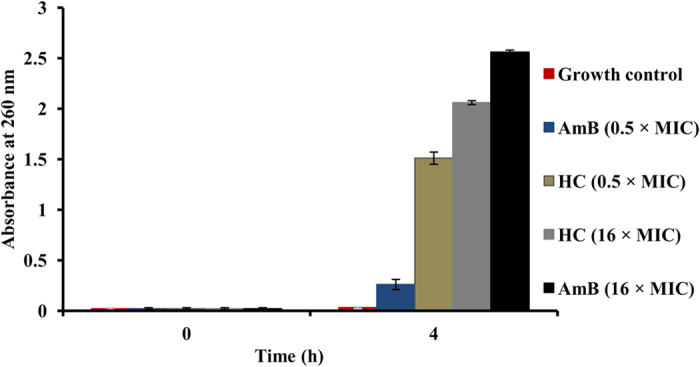
The present study was designed to investigate the potency of hydroxychavicol on selected cutaneous human pathogenic fungi by the use of in vitro and in vivo assays and mechanistic characterization along with toxicological effects. Hydroxychavicol consistently displayed a fungicidal effect against all fungal species tested. Inoculum concentrations over the range of 10 to 10 CFU/ml did not significantly alter its antifungal potential and time-kill curve results revealed concentration-dependent killing. It also inhibited the growth of biofilm generated by Trichophyton mentagrophytes and Candida parapsilosis and reduced the preformed biofilms. Hydroxychavicol was highly effective in the treatment, and mycological eradication of an experimentally induced topical infection model of dermatophytosis (tinea corporis) and cutaneous candidiasis in guinea pigs, respectively. The mode of action of hydroxychavicol appears to originate from the disruption of cell membrane integrity. Administration of hydroxychavicol in mice at 500 mg per kg of body weight by orally produced no overt toxicity. The retention capacity of hydroxychavicol in vitro, in the presence of keratin has attributed to its in vivo effectiveness in the guinea pig model of topical infections. Furthermore, it is suggestive of its potential use as phytochemical for topical use in cutaneous fungal infections.
本研究旨在通过体外和体内试验以及机制表征和毒理学研究,研究胡椒基甲酚对几种人体皮肤致病真菌的效力。胡椒基甲酚对所有测试的真菌物种均显示出杀菌作用。接种物浓度在 10 至 10 CFU/ml 范围内不会显著改变其抗真菌潜力,时间杀伤曲线结果显示出浓度依赖性杀伤。它还抑制了毛癣菌和假丝酵母产生的生物膜的生长,并减少了已形成的生物膜。胡椒基甲酚在治疗和真菌感染(体癣)和豚鼠皮肤念珠菌病的实验性诱导局部感染模型中的真菌学根除方面非常有效。胡椒基甲酚的作用模式似乎源于细胞膜完整性的破坏。以 500mg/kg 体重的剂量经口给予胡椒基甲酚在小鼠中未产生明显毒性。胡椒基甲酚在体外存在角蛋白的情况下的保留能力归因于其在豚鼠局部感染模型中的体内有效性。此外,这表明它可能作为植物化学物质用于治疗皮肤真菌感染。