Perea Silvia, Vukić Jasna, Šanda Radek, Doadrio Ignacio
Biodiversity and Evolutionary Group, Museo Nacional de Ciencias Naturales-CSIC, C/José Gutiérrez Abascal, Madrid, Spain.
Department of Ecology, Faculty of Science, Charles University, Viničná, Prague, Czech Republic.
PLoS One. 2016 Dec 1;11(12):e0166292. doi: 10.1371/journal.pone.0166292. eCollection 2016.
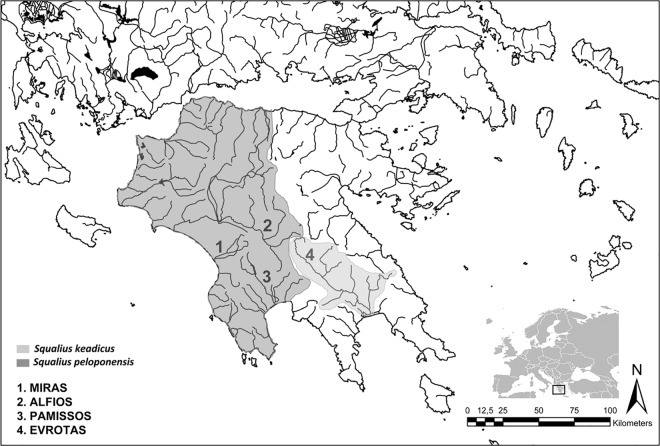
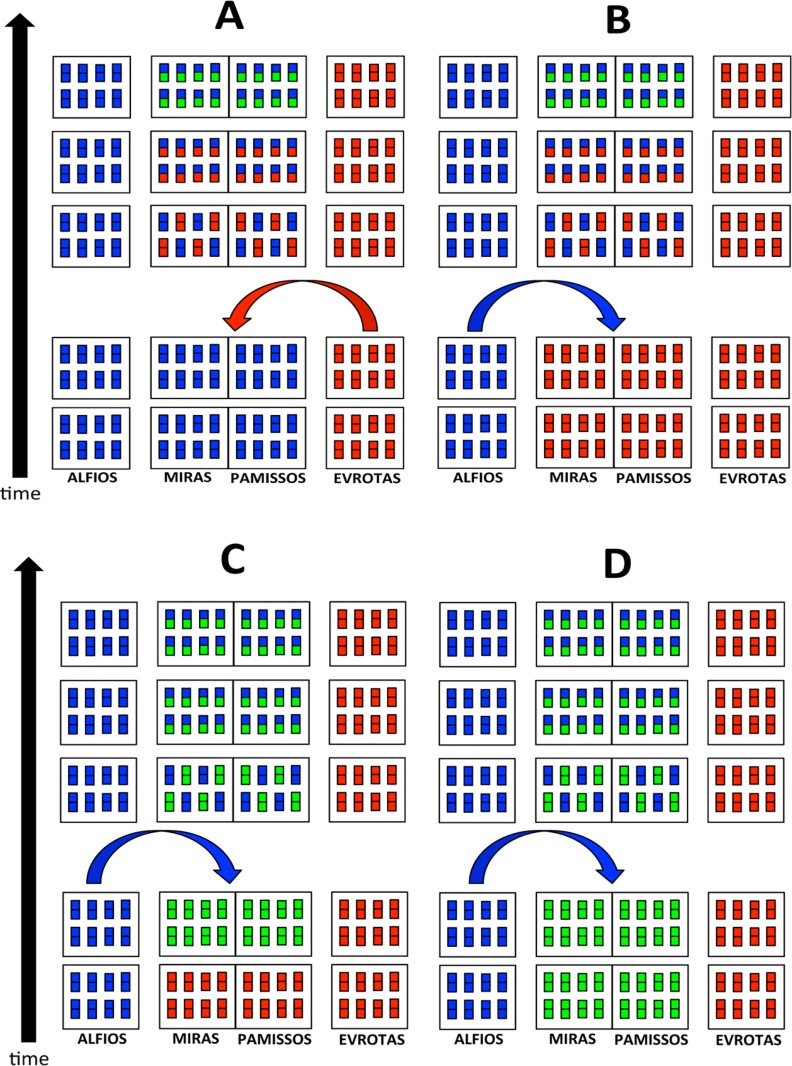
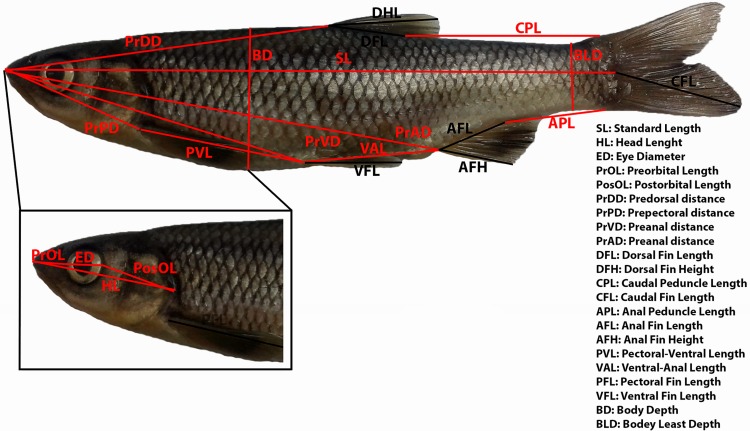
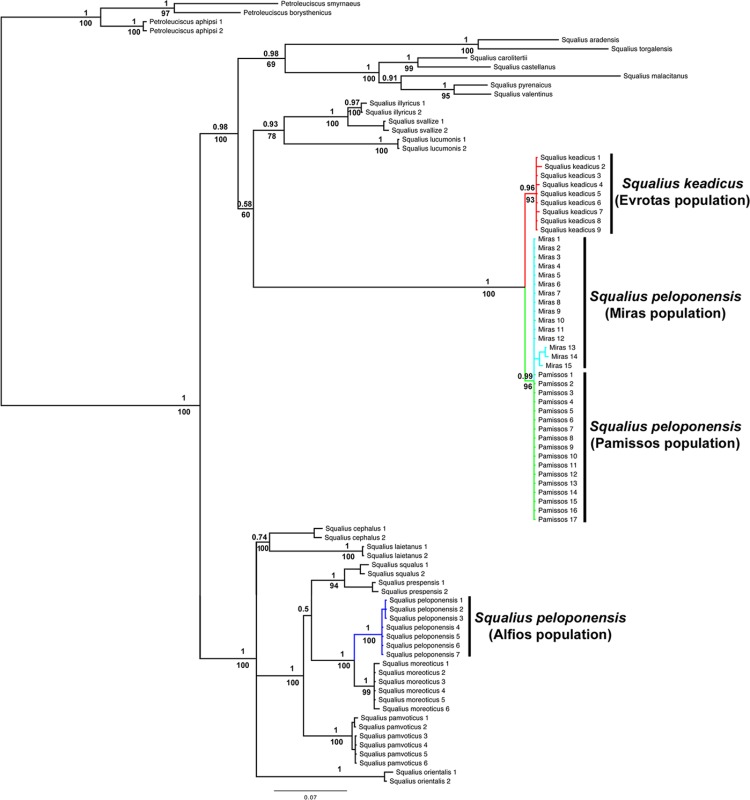
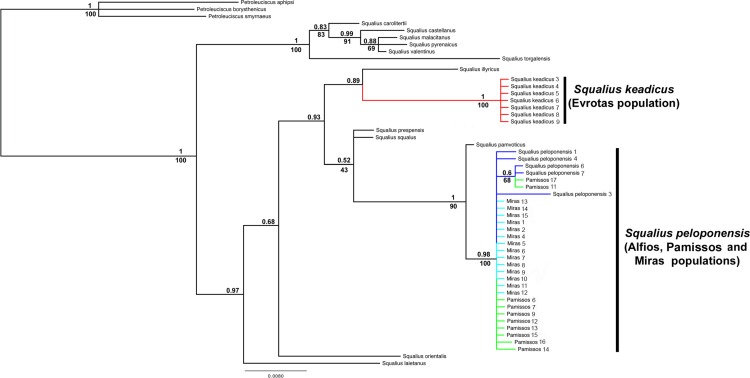
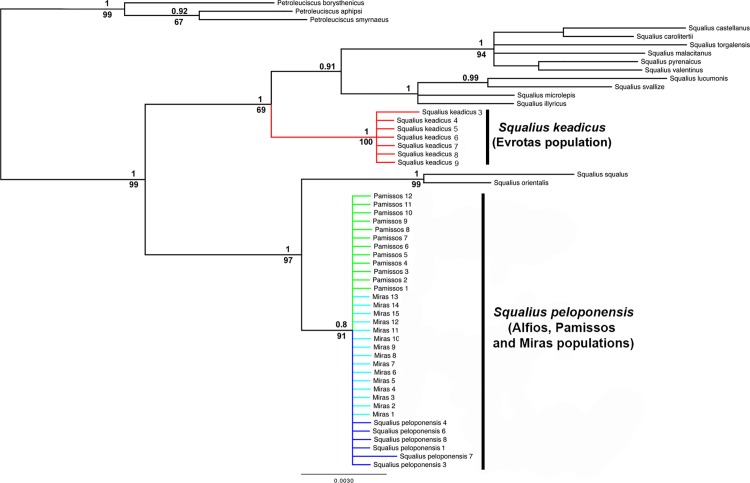
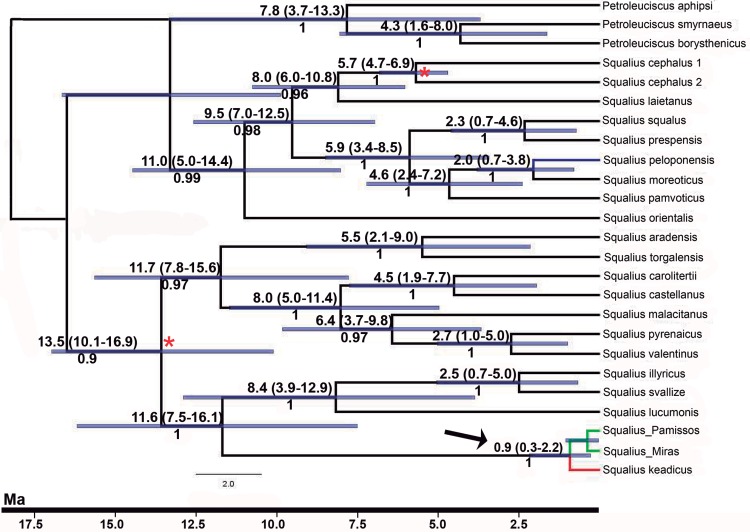
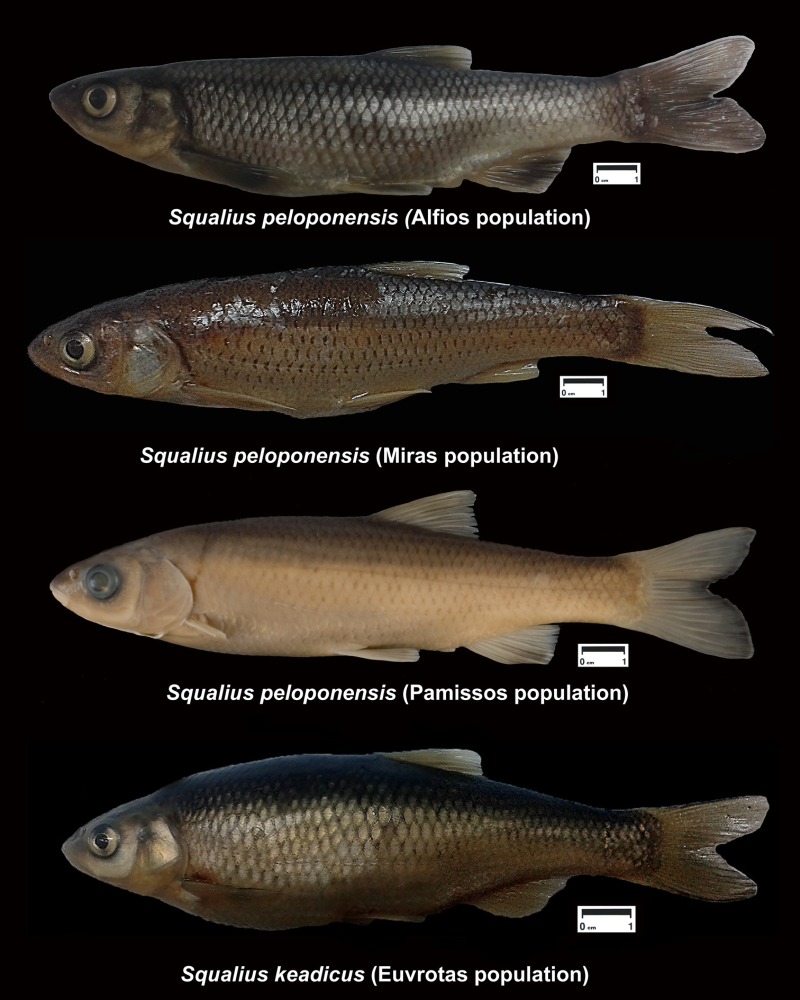
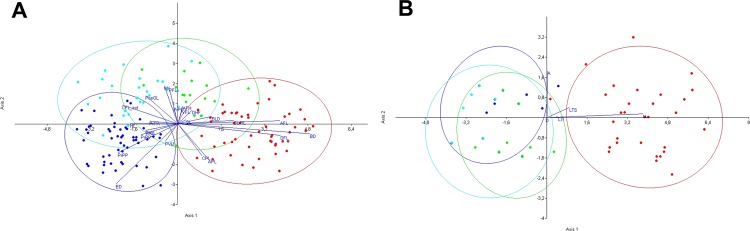
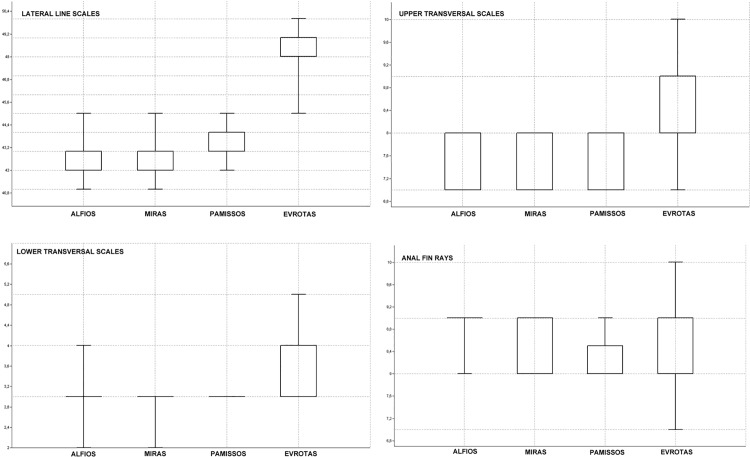
Hybridization and incomplete lineage sorting are common confounding factors in phylogeny and speciation resulting in mitonuclear disparity. Mitochondrial introgression, a particular case of hybridization, may, in extreme cases, lead to replacement of the mitochondrial genome of one species with that of another (mitochondrial capture). We investigated mitochondrial introgression involving two species of the cyprinid genus Squalius in the western Peloponnese region of Greece using molecular and morphological data. We found evidence of complete mitochondrial introgression of Squalius keadicus into two populations recognized as Squalius peloponensis from the Miras and Pamissos River basins and a divergence of mitochondrial genomes of S. keadicus from the Evrotas basin from that of the introgressed populations dating from the Pleistocene. Secondary contact among basins is a possible factor in connection of the species and the introgression event. Morphological analyses support the hypothesis of mitochondrial introgression, as S. keadicus was different from the other three populations recognized as S. peloponensis, although significant differences were found among the four populations. Isolation by geographical barriers arose during Pleistocene in the western Peloponnese were the source of the evolution of the two reciprocally monophyletic subclades found in the S. keadicus mitochondrial clade, and the morphological differences found among the four populations. Along with the lack of structure in the nuclear genome in the three populations ascribed to S. peloponensis, this suggests an incipient speciation process occurring in these Squalius species in the western Peloponnese.
杂交和不完全谱系分选是系统发育和物种形成中常见的混杂因素,会导致线粒体-核基因不一致。线粒体渐渗作为杂交的一种特殊情况,在极端情况下可能导致一个物种的线粒体基因组被另一个物种的线粒体基因组所取代(线粒体捕获)。我们利用分子和形态学数据,对希腊伯罗奔尼撒半岛西部鲤科属Squalius的两个物种之间的线粒体渐渗进行了研究。我们发现,Squalius keadicus的线粒体完全渐渗到了来自米拉斯河和帕米索斯河流域被认定为Peloponensis鲤的两个种群中,并且来自埃夫罗塔斯河流域的S. keadicus线粒体基因组与渐渗种群的线粒体基因组存在分歧,这种分歧可追溯到更新世。流域间的二次接触可能是物种关联和渐渗事件的一个因素。形态学分析支持了线粒体渐渗的假说,因为S. keadicus与被认定为Peloponensis鲤的其他三个种群不同,尽管这四个种群之间存在显著差异。更新世期间,伯罗奔尼撒半岛西部因地理屏障而产生的隔离是S. keadicus线粒体分支中发现的两个相互单系亚分支进化的源头,也是这四个种群之间形态差异的源头。由于被归为Peloponensis鲤的三个种群的核基因组缺乏结构,这表明在伯罗奔尼撒半岛西部的这些Squalius物种中正在发生一个初始的物种形成过程。