North Matthew, Gaytán Brandon D, Romero Carlos, De La Rosa Vanessa Y, Loguinov Alex, Smith Martyn T, Zhang Luoping, Vulpe Chris D
Department of Nutritional Science and Toxicology, University of California Berkeley, CA, USA.
Division of Environmental Health Sciences, School of Public Health, University of California Berkeley, CA, USA.
Front Genet. 2016 Nov 17;7:200. doi: 10.3389/fgene.2016.00200. eCollection 2016.
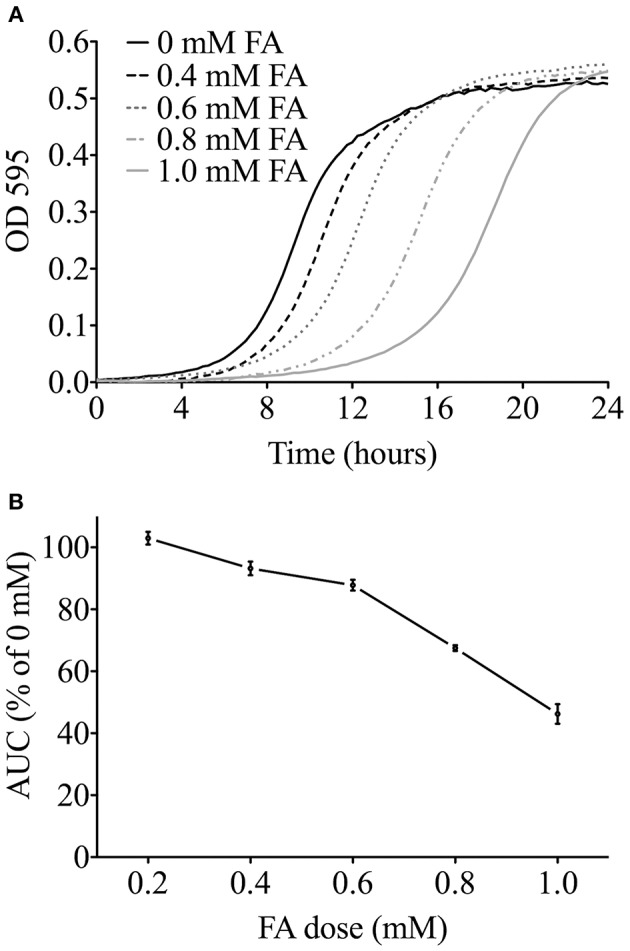
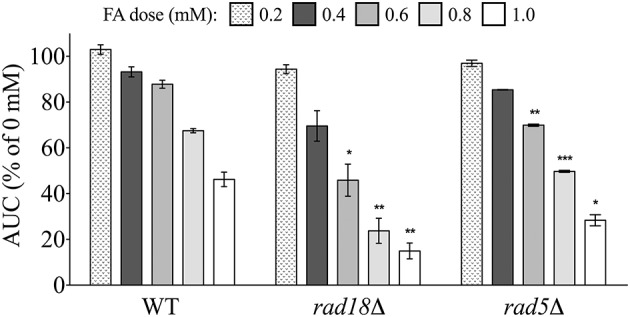
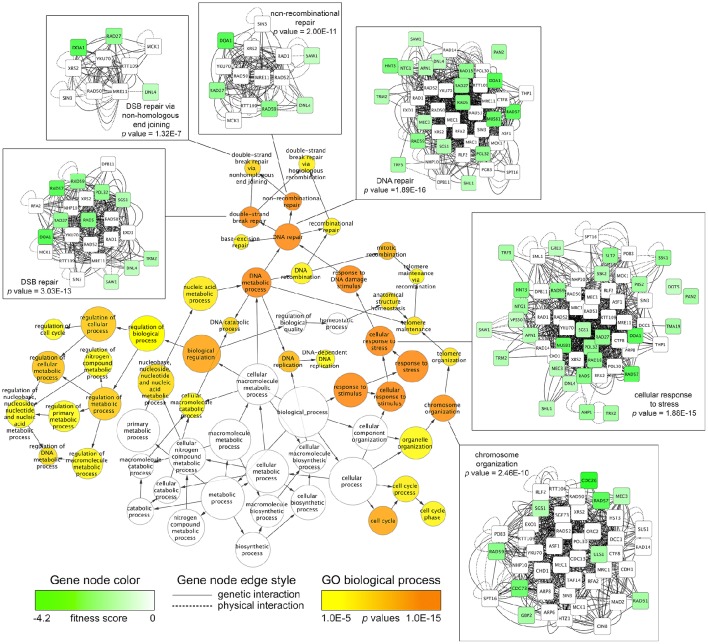
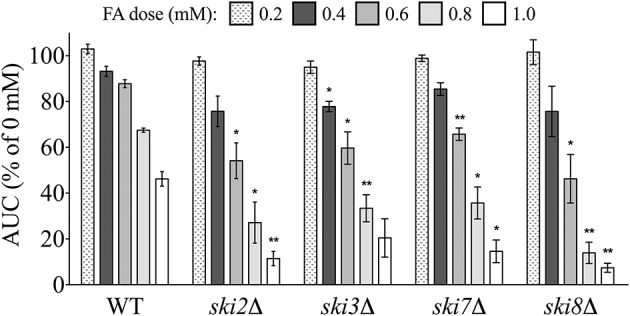
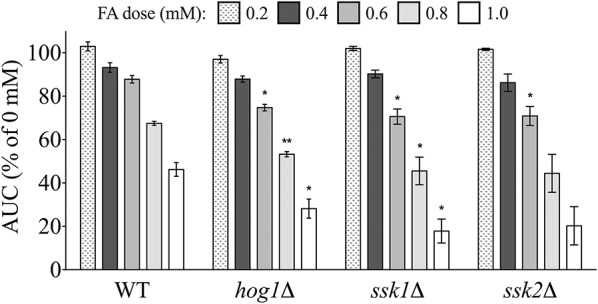
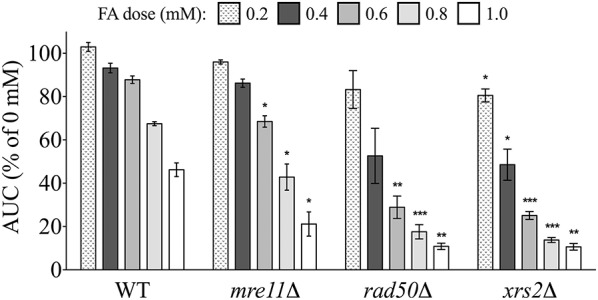
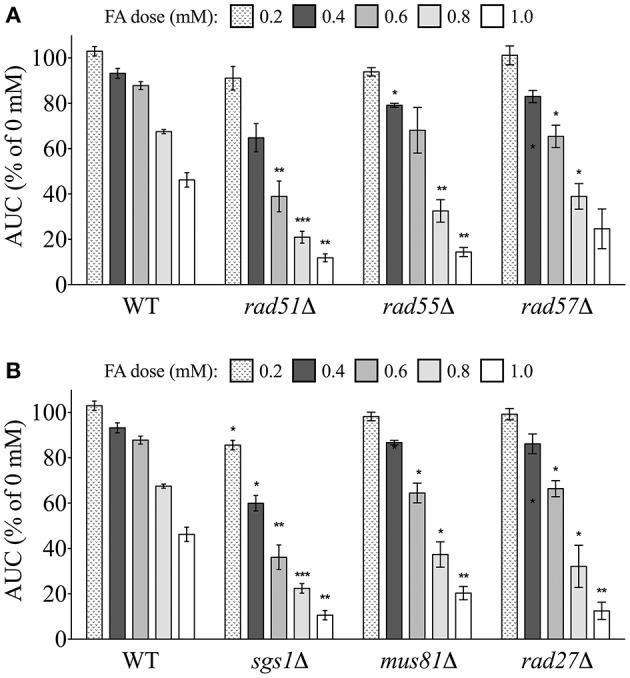
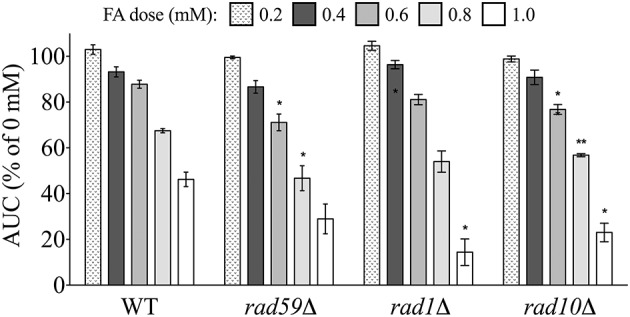
Formaldehyde (FA) is a commercially important chemical with numerous and diverse uses. Accordingly, occupational and environmental exposure to FA is prevalent worldwide. Various adverse effects, including nasopharyngeal, sinonasal, and lymphohematopoietic cancers, have been linked to FA exposure, prompting designation of FA as a human carcinogen by U.S. and international scientific entities. Although the mechanism(s) of FA toxicity have been well studied, additional insight is needed in regard to the genetic requirements for FA tolerance. In this study, a functional toxicogenomics approach was utilized in the model eukaryotic yeast to identify genes and cellular processes modulating the cellular toxicity of FA. Our results demonstrate mutant strains deficient in multiple DNA repair pathways-including homologous recombination, single strand annealing, and postreplication repair-were sensitive to FA, indicating FA may cause various forms of DNA damage in yeast. The SKI complex and its associated factors, which regulate mRNA degradation by the exosome, were also required for FA tolerance, suggesting FA may have unappreciated effects on RNA stability. Furthermore, various strains involved in osmoregulation and stress response were sensitive to FA. Together, our results are generally consistent with FA-mediated damage to both DNA and RNA. Considering DNA repair and RNA degradation pathways are evolutionarily conserved from yeast to humans, mechanisms of FA toxicity identified in yeast may be relevant to human disease and genetic susceptibility.
甲醛(FA)是一种具有多种重要商业用途的化学品。因此,在全球范围内,职业性和环境性接触甲醛的情况普遍存在。包括鼻咽癌、鼻窦癌和淋巴造血系统癌症在内的各种不良反应都与接触甲醛有关,这促使美国和国际科学机构将甲醛指定为人类致癌物。尽管对甲醛毒性的机制已经进行了深入研究,但在甲醛耐受性的遗传需求方面仍需要更多的见解。在这项研究中,我们在真核酵母模型中采用了功能毒理基因组学方法,以鉴定调节甲醛细胞毒性的基因和细胞过程。我们的结果表明,缺乏多种DNA修复途径(包括同源重组、单链退火和复制后修复)的突变菌株对甲醛敏感,这表明甲醛可能在酵母中导致多种形式的DNA损伤。SKI复合体及其相关因子通过外泌体调节mRNA降解,它们也是甲醛耐受性所必需的,这表明甲醛可能对RNA稳定性有尚未被认识到的影响。此外,参与渗透调节和应激反应的各种菌株对甲醛敏感。总之,我们的结果总体上与甲醛对DNA和RNA的损伤一致。考虑到DNA修复和RNA降解途径从酵母到人类在进化上是保守的,在酵母中鉴定出的甲醛毒性机制可能与人类疾病和遗传易感性相关。