Toonen Joseph A, Solga Anne C, Ma Yu, Gutmann David H
Department of Neurology, Washington University School of Medicine, St. Louis, MO 63110.
Department of Neurology, Washington University School of Medicine, St. Louis, MO 63110
J Exp Med. 2017 Jan;214(1):17-25. doi: 10.1084/jem.20160447. Epub 2016 Dec 6.
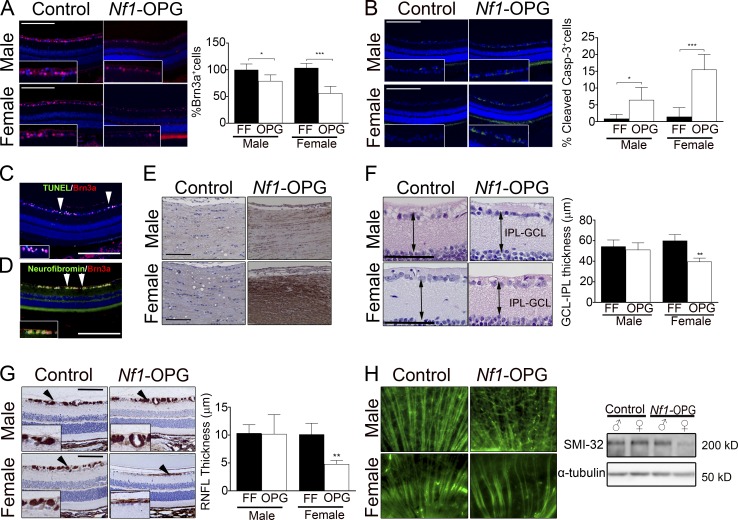
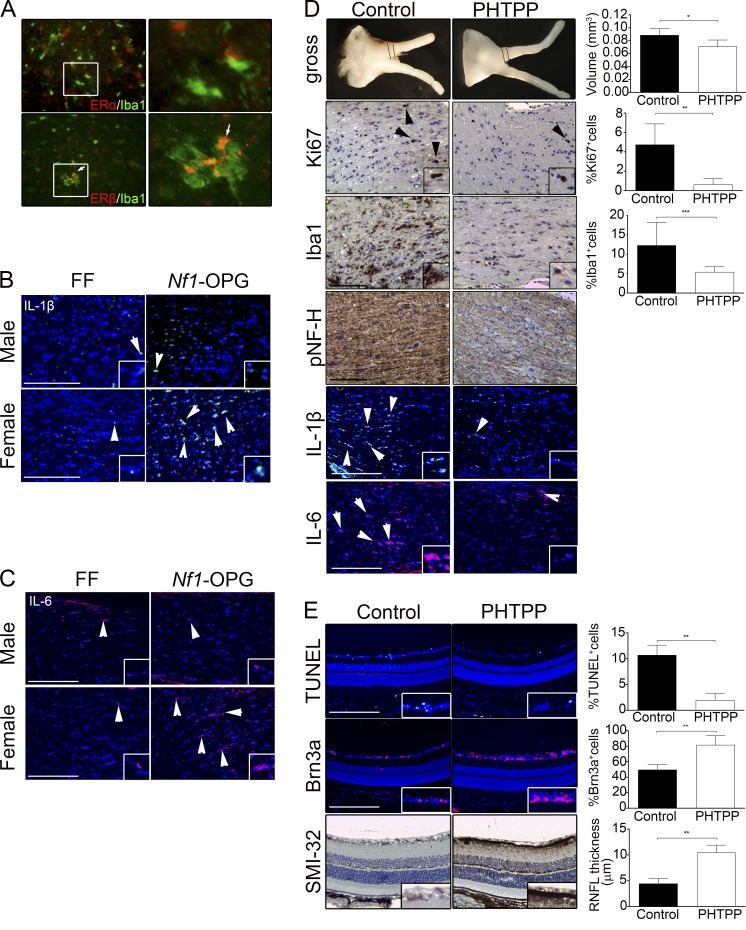
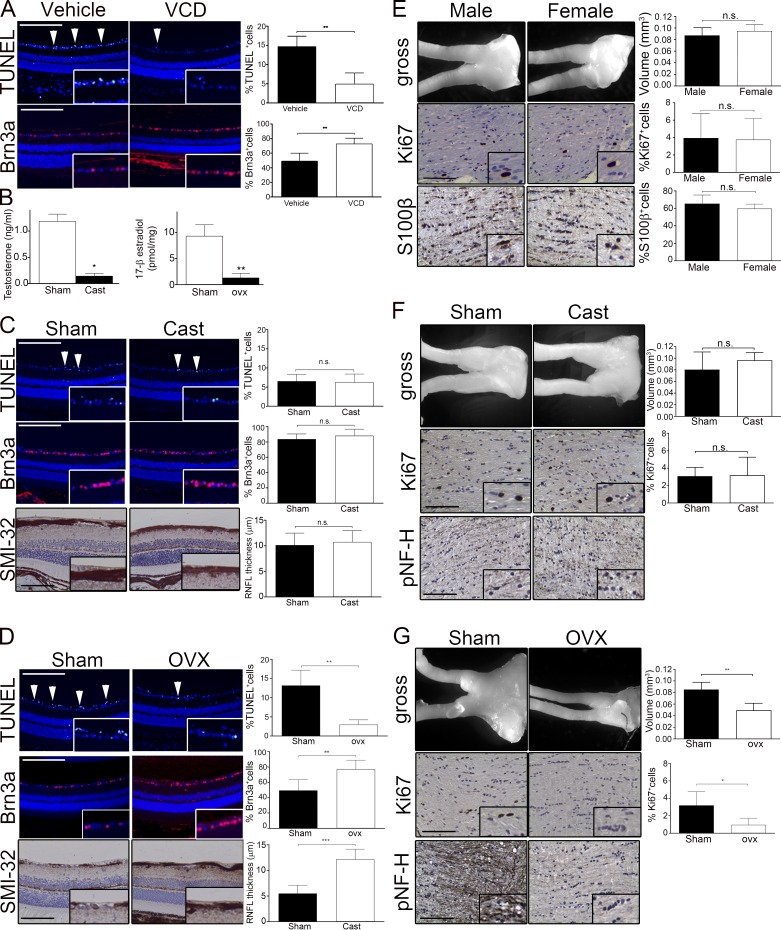
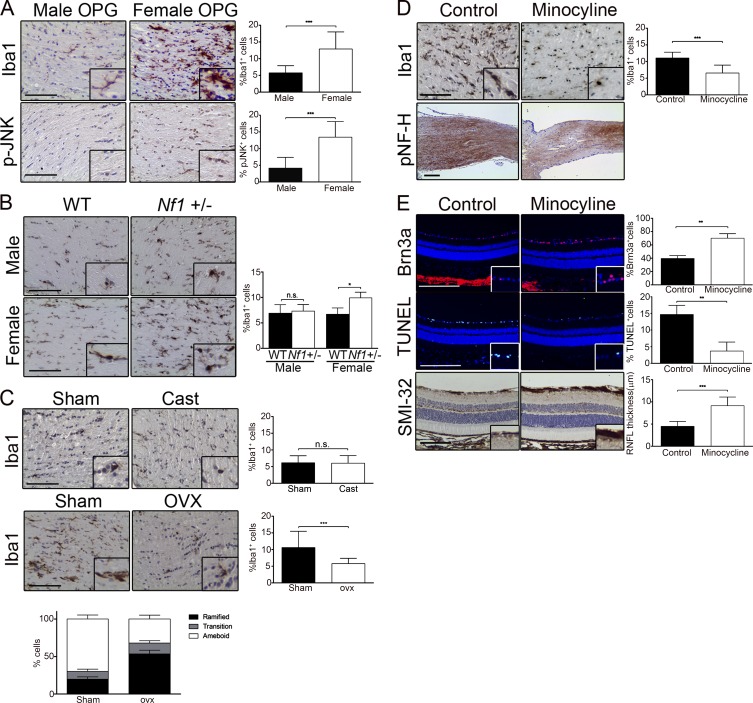
Children with neurofibromatosis type 1 (NF1) develop low-grade brain tumors throughout the optic pathway. Nearly 50% of children with optic pathway gliomas (OPGs) experience visual impairment, and few regain their vision after chemotherapy. Recent studies have revealed that girls with optic nerve gliomas are five times more likely to lose vision and require treatment than boys. To determine the mechanism underlying this sexually dimorphic difference in clinical outcome, we leveraged Nf1 optic glioma (Nf1-OPG) mice. We demonstrate that female Nf1-OPG mice exhibit greater retinal ganglion cell (RGC) loss and only females have retinal nerve fiber layer (RNFL) thinning, despite mice of both sexes harboring tumors of identical volumes and proliferation. Female gonadal sex hormones are responsible for this sexual dimorphism, as ovariectomy, but not castration, of Nf1-OPG mice normalizes RGC survival and RNFL thickness. In addition, female Nf1-OPG mice have threefold more microglia than their male counterparts, and minocycline inhibition of microglia corrects the retinal pathology. Moreover, pharmacologic inhibition of microglial estrogen receptor-β (ERβ) function corrects the retinal abnormalities in female Nf1-OPG mice. Collectively, these studies establish that female gonadal sex hormones underlie the sexual dimorphic differences in Nf1 optic glioma-induced retinal dysfunction by operating at the level of tumor-associated microglial activation.
1型神经纤维瘤病(NF1)患儿在整个视路会发生低度脑肿瘤。近50%的视神经胶质瘤(OPG)患儿存在视力损害,化疗后很少有人能恢复视力。最近的研究表明,患有视神经胶质瘤的女孩失明和需要治疗的可能性是男孩的五倍。为了确定这种临床结果中性别差异的潜在机制,我们利用了Nf1视神经胶质瘤(Nf1-OPG)小鼠。我们证明,雌性Nf1-OPG小鼠表现出更大程度的视网膜神经节细胞(RGC)损失,并且只有雌性小鼠出现视网膜神经纤维层(RNFL)变薄,尽管两性小鼠的肿瘤体积和增殖情况相同。雌性性腺性激素导致了这种性别差异,因为对Nf1-OPG小鼠进行卵巢切除术而非去势术可使RGC存活率和RNFL厚度恢复正常。此外,雌性Nf1-OPG小鼠的小胶质细胞数量是雄性小鼠的三倍,用米诺环素抑制小胶质细胞可纠正视网膜病变。此外,对小胶质细胞雌激素受体-β(ERβ)功能的药理抑制可纠正雌性Nf1-OPG小鼠的视网膜异常。总的来说,这些研究表明,雌性性腺性激素通过在肿瘤相关小胶质细胞激活水平起作用,成为Nf1视神经胶质瘤诱导的视网膜功能障碍中性别差异的基础。