Gidlund Eva-Karin, von Walden Ferdinand, Venojärvi Mika, Risérus Ulf, Heinonen Olli J, Norrbom Jessica, Sundberg Carl Johan
Department of Physiology and Pharmacology, Karolinska Institutet, Stockholm, Sweden
Neuropediatrics Unit, Department of Women's and Children's Health, Karolinska Institutet and Astrid Lindgren's Pediatric Hospital, Stockholm, Sweden.
Physiol Rep. 2016 Dec;4(23). doi: 10.14814/phy2.13063.
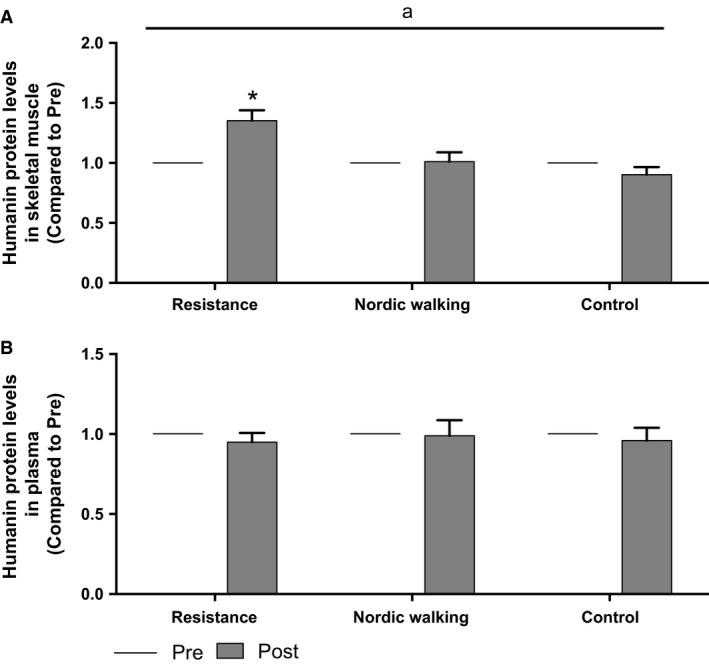
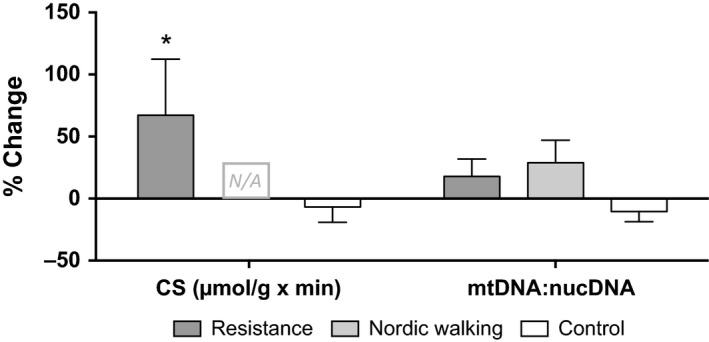
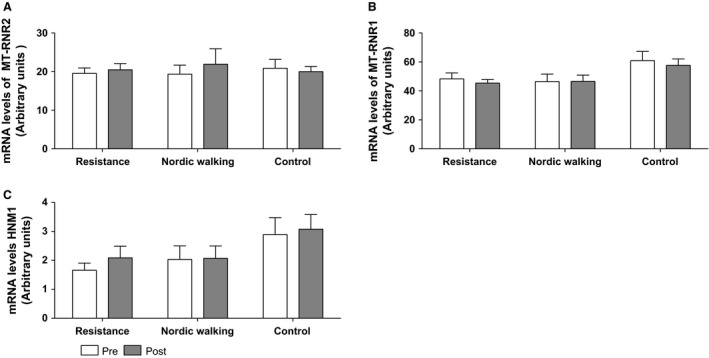
Humanin (HN) is a mitochondrially encoded and secreted peptide linked to glucose metabolism and tissue protecting mechanisms. Whether skeletal muscle HN gene or protein expression is influenced by exercise remains unknown. In this intervention study we show, for the first time, that HN protein levels increase in human skeletal muscle following 12 weeks of resistance training in persons with prediabetes. Male subjects (n = 55) with impaired glucose regulation (IGR) were recruited and randomly assigned to resistance training, Nordic walking or a control group. The exercise interventions were performed three times per week for 12 weeks with progressively increased intensity during the intervention period. Biopsies from the vastus lateralis muscle and venous blood samples were taken before and after the intervention. Skeletal muscle and serum protein levels of HN were analyzed as well as skeletal muscle gene expression of the mitochondrially encoded gene MT-RNR2, containing the open reading frame for HN To elucidate mitochondrial training adaptation, mtDNA, and nuclear DNA as well as Citrate synthase were measured. Skeletal muscle HN protein levels increased by 35% after 12 weeks of resistance training. No change in humanin protein levels was seen in serum in any of the intervention groups. There was a significant correlation between humanin levels in serum and the improvements in the 2 h glucose loading test in the resistance training group. The increase in HN protein levels in skeletal muscle after regular resistance training in prediabetic males may suggest a role for HN in the regulation of glucose metabolism. Given the preventative effect of exercise on diabetes type 2, the role of HN as a mitochondrially derived peptide and an exercise-responsive mitokine warrants further investigation.
人胰岛素(HN)是一种由线粒体编码并分泌的肽,与葡萄糖代谢和组织保护机制相关。骨骼肌中HN基因或蛋白质表达是否受运动影响尚不清楚。在这项干预研究中,我们首次表明,糖尿病前期患者进行12周抗阻训练后,人体骨骼肌中HN蛋白水平会升高。招募了55名葡萄糖调节受损(IGR)的男性受试者,并将他们随机分为抗阻训练组、越野行走组或对照组。干预期间,运动干预每周进行3次,共12周,强度逐渐增加。在干预前后采集股外侧肌活检组织和静脉血样本。分析了骨骼肌和血清中HN的蛋白水平,以及含有HN开放阅读框的线粒体编码基因MT-RNR2的骨骼肌基因表达。为了阐明线粒体训练适应性,还测量了线粒体DNA、核DNA以及柠檬酸合酶。抗阻训练12周后,骨骼肌中HN蛋白水平提高了35%。在任何干预组的血清中,人胰岛素蛋白水平均未发生变化。抗阻训练组血清中人胰岛素水平与2小时葡萄糖负荷试验的改善情况之间存在显著相关性。糖尿病前期男性定期进行抗阻训练后,骨骼肌中HN蛋白水平的升高可能表明HN在葡萄糖代谢调节中发挥作用。鉴于运动对2型糖尿病的预防作用,HN作为一种线粒体衍生肽和运动反应性线粒体因子的作用值得进一步研究。