Key Laboratory of Evidence Science of Gansu Province, Gansu Institute of Political Science and Law, Lanzhou, 730070, China.
State Key Laboratory of Genetic Engineering and Ministry of Education Key Laboratory of Contemporary Anthropology, Collaborative Innovation Center for Genetics and Development, School of Life Sciences, Fudan University, Shanghai, 200433, China.
Sci Rep. 2016 Dec 7;6:38656. doi: 10.1038/srep38656.
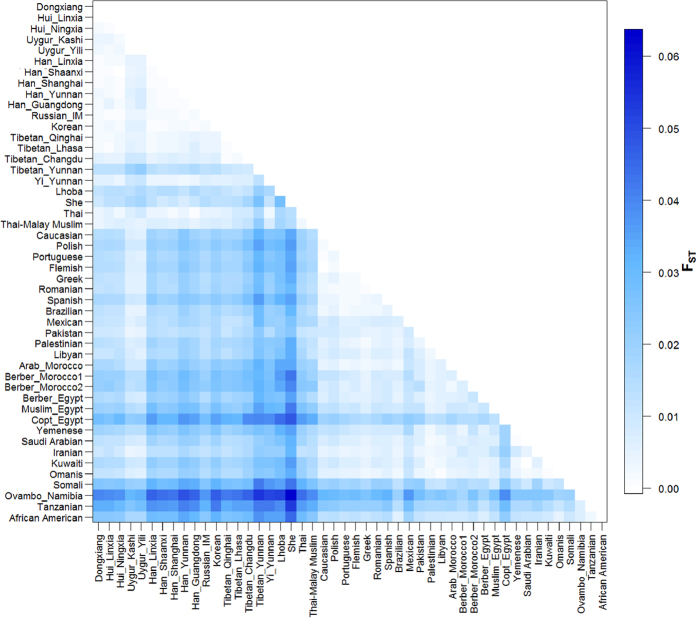
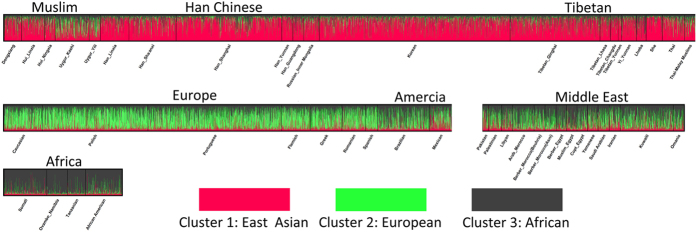
There is a long-going debate on the genetic origin of Chinese Muslim populations, such as Uygur, Dongxiang, and Hui. However, genetic information for those Muslim populations except Uygur is extremely limited. In this study, we investigated the genetic structure and ancestry of Chinese Muslims by analyzing 15 autosomal short tandem repeats in 652 individuals from Dongxiang, Hui, and Han Chinese populations in Gansu province. Both genetic distance and Bayesian-clustering methods showed significant genetic homogeneity between the two Muslim populations and East Asian populations, suggesting a common genetic ancestry. Our analysis found no evidence of substantial gene flow from Middle East or Europe into Dongxiang and Hui people during their Islamization. The dataset generated in present study are also valuable for forensic identification and paternity tests in China.
长期以来,人们一直在争论中国穆斯林群体(如维吾尔族、东乡族和回族)的遗传起源。然而,除维吾尔族外,其他穆斯林群体的遗传信息极其有限。在这项研究中,我们通过分析来自甘肃省的 652 名东乡族、回族和汉族个体的 15 个常染色体短串联重复序列,研究了中国穆斯林的遗传结构和祖先。遗传距离和贝叶斯聚类方法都表明,这两个穆斯林群体与东亚群体之间存在显著的遗传同质性,表明存在共同的遗传祖先。我们的分析没有发现证据表明在伊斯兰教化过程中,中东或欧洲有大量的基因流入东乡族和回族。本研究产生的数据集也可用于中国的法医鉴定和亲子鉴定。