Yoo Jeong Rae, Heo Sang Taek, Park Dahee, Kim Hyemin, Fukuma Aiko, Fukushi Shuetsu, Shimojima Masayuki, Lee Keun Hwa
Division of Infectious Diseases, Jeju National University School of Medicine, Jeju, South Korea.
Department of Microbiology and Immunology, Jeju National University School of Medicine, Jeju, South Korea.
Am J Trop Med Hyg. 2016 Dec 7;95(6):1351-1357. doi: 10.4269/ajtmh.16-0527. Epub 2016 Oct 17.
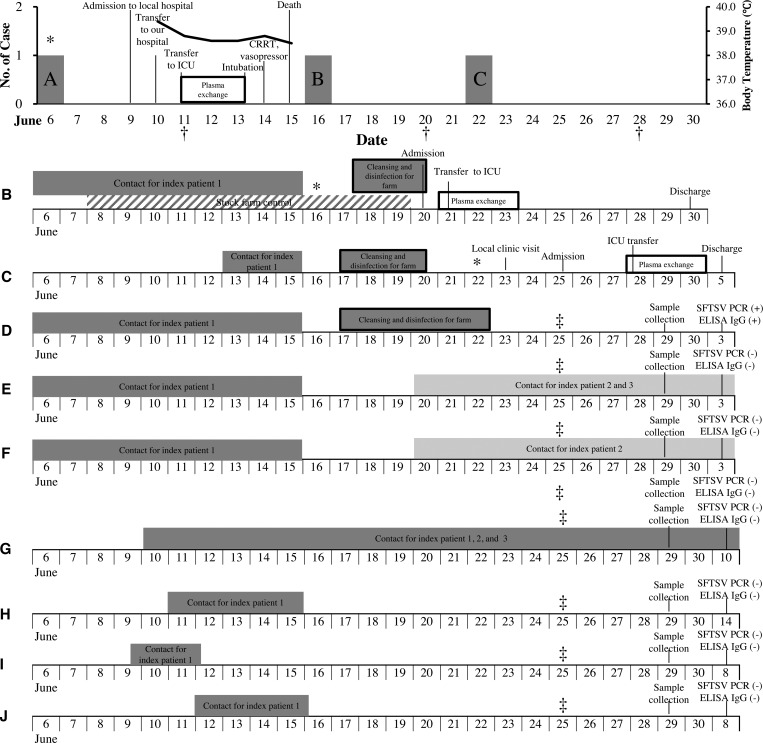
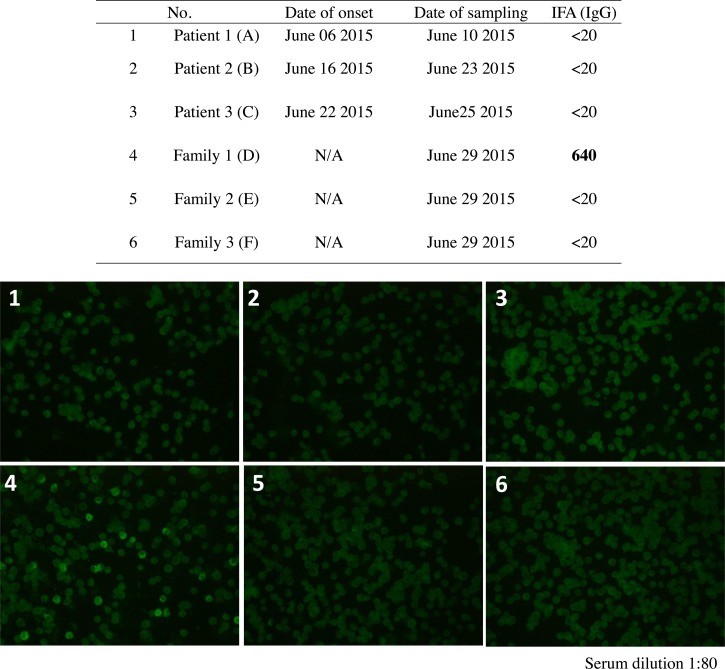
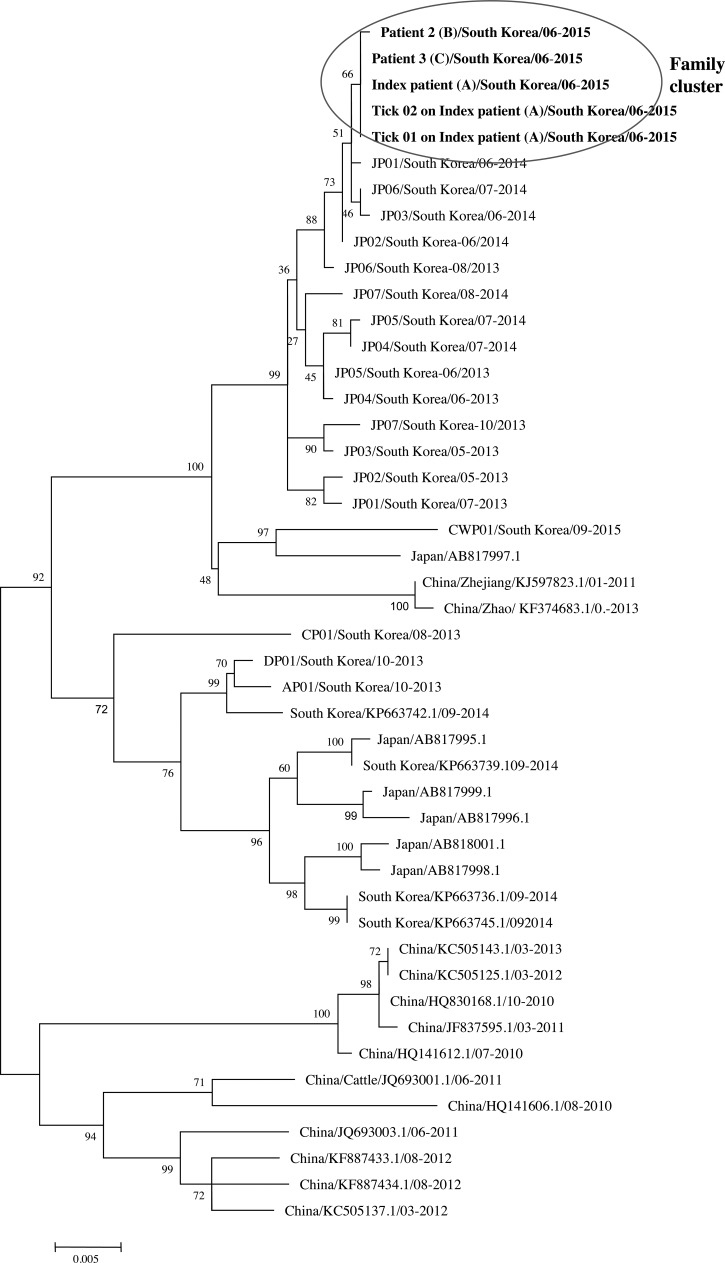
Severe fever with thrombocytopenia syndrome (SFTS) is tick-borne viral disease that was first suspected in China in 2009. The causative virus (SFTSV) was isolated in 2009 and reported in 2011, and SFTSV expanded its geographic distribution in 2012-2013, from China to South Korea and Japan. Most SFTSV infections occur through Haemaphysalis longicornis However, SFTSV infection can also occur between family members, and nosocomial transmission of SFTSV is also possible through close contact with a patient. In this study, we first analyzed clinical, epidemiological, and laboratory data for SFTS patients and family members of an index patient in Korea. The S segment of SFTSV was amplified from the sera of three patients, and the S segment of SFTSV and IgG specific to SFTSV were detected in the serum from one family member; although this individual had no history of exposure to H. longicornis, she frequently had close contact with the index patient. In Korea, SFTSV infection among family members does not have to be reported, and we suggest that person-to-person transmission of SFTSV among family members is possible in Korea.
发热伴血小板减少综合征(SFTS)是一种通过蜱虫传播的病毒性疾病,2009年在中国首次被怀疑存在。致病病毒(SFTS病毒)于2009年分离出来,并于2011年被报道,2012 - 2013年期间,SFTS病毒的地理分布范围从中国扩展到了韩国和日本。大多数SFTS病毒感染是通过长角血蜱发生的。然而,SFTS病毒感染也可能在家庭成员之间发生,并且通过与患者密切接触,SFTS病毒的医院内传播也是有可能的。在本研究中,我们首先分析了韩国一名首例患者及其家庭成员的SFTS患者的临床、流行病学和实验室数据。从三名患者的血清中扩增出了SFTS病毒的S片段,并且在一名家庭成员的血清中检测到了SFTS病毒的S片段以及针对SFTS病毒的IgG;尽管该个体没有接触过长角血蜱的病史,但她经常与首例患者密切接触。在韩国,家庭成员之间的SFTS病毒感染无需上报,我们认为在韩国家庭成员之间SFTS病毒的人际传播是可能的。