Kubrak Olga I, Kučerová Lucie, Theopold Ulrich, Nylin Sören, Nässel Dick R
Department of Zoology, Stockholm University Stockholm, Sweden.
Department of Molecular Biosciences, Wenner-Gren Institute, Stockholm University Stockholm, Sweden.
Front Physiol. 2016 Nov 24;7:572. doi: 10.3389/fphys.2016.00572. eCollection 2016.
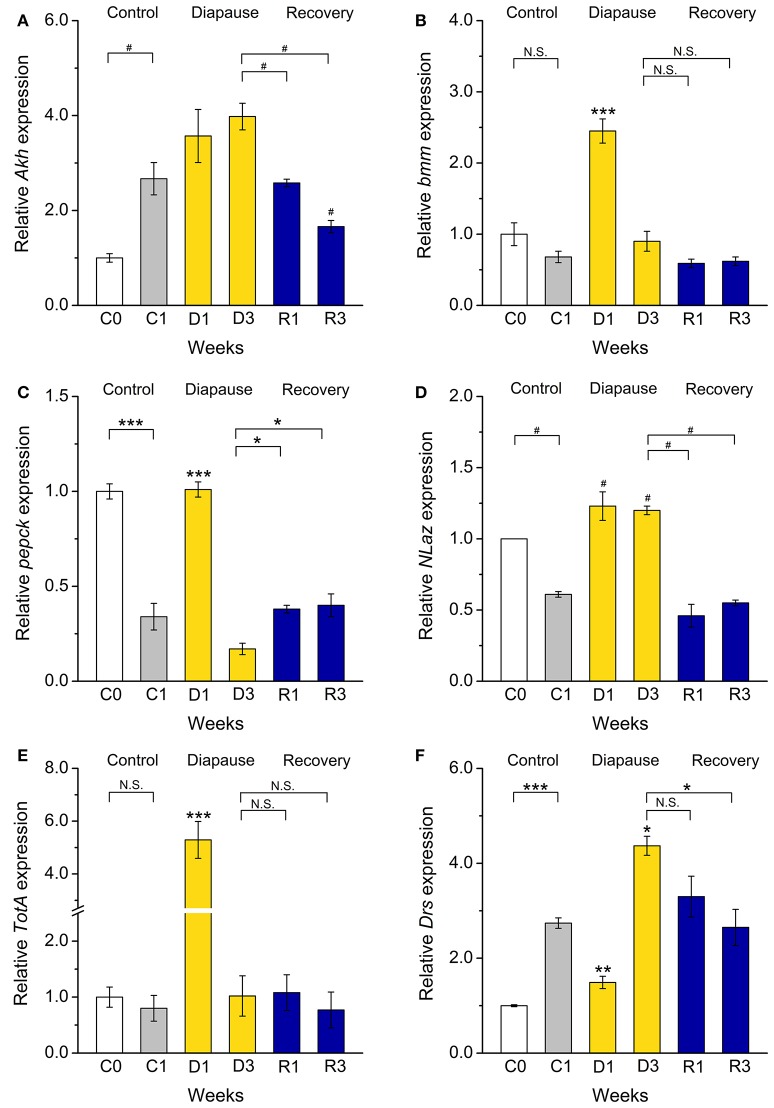
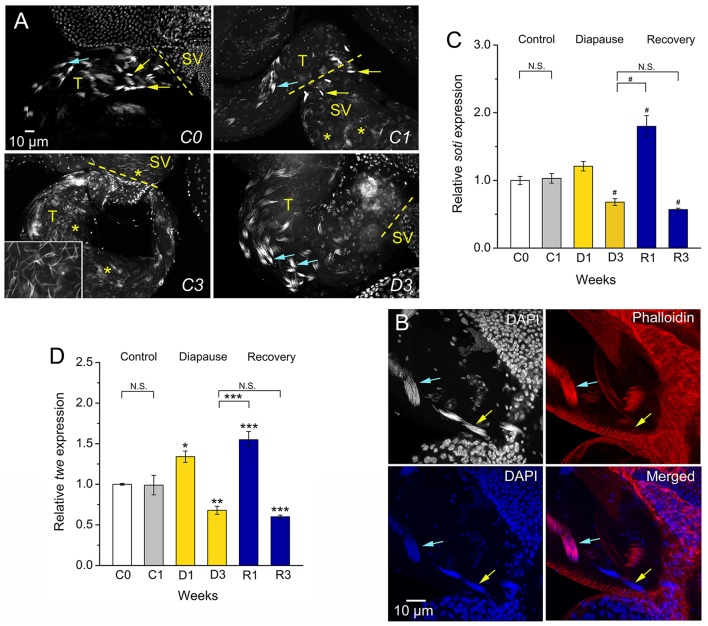
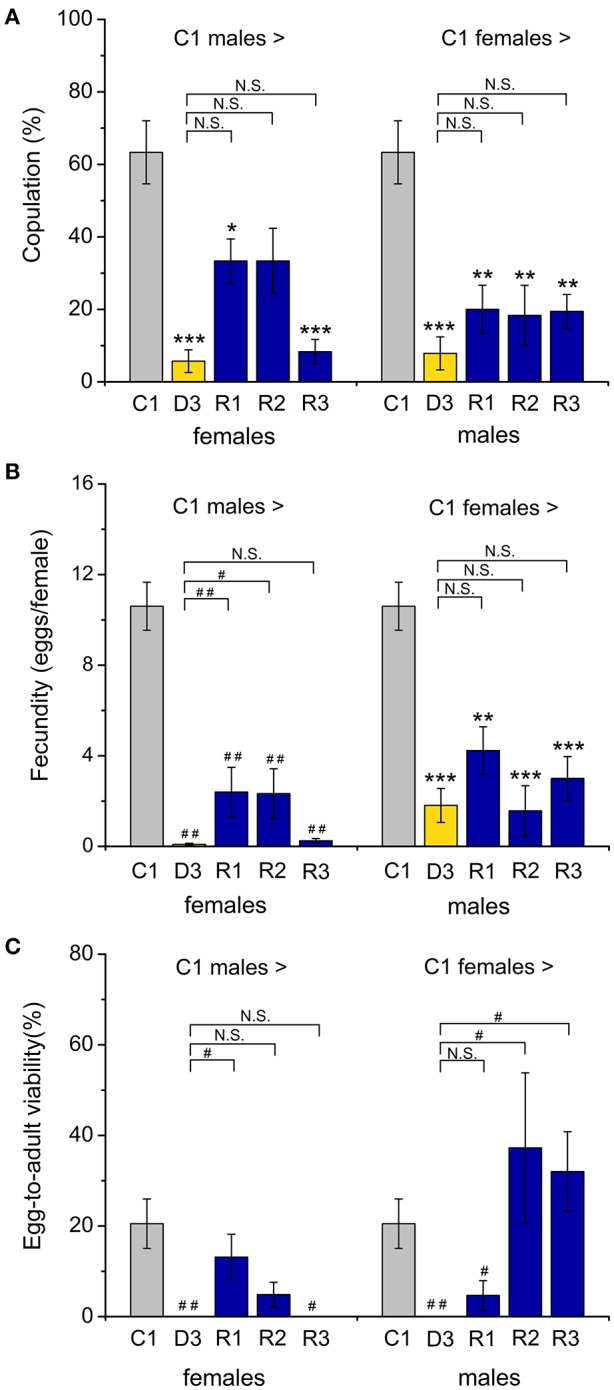
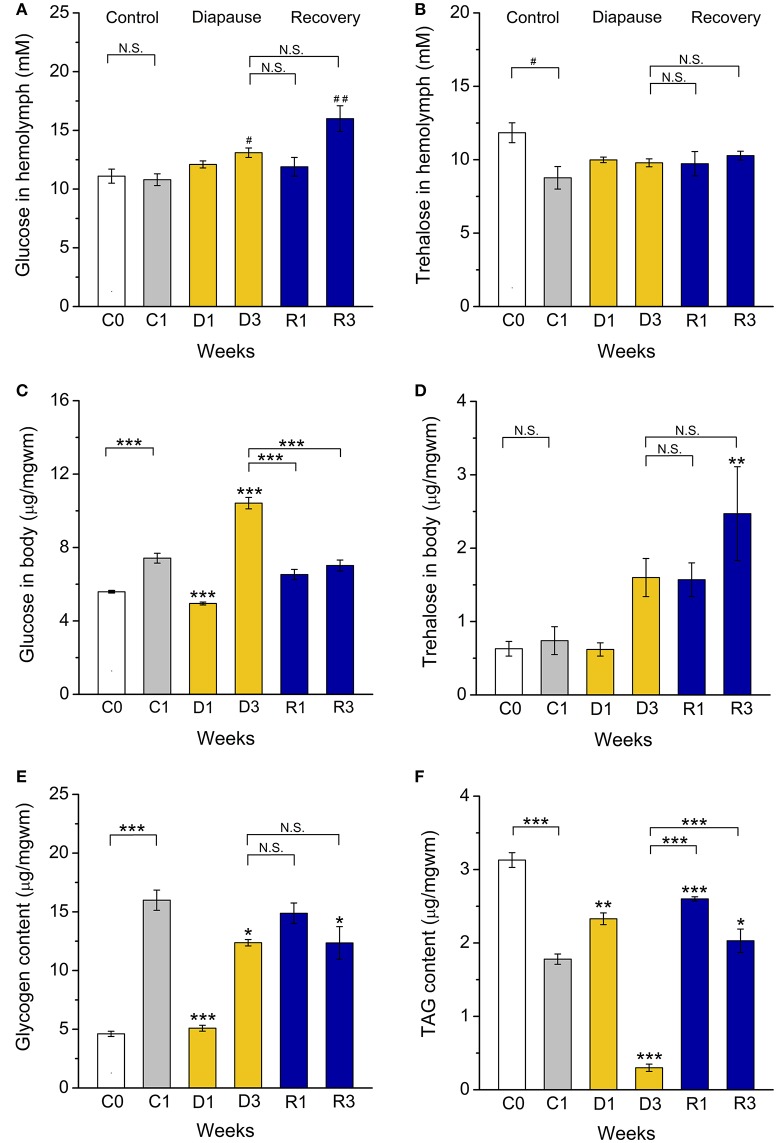
Insects are known to respond to seasonal and adverse environmental changes by entering dormancy, also known as diapause. In some insect species, including , dormancy occurs in the adult organism and postpones reproduction. This adult dormancy has been studied in female flies where it is characterized by arrested development of ovaries, altered nutrient stores, lowered metabolism, increased stress and immune resistance and drastically extended lifespan. Male dormancy, however, has not been investigated in , and its physiology is poorly known in most insects. Here we show that unmated 3-6 h old male flies placed at low temperature (11°C) and short photoperiod (10 Light:14 Dark) enter a state of dormancy with arrested spermatogenesis and development of testes and male accessory glands. Over 3 weeks of diapause we see a dynamic increase in stored carbohydrates and an initial increase and then a decrease in lipids. We also note an up-regulated expression of genes involved in metabolism, stress responses and innate immunity. Interestingly, we found that male flies that entered reproductive dormancy do not attempt to mate females kept under non-diapause conditions (25°C, 12L:12D), and conversely non-diapausing males do not mate females in dormancy. In summary, our study shows that male can enter reproductive dormancy. However, our data suggest that dormant male flies deplete stored nutrients faster than females, studied earlier, and that males take longer to recover reproductive capacity after reintroduction to non-diapause conditions.
众所周知,昆虫会通过进入休眠状态(也称为滞育)来应对季节性和不利的环境变化。在包括 在内的一些昆虫物种中,休眠发生在成年生物体中,并会推迟繁殖。这种成年休眠现象已在雌性果蝇中得到研究,其特征是卵巢发育停滞、营养储备改变、新陈代谢降低、应激和免疫抵抗力增强以及寿命大幅延长。然而, 在 中尚未对雄性休眠进行研究,而且在大多数昆虫中其生理机制也鲜为人知。在此我们表明,将未交配的3至6小时龄雄性果蝇置于低温(11°C)和短光照周期(10小时光照:14小时黑暗)条件下,它们会进入休眠状态,精子发生以及睾丸和雄性附腺的发育都会停滞。在超过3周的滞育期内,我们观察到储存的碳水化合物动态增加,脂质先增加后减少。我们还注意到参与新陈代谢、应激反应和先天免疫的基因表达上调。有趣的是,我们发现进入生殖休眠的雄性果蝇不会试图与处于非滞育条件(25°C,12小时光照:12小时黑暗)下的雌性果蝇交配,反之,非滞育的雄性果蝇也不会与处于休眠状态的雌性果蝇交配。总之,我们的研究表明 雄性果蝇可以进入生殖休眠。然而,我们的数据表明,与之前研究的雌性果蝇相比,休眠的雄性果蝇消耗储存营养的速度更快,而且在重新引入非滞育条件后,雄性果蝇恢复生殖能力所需的时间更长。