Nagasaka Arata, Shinoda Tomoyasu, Kawaue Takumi, Suzuki Makoto, Nagayama Kazuaki, Matsumoto Takeo, Ueno Naoto, Kawaguchi Ayano, Miyata Takaki
Department of Anatomy and Cell Biology, Graduate School of Medicine, Nagoya University Nagoya, Japan.
Division for Morphogenesis, Department of Developmental Biology, National Institute for Basic Biology Okazaki, Japan.
Front Cell Dev Biol. 2016 Nov 25;4:139. doi: 10.3389/fcell.2016.00139. eCollection 2016.
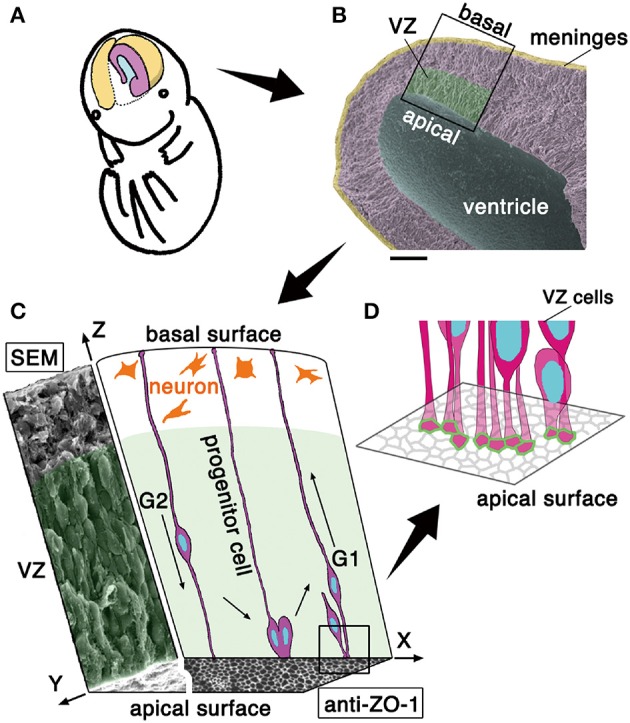
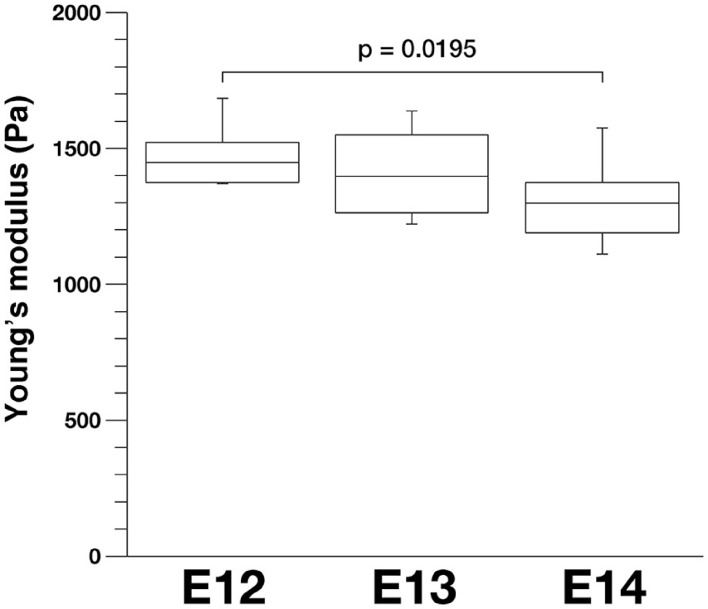
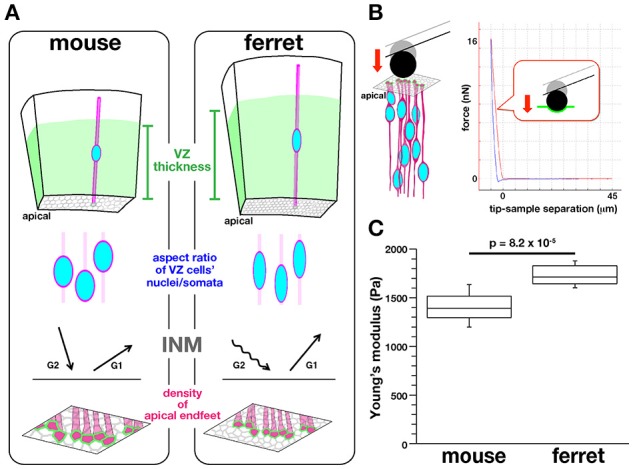
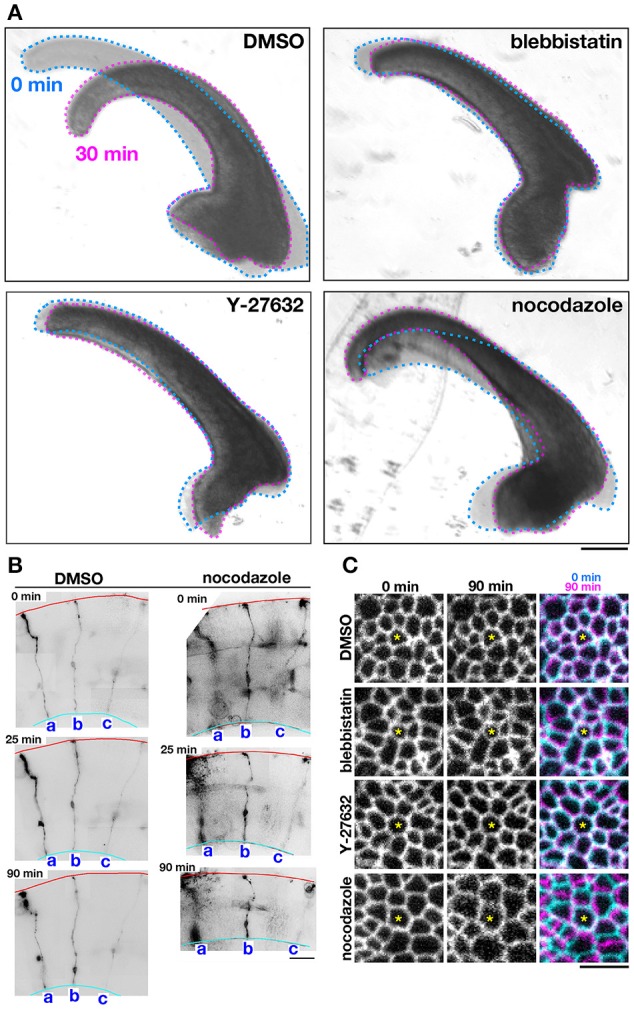
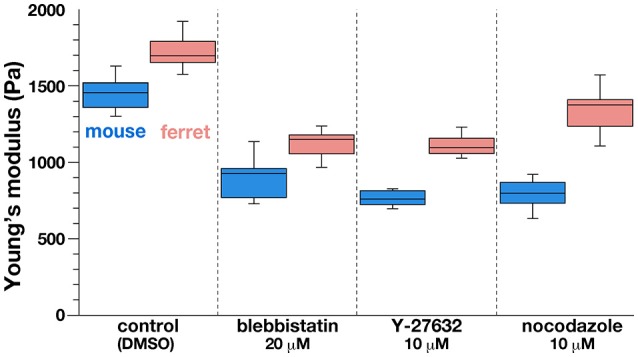
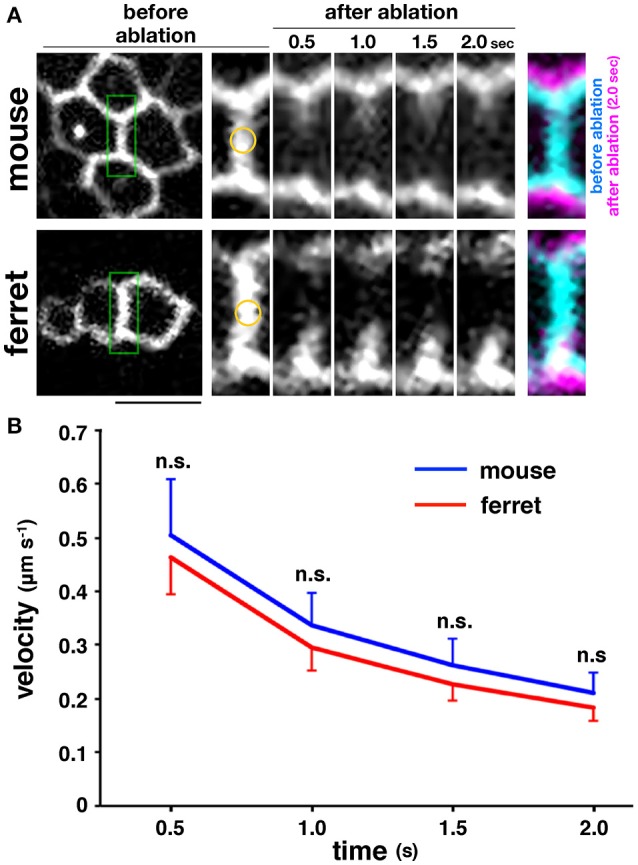
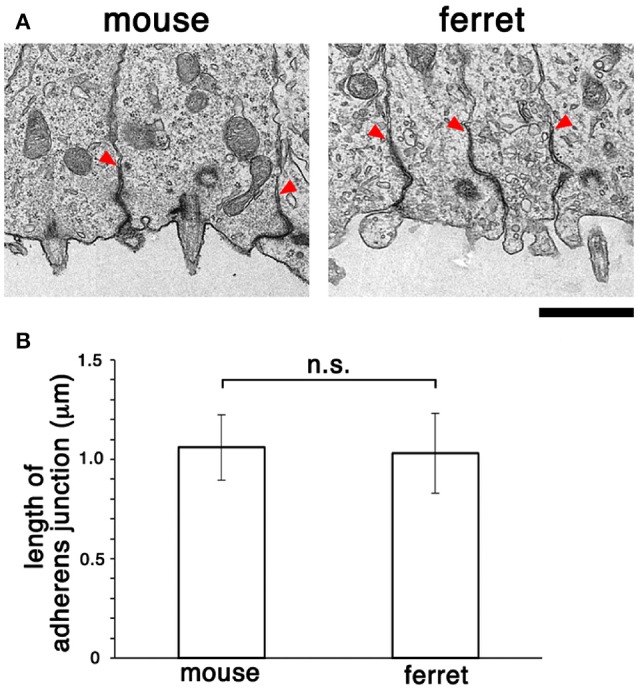
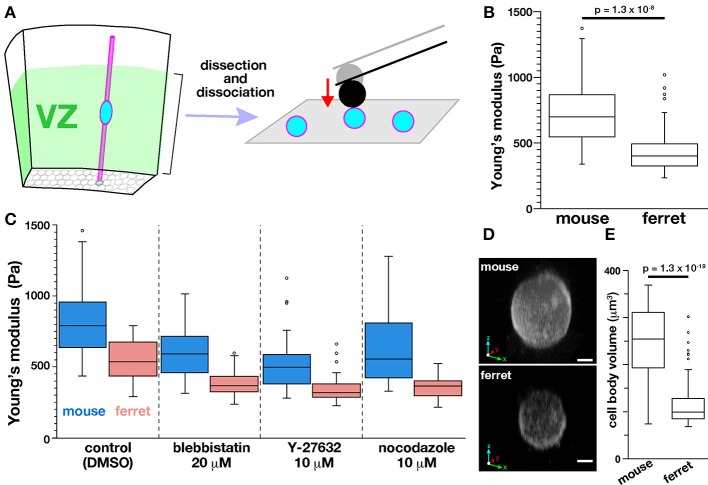
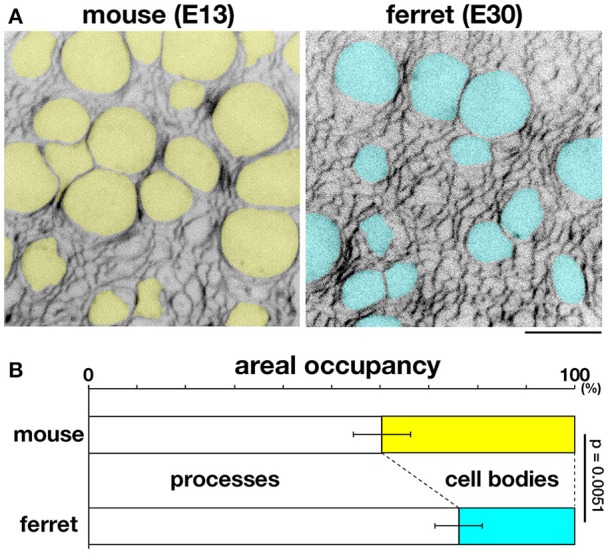
Cell-producing events in developing tissues are mechanically dynamic throughout the cell cycle. In many epithelial systems, cells are apicobasally tall, with nuclei and somata that adopt different apicobasal positions because nuclei and somata move in a cell cycle-dependent manner. This movement is apical during G2 phase and basal during G1 phase, whereas mitosis occurs at the apical surface. These movements are collectively referred to as interkinetic nuclear migration, and such epithelia are called "pseudostratified." The embryonic mammalian cerebral cortical neuroepithelium is a good model for highly pseudostratified epithelia, and we previously found differences between mice and ferrets in both horizontal cellular density (greater in ferrets) and nuclear/somal movements (slower during G2 and faster during G1 in ferrets). These differences suggest that neuroepithelial cells alter their nucleokinetic behavior in response to physical factors that they encounter, which may form the basis for evolutionary transitions toward more abundant brain-cell production from mice to ferrets and primates. To address how mouse and ferret neuroepithelia may differ physically in a quantitative manner, we used atomic force microscopy to determine that the vertical stiffness of their apical surface is greater in ferrets (Young's modulus = 1700 Pa) than in mice (1400 Pa). We systematically analyzed factors underlying the apical-surface stiffness through experiments to pharmacologically inhibit actomyosin or microtubules and to examine recoiling behaviors of the apical surface upon laser ablation and also through electron microscopy to observe adherens junction. We found that although both actomyosin and microtubules are partly responsible for the apical-surface stiffness, the mouse<ferret relationship in the apical-surface stiffness was maintained even in the presence of inhibitors. We also found that the stiffness of single, dissociated neuroepithelial cells is actually greater in mice (720 Pa) than in ferrets (450 Pa). Adherens junction was ultrastructurally comparable between mice and ferrets. These results show that the horizontally denser packing of neuroepithelial cell processes is a major contributor to the increased tissue-level apical stiffness in ferrets, and suggest that tissue-level mechanical properties may be achieved by balancing cellular densification and the physical properties of single cells.
在发育中的组织中,细胞生成事件在整个细胞周期中都是机械动态的。在许多上皮系统中,细胞呈顶-基向高柱状,细胞核和细胞体处于不同的顶-基位置,因为细胞核和细胞体以细胞周期依赖性方式移动。这种移动在G2期朝向顶端,在G1期朝向基部,而有丝分裂发生在顶端表面。这些移动统称为动核迁移,这样的上皮组织被称为“假复层”。胚胎哺乳动物大脑皮质神经上皮是高度假复层上皮的良好模型,我们之前发现小鼠和雪貂在水平细胞密度(雪貂中更高)和核/体细胞移动(雪貂在G2期较慢,在G1期较快)方面存在差异。这些差异表明神经上皮细胞会根据它们遇到的物理因素改变其核运动行为,这可能是从小鼠到雪貂和灵长类动物向更多脑细胞生成进化转变的基础。为了定量研究小鼠和雪貂神经上皮在物理性质上可能存在的差异,我们使用原子力显微镜确定,雪貂(杨氏模量 = 1700帕斯卡)顶端表面的垂直刚度大于小鼠(1400帕斯卡)。我们通过药理学抑制肌动球蛋白或微管的实验,以及观察激光消融后顶端表面的回缩行为,并通过电子显微镜观察黏着连接,系统地分析了顶端表面刚度的潜在因素。我们发现,虽然肌动球蛋白和微管都对顶端表面刚度有一定作用,但即使存在抑制剂,小鼠和雪貂在顶端表面刚度上的关系仍然保持。我们还发现,单个解离的神经上皮细胞的刚度实际上小鼠(720帕斯卡)大于雪貂(450帕斯卡)。小鼠和雪貂的黏着连接在超微结构上具有可比性。这些结果表明,神经上皮细胞突起在水平方向上更紧密的堆积是雪貂组织水平顶端刚度增加的主要原因,并表明组织水平的机械性能可能是通过平衡细胞致密化和单个细胞的物理性质来实现的。