Danhof Heather A, Vylkova Slavena, Vesely Elisa M, Ford Amy E, Gonzalez-Garay Manuel, Lorenz Michael C
Department of Microbiology and Molecular Genetics, McGovern Medical School, University of Texas Health Science Center at Houston, Houston, Texas, USA.
The Graduate School of Biomedical Sciences, University of Texas Health Science Center at Houston, Houston, Texas, USA.
mBio. 2016 Nov 15;7(6):e01646-16. doi: 10.1128/mBio.01646-16.
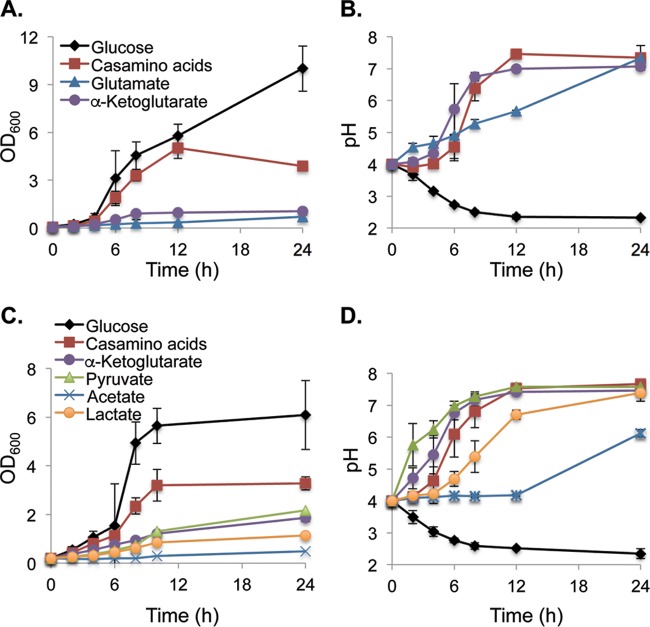
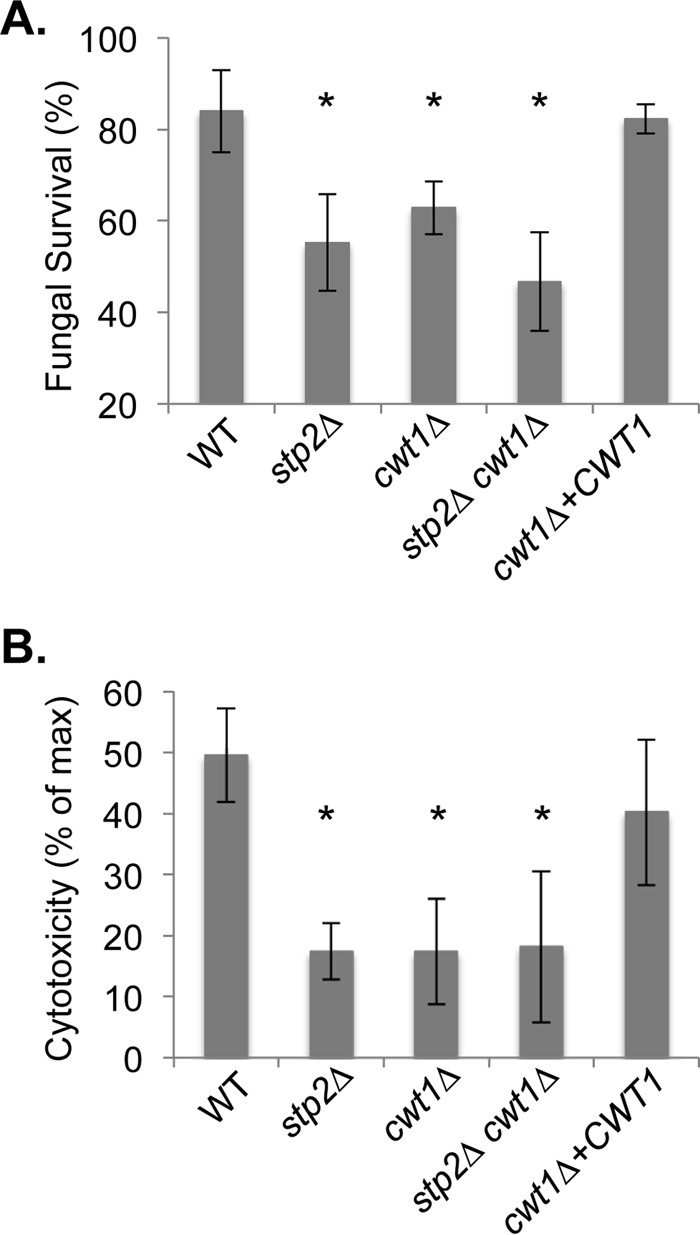
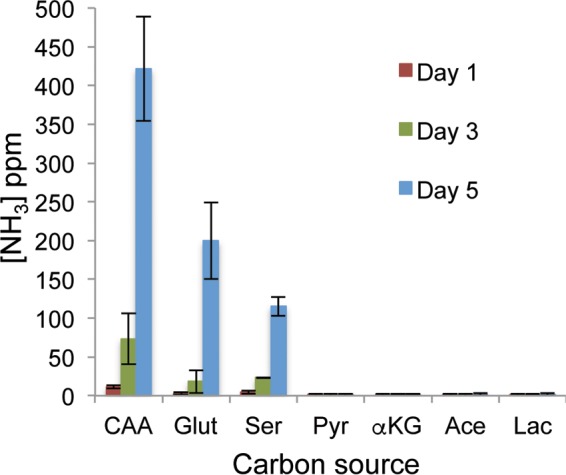
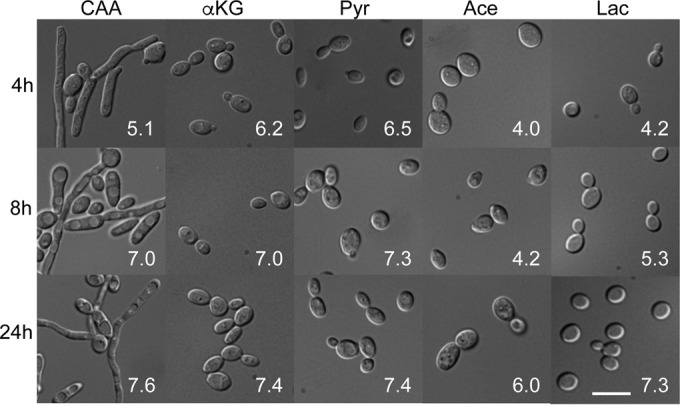
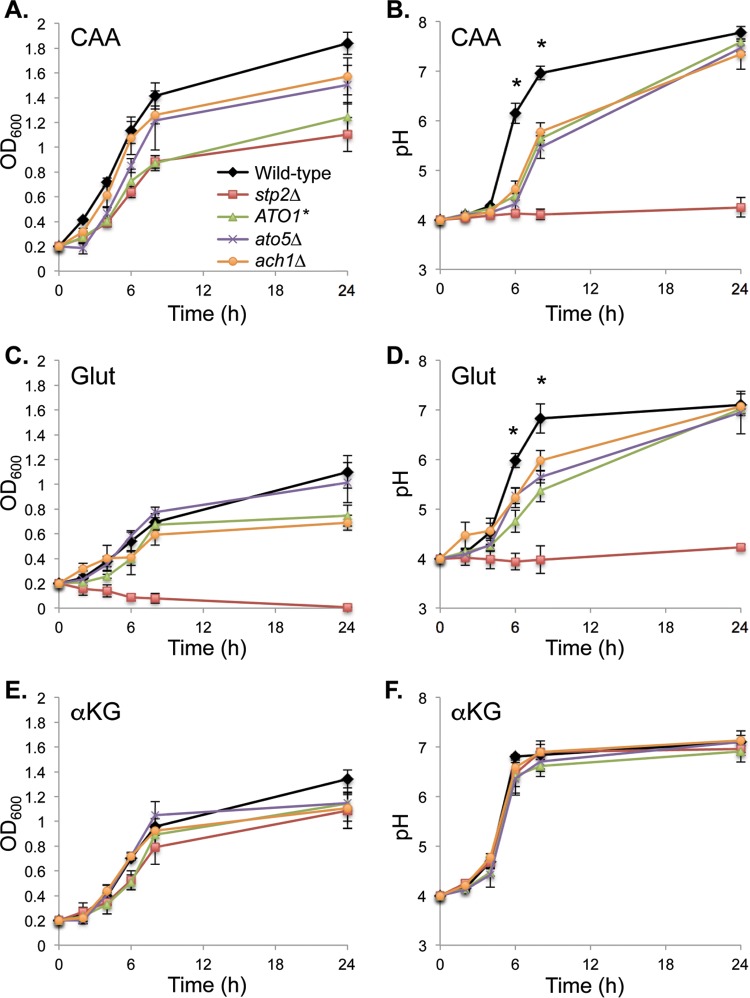
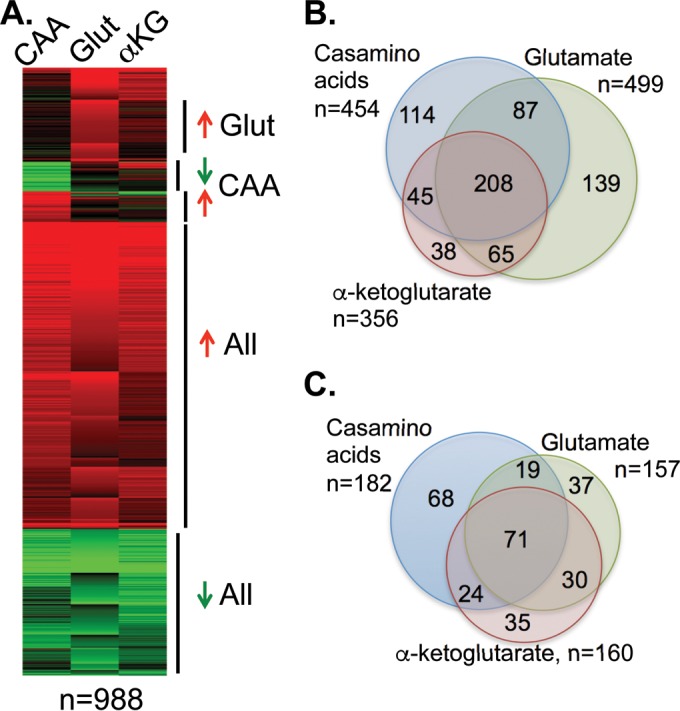
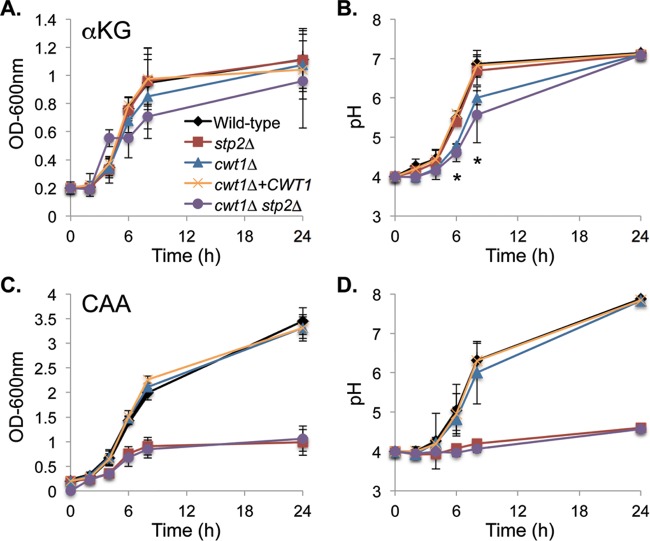
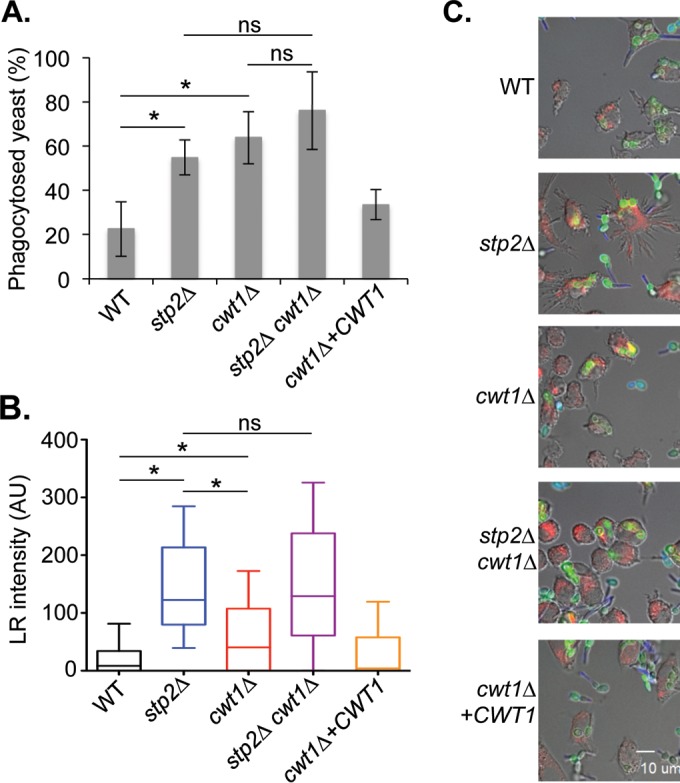
The opportunistic fungal pathogen Candida albicans thrives within diverse niches in the mammalian host. Among the adaptations that underlie this fitness is an ability to utilize a wide array of nutrients, especially sources of carbon that are disfavored by many other fungi; this contributes to its ability to survive interactions with the phagocytes that serve as key barriers against disseminated infections. We have reported that C. albicans generates ammonia as a byproduct of amino acid catabolism to neutralize the acidic phagolysosome and promote hyphal morphogenesis in a manner dependent on the Stp2 transcription factor. Here, we report that this species rapidly neutralizes acidic environments when utilizing carboxylic acids like pyruvate, α-ketoglutarate (αKG), or lactate as the primary carbon source. Unlike in cells growing in amino acid-rich medium, this does not result in ammonia release, does not induce hyphal differentiation, and is genetically distinct. While transcript profiling revealed significant similarities in gene expression in cells grown on either carboxylic or amino acids, genetic screens for mutants that fail to neutralize αKG medium identified a nonoverlapping set of genes, including CWT1, encoding a transcription factor responsive to cell wall and nitrosative stresses. Strains lacking CWT1 exhibit retarded αKG-mediated neutralization in vitro, exist in a more acidic phagolysosome, and are more susceptible to macrophage killing, while double cwt1Δ stp2Δ mutants are more impaired than either single mutant. Together, our observations indicate that C. albicans has evolved multiple ways to modulate the pH of host-relevant environments to promote its fitness as a pathogen.
The fungal pathogen Candida albicans is a ubiquitous and usually benign constituent of the human microbial ecosystem. In individuals with weakened immune systems, this organism can cause potentially life-threatening infections and is one of the most common causes of hospital-acquired infections. Understanding the interactions between C. albicans and immune phagocytic cells, such as macrophages and neutrophils, will define the mechanisms of pathogenesis in this species. One such adaptation is an ability to make use of nonstandard nutrients that we predict are plentiful in certain niches within the host, including within these phagocytic cells. We show here that the metabolism of certain organic acids enables C. albicans to neutralize acidic environments, such as those within macrophages. This phenomenon is distinct in several significant ways from previous reports of similar processes, indicating that C. albicans has evolved multiple mechanisms to combat the harmful acidity of phagocytic cells.
机会性真菌病原体白色念珠菌在哺乳动物宿主的多种生态位中茁壮成长。其适应性的基础之一是能够利用多种营养物质,尤其是许多其他真菌不喜欢的碳源;这有助于其在与作为抵御播散性感染关键屏障的吞噬细胞相互作用中存活。我们曾报道,白色念珠菌在氨基酸分解代谢过程中产生氨作为副产物,以中和酸性吞噬溶酶体,并以依赖于Stp2转录因子的方式促进菌丝形态发生。在此,我们报道,当以丙酮酸、α-酮戊二酸(αKG)或乳酸等羧酸作为主要碳源时,该菌能迅速中和酸性环境。与在富含氨基酸的培养基中生长的细胞不同,这不会导致氨的释放,不会诱导菌丝分化,且在基因上有差异。虽然转录谱分析显示在以羧酸或氨基酸为碳源生长的细胞中基因表达有显著相似性,但对无法中和αKG培养基的突变体进行的遗传筛选确定了一组不重叠的基因,包括编码对细胞壁和亚硝化应激有反应的转录因子的CWT1。缺乏CWT1的菌株在体外表现出αKG介导的中和作用延迟,存在于酸性更强的吞噬溶酶体中,且更易被巨噬细胞杀伤,而双突变体cwt1Δ stp2Δ比任何一个单突变体受损更严重。总之,我们的观察结果表明,白色念珠菌已进化出多种方式来调节与宿主相关环境的pH值,以促进其作为病原体的适应性。
真菌病原体白色念珠菌是人类微生物生态系统中普遍存在且通常无害的组成部分。在免疫系统较弱的个体中,这种生物体可导致潜在的危及生命的感染,是医院获得性感染最常见的原因之一。了解白色念珠菌与免疫吞噬细胞(如巨噬细胞和中性粒细胞)之间的相互作用,将明确该物种的致病机制。其中一种适应性是能够利用我们预测在宿主某些生态位(包括这些吞噬细胞内)丰富的非标准营养物质。我们在此表明,某些有机酸的代谢使白色念珠菌能够中和酸性环境,如巨噬细胞内的环境。这一现象在几个重要方面与先前关于类似过程的报道不同,表明白色念珠菌已进化出多种机制来对抗吞噬细胞的有害酸性。