Peck David T, Smith Michael L, Seeley Thomas D
Department of Neurobiology and Behavior, Cornell University, Ithaca New York, United States of America.
PLoS One. 2016 Dec 12;11(12):e0167798. doi: 10.1371/journal.pone.0167798. eCollection 2016.
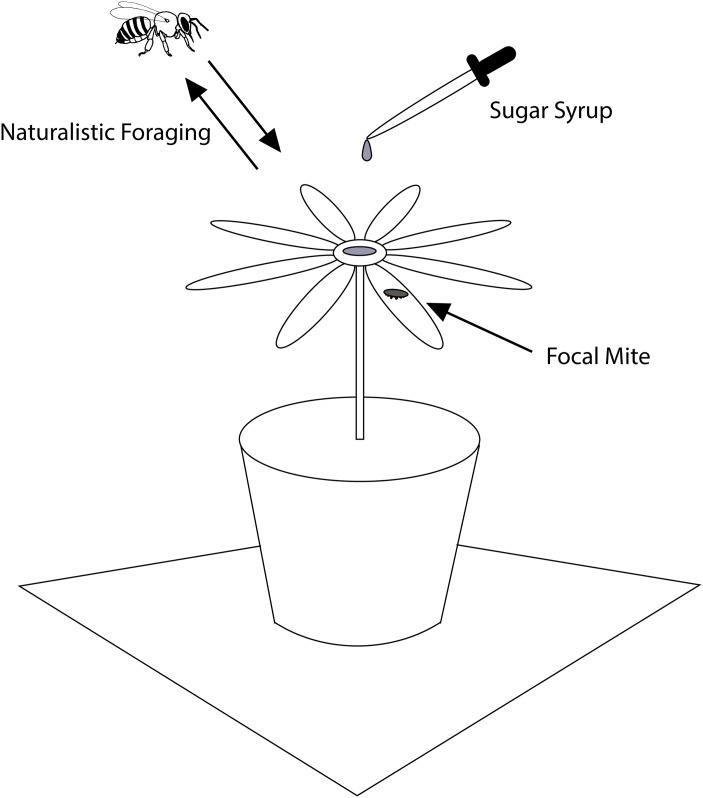
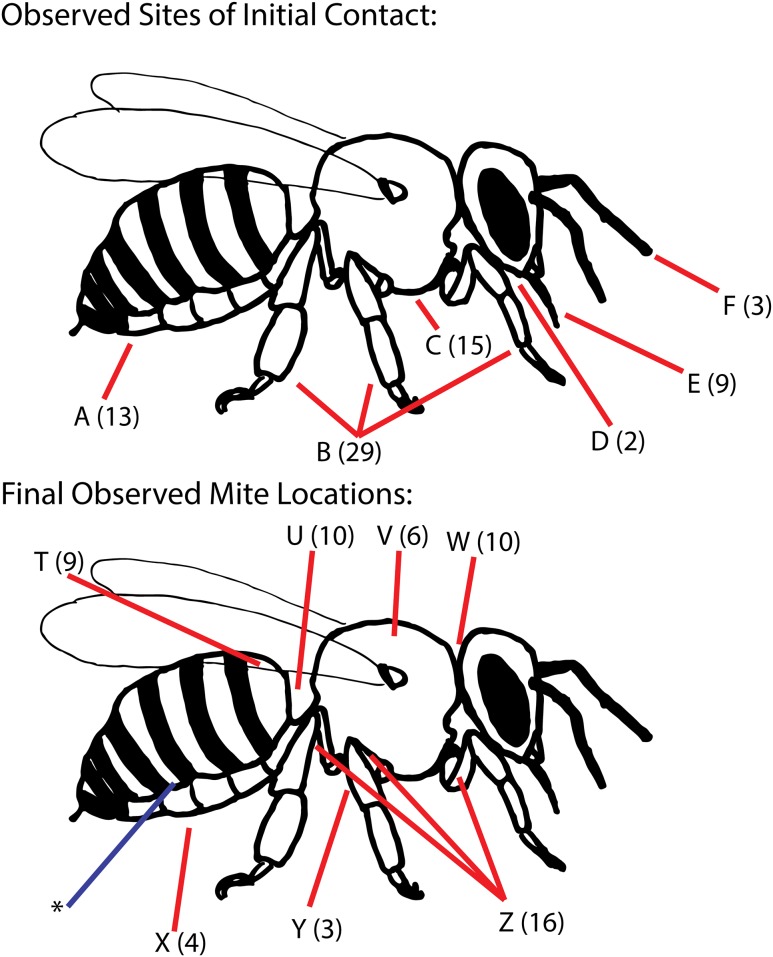
Varroa destructor, the introduced parasite of European honey bees associated with massive colony deaths, spreads readily through populations of honey bee colonies, both managed colonies living crowded together in apiaries and wild colonies living widely dispersed in natural settings. Mites are hypothesized to spread between most managed colonies via phoretically riding forager bees when they engage in robbing colonies or they drift between hives. However, widely spaced wild colonies show Varroa infestation despite limited opportunities for robbing and little or no drifting of bees between colonies. Both wild and managed colonies may also exchange mites via another mechanism that has received remarkably little attention or study: floral transmission. The present study tested the ability of mites to infest foragers at feeders or flowers. We show that Varroa destructor mites are highly capable of phoretically infesting foraging honey bees, detail the mechanisms and maneuvers by which they do so, and describe mite behaviors post-infestation.
狄斯瓦螨(Varroa destructor)是一种传入的欧洲蜜蜂寄生虫,与蜂群大量死亡有关,它能轻易在蜂群中传播,无论是挤在养蜂场的人工饲养蜂群,还是广泛分布在自然环境中的野生蜂群。据推测,螨虫在大多数人工饲养蜂群之间传播,是通过搭乘盗蜜的觅食工蜂,或者在蜂箱间漂移。然而,尽管野生蜂群间隔很远,盗蜜机会有限,且蜂群间蜜蜂很少或几乎没有漂移现象,但野生蜂群仍出现了狄斯瓦螨感染。野生蜂群和人工饲养蜂群也可能通过另一种极少受到关注或研究的机制来交换螨虫:花卉传播。本研究测试了螨虫感染喂食器或花朵上觅食工蜂的能力。我们发现狄斯瓦螨能够高效地搭乘觅食的蜜蜂进行传播,详细说明了它们这样做的机制和动作,并描述了感染后螨虫的行为。