Wong A K
Joint Department of Medical Imaging, Toronto General Research Institute, University Health Network, Toronto, ON, Canada.
J Musculoskelet Neuronal Interact. 2016 Dec 14;16(4):265-282.
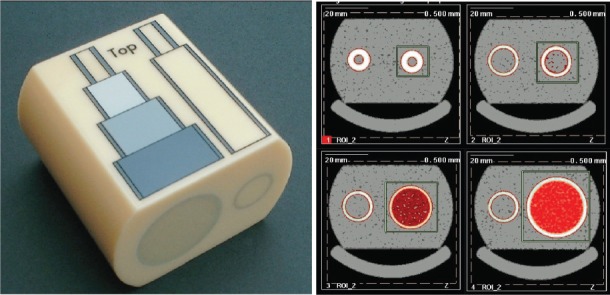
The choice of an appropriate imaging technique to quantify bone, muscle, or muscle adiposity needs to be guided by a thorough understanding of its competitive advantages over other modalities balanced by its limitations. This review details the technical machinery and methods behind peripheral quantitative computed tomography (pQCT), high-resolution (HR)-pQCT, and magnetic resonance imaging (MRI) that drive successful depiction of bone and muscle morphometry, densitometry, and structure. It discusses a number of image acquisition settings, the challenges associated with using one versus another, and compares the risk-benefits across the different modalities. Issues related to all modalities including partial volume artifact, beam hardening, calibration, and motion assessment are also detailed. The review further provides data and images to illustrate differences between methods to better guide the reader in selecting an imaging method strategically. Overall, investigators should be cautious of the impact of imaging parameters on image signal or contrast-to-noise-ratios, and the need to report these settings in future publications. The effect of motion should be assessed on images and a decision made to exclude prior to segmentation. A more standardized approach to imaging bone and muscle on pQCT and MRI could enhance comparability across studies and could improve the quality of meta-analyses.
选择合适的成像技术来量化骨骼、肌肉或肌肉脂肪含量,需要在全面了解其相对于其他模式的竞争优势及其局限性之间取得平衡的基础上进行指导。本综述详细介绍了外周定量计算机断层扫描(pQCT)、高分辨率(HR)-pQCT和磁共振成像(MRI)背后的技术机制和方法,这些技术可成功描绘骨骼和肌肉的形态测量、密度测量和结构。它讨论了一些图像采集设置、使用一种技术与另一种技术相关的挑战,并比较了不同模式的风险效益。还详细介绍了与所有模式相关的问题,包括部分容积伪影、束硬化、校准和运动评估。本综述进一步提供数据和图像,以说明不同方法之间的差异,从而更好地指导读者战略性地选择成像方法。总体而言,研究人员应谨慎对待成像参数对图像信号或对比度噪声比的影响,以及在未来出版物中报告这些设置的必要性。应在图像上评估运动的影响,并在分割前决定是否排除。采用更标准化的方法在pQCT和MRI上对骨骼和肌肉进行成像,可以提高不同研究之间的可比性,并改善荟萃分析的质量。