McGeorge Nicolette, Hegde Sudeep, Berg Rebecca L, Guarrera-Schick Theresa K, LaVergne David T, Casucci Sabrina N, Hettinger A Zachary, Clark Lindsey N, Lin Li, Fairbanks Rollin J, Benda Natalie C, Sun Longsheng, Wears Robert L, Perry Shawna, Bisantz Ann
Department of Industrial and Systems Engineering, University at Buffalo, State University of New York.
National Center for Human Factors in Healthcare, MedStar Institute for Innovation, and Department of Emergency Medicine, Georgetown University.
J Cogn Eng Decis Mak. 2015 Dec;9(4):329-346. doi: 10.1177/1555343415613723.
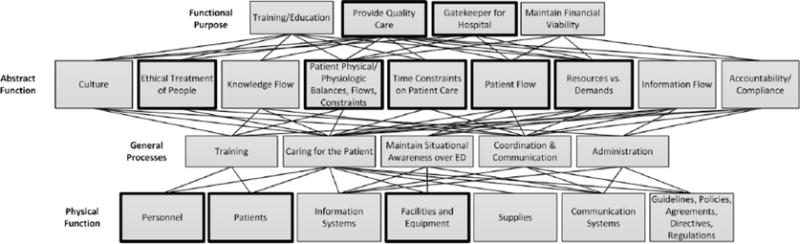
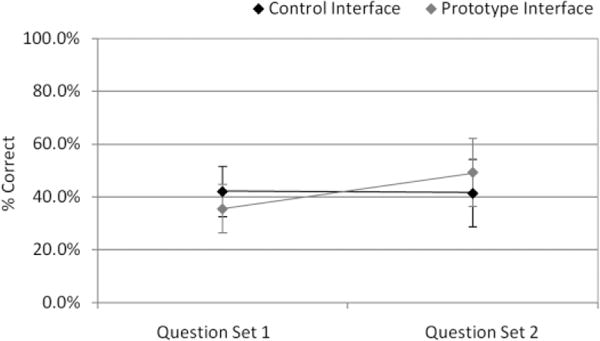
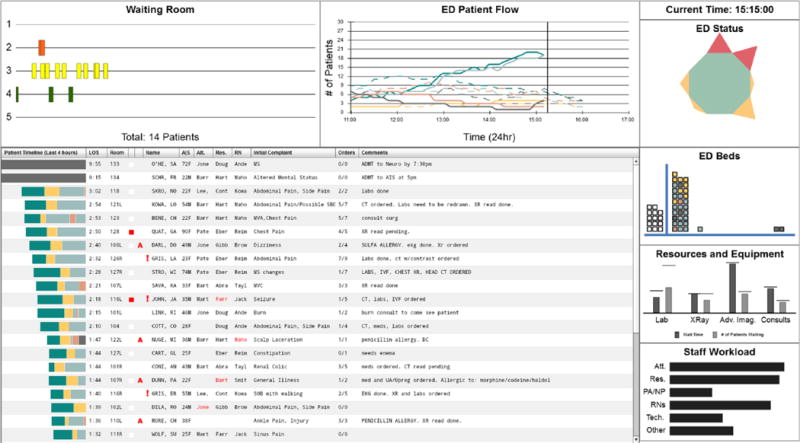
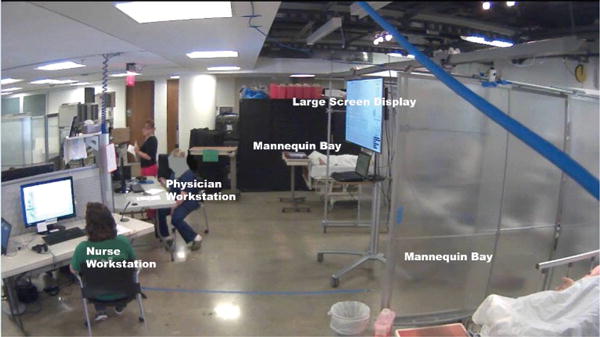
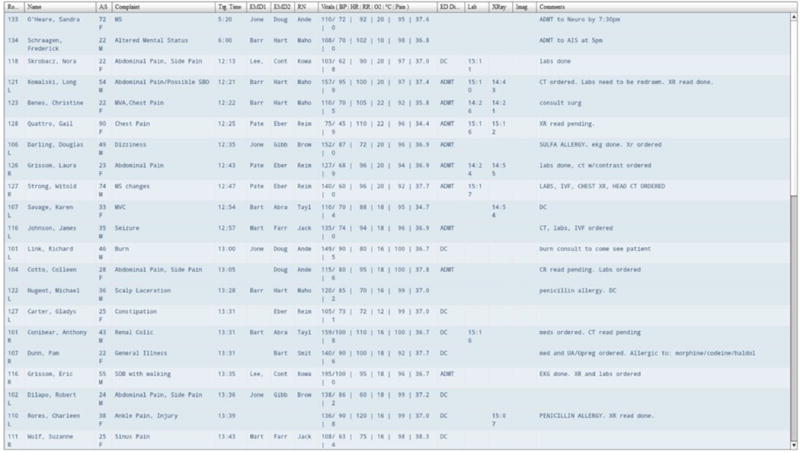
The objective of this work was to assess the functional utility of new display concepts for an emergency department information system created using cognitive systems engineering methods, by comparing them to similar displays currently in use. The display concepts were compared to standard displays in a clinical simulation study during which nurse-physician teams performed simulated emergency department tasks. Questionnaires were used to assess the cognitive support provided by the displays, participants' level of situation awareness, and participants' workload during the simulated tasks. Participants rated the new displays significantly higher than the control displays in terms of cognitive support. There was no significant difference in workload scores between the display conditions. There was no main effect of display type on situation awareness, but there was a significant interaction; participants using the new displays showed improved situation awareness from the middle to the end of the session. This study demonstrates that cognitive systems engineering methods can be used to create innovative displays that better support emergency medicine tasks, without increasing workload, compared to more standard displays. These methods provide a means to develop emergency department information systems-and more broadly, health information technology-that better support the cognitive needs of healthcare providers.
这项工作的目的是,通过将使用认知系统工程方法创建的急诊科信息系统的新显示概念与当前使用的类似显示进行比较,来评估其功能效用。在一项临床模拟研究中,将这些显示概念与标准显示进行了比较,在此期间,护士-医生团队执行了模拟的急诊科任务。使用问卷来评估显示提供的认知支持、参与者的态势感知水平以及模拟任务期间参与者的工作量。在认知支持方面,参与者对新显示的评分明显高于对照显示。不同显示条件下的工作量得分没有显著差异。显示类型对态势感知没有主效应,但存在显著的交互作用;使用新显示的参与者在会话过程中从中段到结束时态势感知有所改善。这项研究表明,与更标准的显示相比,认知系统工程方法可用于创建能更好地支持急诊医学任务且不增加工作量的创新显示。这些方法为开发急诊科信息系统以及更广泛地说,为开发能更好地支持医疗保健提供者认知需求的健康信息技术提供了一种手段。