Sakelliou Alexandra, Fatouros Ioannis G, Athanailidis Ioannis, Tsoukas Dimitrios, Chatzinikolaou Athanasios, Draganidis Dimitris, Jamurtas Athanasios Z, Liacos Christina, Papassotiriou Ioannis, Mandalidis Dimitrios, Stamatelopoulos Kimon, Dimopoulos Meletios A, Mitrakou Asimina
Department of Clinical Therapeutics, Medical School, University of Athens, 11527 Athens, Greece.
School of Physical Education and Sport Sciences, University of Thessaly, Karies, 42100 Trikala, Greece.
Oxid Med Cell Longev. 2016;2016:2840643. doi: 10.1155/2016/2840643. Epub 2016 Nov 15.
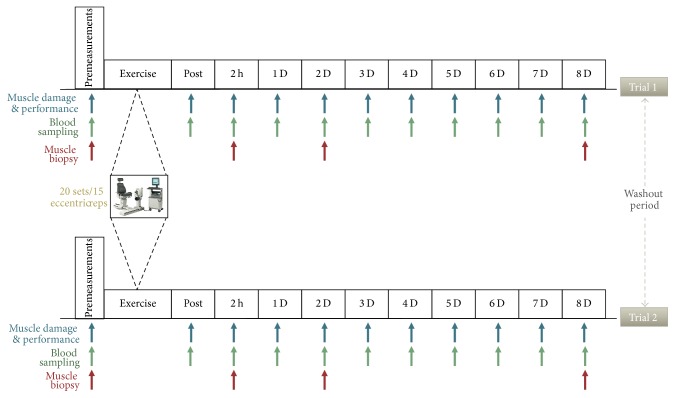
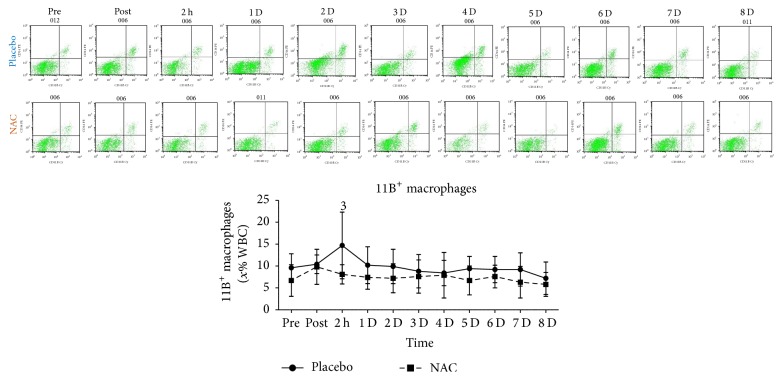
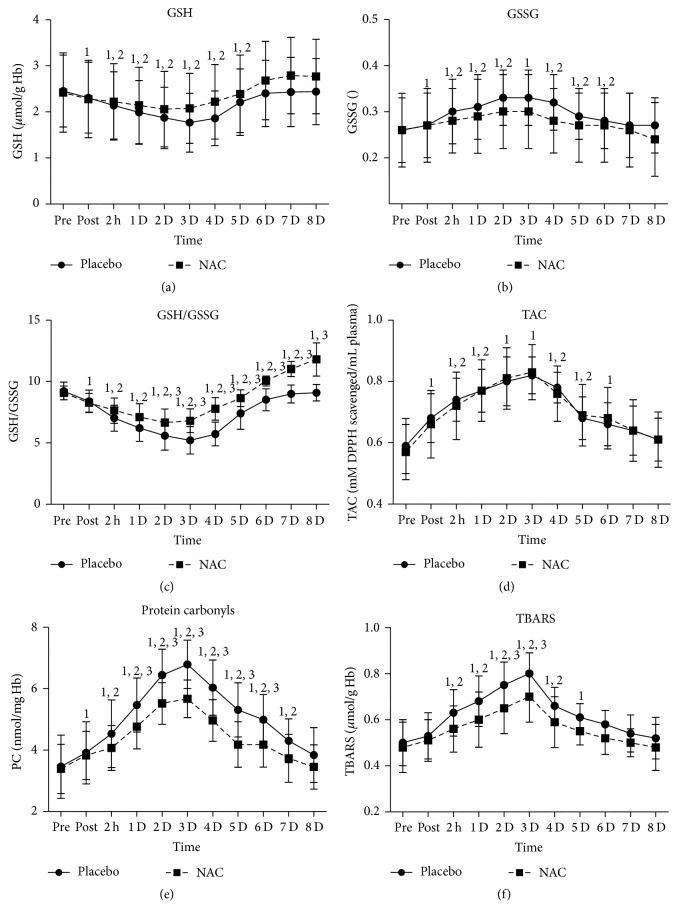
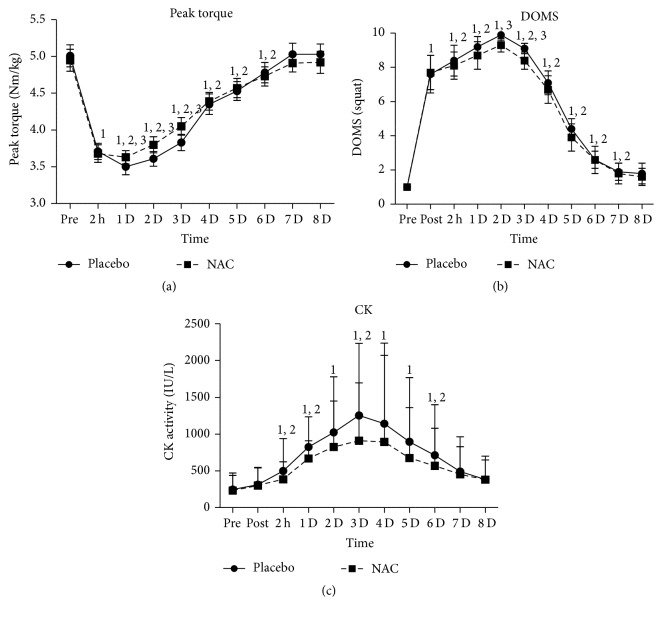
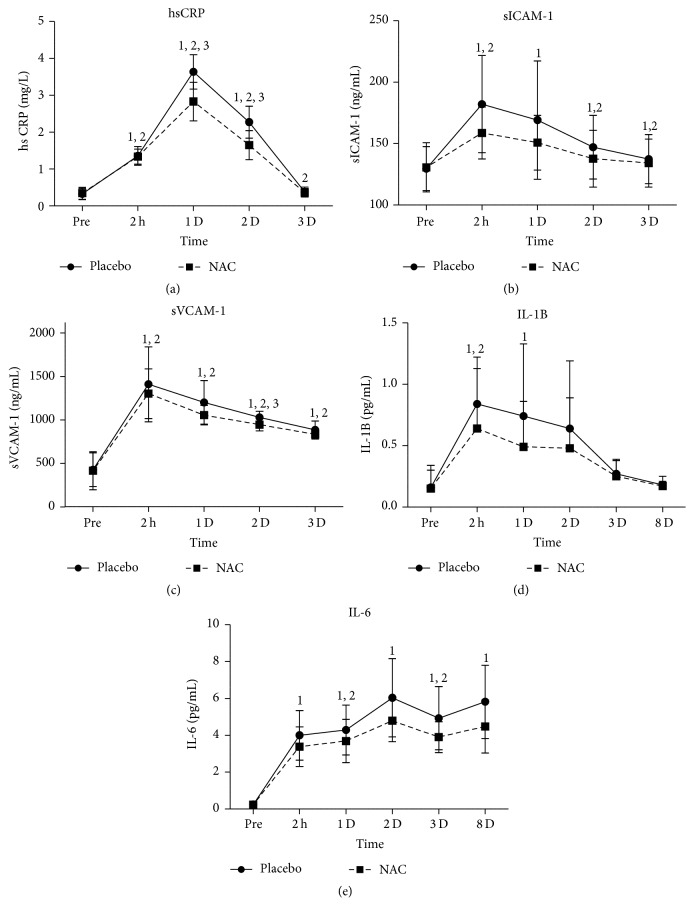
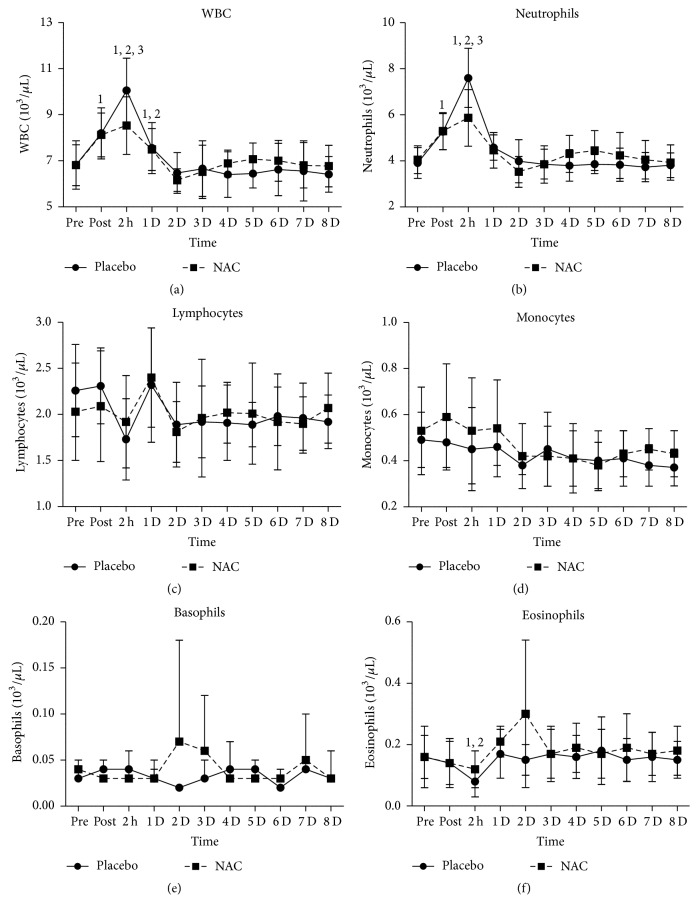
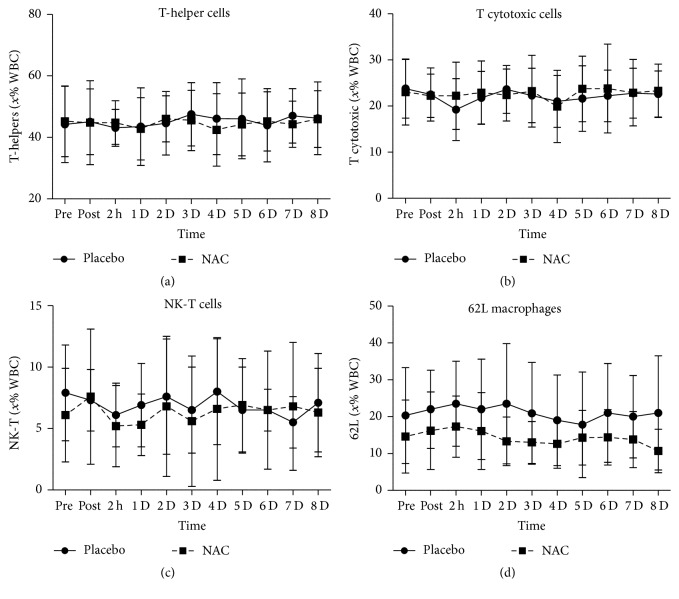
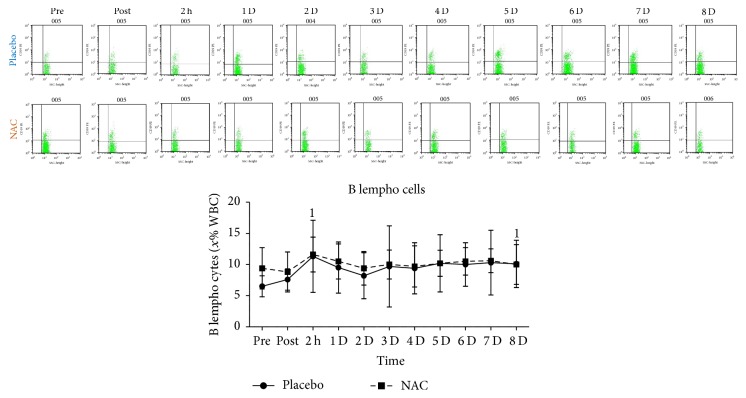
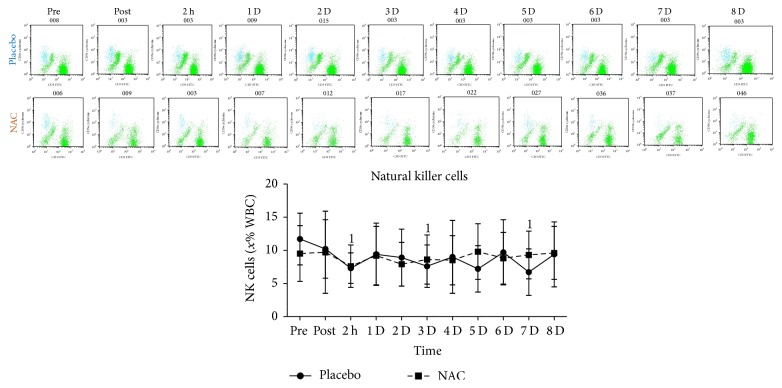
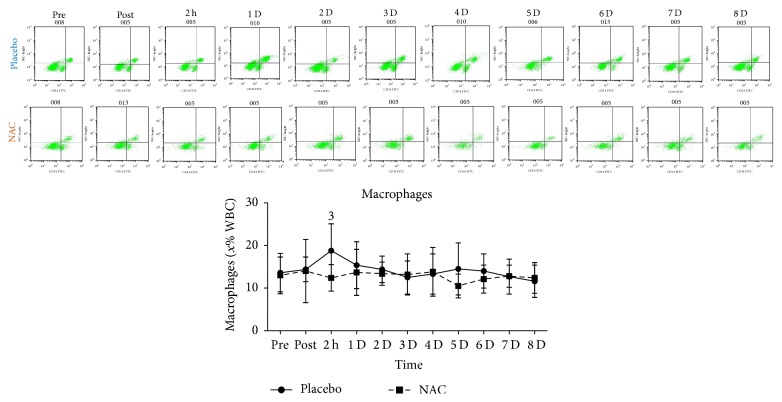
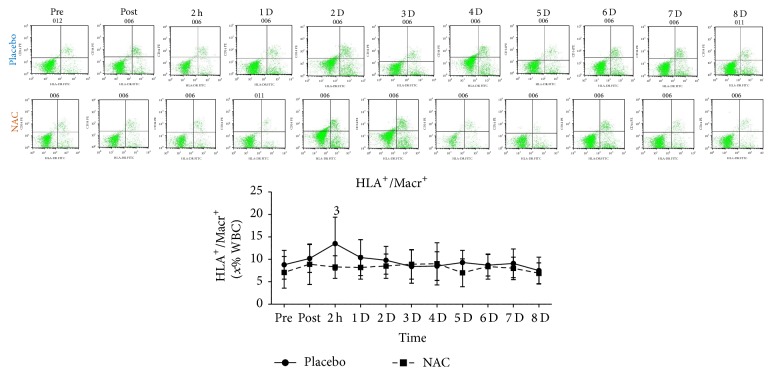
We used thiol-based antioxidant supplementation (n-acetylcysteine, NAC) to determine whether immune mobilisation following skeletal muscle microtrauma induced by exercise is redox-sensitive in healthy humans. According to a two-trial, double-blind, crossover, repeated measures design, 10 young men received either placebo or NAC (20 mg/kg/day) immediately after a muscle-damaging exercise protocol (300 eccentric contractions) and for eight consecutive days. Blood sampling and performance assessments were performed before exercise, after exercise, and daily throughout recovery. NAC reduced the decline of reduced glutathione in erythrocytes and the increase of plasma protein carbonyls, serum TAC and erythrocyte oxidized glutathione, and TBARS and catalase activity during recovery thereby altering postexercise redox status. The rise of muscle damage and inflammatory markers (muscle strength, creatine kinase activity, CRP, proinflammatory cytokines, and adhesion molecules) was less pronounced in NAC during the first phase of recovery. The rise of leukocyte and neutrophil count was decreased by NAC after exercise. Results on immune cell subpopulations obtained by flow cytometry indicated that NAC ingestion reduced the exercise-induced rise of total macrophages, HLA macrophages, and 11B macrophages and abolished the exercise-induced upregulation of B lymphocytes. Natural killer cells declined only in PLA immediately after exercise. These results indicate that thiol-based antioxidant supplementation blunts immune cell mobilisation in response to exercise-induced inflammation suggesting that leukocyte mobilization may be under redox-dependent regulation.
我们使用基于硫醇的抗氧化剂补充剂(N-乙酰半胱氨酸,NAC)来确定在健康人体内,运动引起的骨骼肌微创伤后免疫动员是否对氧化还原敏感。根据一项双试验、双盲、交叉、重复测量设计,10名年轻男性在进行肌肉损伤运动方案(300次离心收缩)后立即接受安慰剂或NAC(20mg/kg/天),并连续服用8天。在运动前、运动后以及恢复期间每天进行血液采样和性能评估。NAC减少了红细胞中还原型谷胱甘肽的下降以及血浆蛋白羰基、血清总抗氧化能力和红细胞氧化型谷胱甘肽、丙二醛和过氧化氢酶活性的增加,从而改变了运动后的氧化还原状态。在恢复的第一阶段,NAC组中肌肉损伤和炎症标志物(肌肉力量、肌酸激酶活性、CRP、促炎细胞因子和黏附分子)的升高不太明显。运动后,NAC降低了白细胞和中性粒细胞计数的升高。通过流式细胞术获得的免疫细胞亚群结果表明,摄入NAC减少了运动诱导的总巨噬细胞、HLA巨噬细胞和11B巨噬细胞的升高,并消除了运动诱导的B淋巴细胞上调。运动后仅安慰剂组的自然杀伤细胞减少。这些结果表明,基于硫醇的抗氧化剂补充剂可抑制运动诱导的炎症反应中免疫细胞的动员,提示白细胞动员可能受氧化还原依赖性调节。