Aleksandar Jovanovic, Vladan Peric, Markovic-Jovanovic Snezana, Stolic Radojica, Mitic Jadranka, Smilic Tanja
Department of Endocrinology, Medical Faculty, University of Pristina, Mitrovica, Serbia.
Department of Cardiology, Medical Faculty, University of Pristina, Mitrovica, Serbia.
J Diabetes Res. 2016;2016:6901345. doi: 10.1155/2016/6901345. Epub 2016 Nov 16.
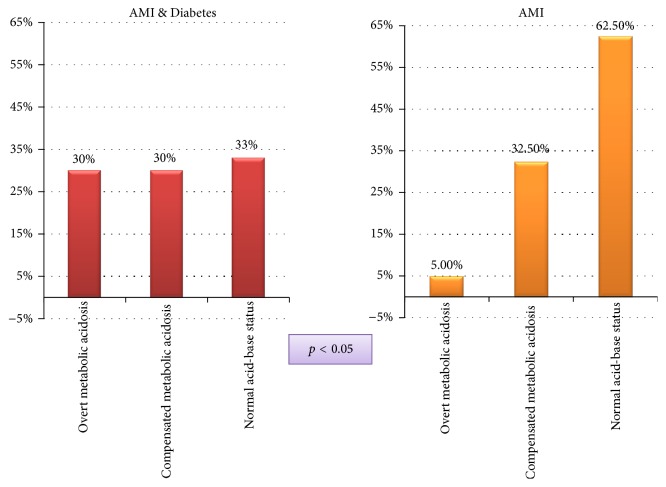
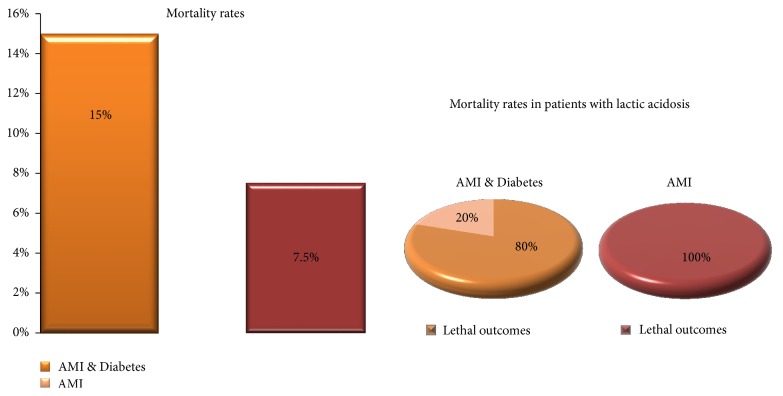
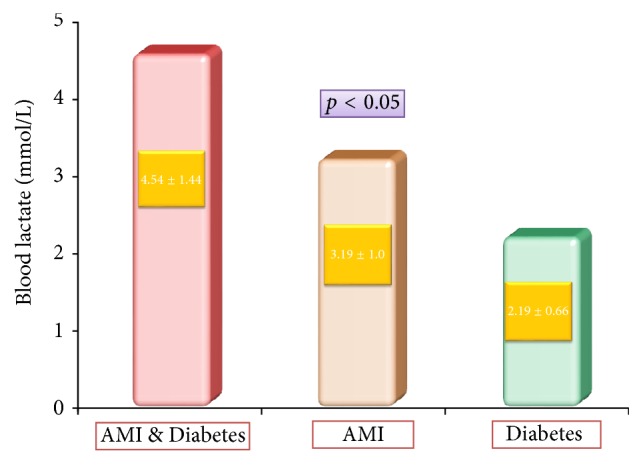
Increased lactate production is frequent in unregulated/complicated diabetes mellitus. Three groups, each consisting of 40 patients (type 2 diabetics with myocardial infarction, DM+AMI, nondiabetics suffering myocardial infarction, MI, and diabetics with no apparent cardiovascular pathology, DM group), were tested for pH, serum bicarbonate and electrolytes, blood lactate, and CK-MB. . Blood lactate levels were markedly higher in AMI+DM compared to MI group (4.54 ± 1.44 versus 3.19 ± 1.005 mmol/L, < 0.05); they correlated with the incidence of heart failure ( = 0.66), cardiac rhythm disorders ( = 0.54), oxygen saturation ( = 0.72), CK-MB levels ( = 0.62), and poor short-term outcome. Lactic acidosis in DM+AMI group was not always related to lethal outcome. . The lactate cutoff value associated with grave prognosis depends on the specific disease. While some authors proposed cutoff values ranging from 0.76 to 4 mmol/L, others argued that only occurrence of lactic acidosis may be truly predictive of lethal outcome. . Both defective glucose metabolism and low tissue oxygenation may contribute to the lactate production in diabetic patients with acute myocardial infarction; high lactate levels indicate increased risk for poor outcome in this population comparing to nondiabetic patients. The rise in blood lactate concentration in diabetics with AMI was associated with increased incidence of heart failure, severe arrhythmias, cardiogenic shock, and high mortality rate.
在未得到控制/复杂的糖尿病中,乳酸生成增加很常见。对三组患者进行了检测,每组40例(2型糖尿病合并心肌梗死患者、糖尿病合并急性心肌梗死患者、非糖尿病心肌梗死患者、心肌梗死患者以及无明显心血管病变的糖尿病患者、糖尿病组),检测项目包括pH值、血清碳酸氢盐和电解质、血乳酸以及肌酸激酶同工酶(CK-MB)。与心肌梗死组相比,糖尿病合并急性心肌梗死组的血乳酸水平显著更高(4.54±1.44对3.19±1.005 mmol/L,P<0.05);血乳酸水平与心力衰竭发生率(r=0.66)、心律失常(r=0.54)、血氧饱和度(r=0.72)、CK-MB水平(r=0.62)以及短期预后不良相关。糖尿病合并急性心肌梗死组的乳酸性酸中毒并不总是与致命结局相关。与严重预后相关的乳酸临界值取决于具体疾病。一些作者提出的临界值范围为0.76至4 mmol/L,另一些人则认为只有乳酸性酸中毒的发生才可能真正预示致命结局。葡萄糖代谢缺陷和组织低氧合均可能导致糖尿病急性心肌梗死患者产生乳酸;与非糖尿病患者相比,高乳酸水平表明该人群预后不良的风险增加。糖尿病合并急性心肌梗死患者血乳酸浓度升高与心力衰竭、严重心律失常、心源性休克的发生率增加以及高死亡率相关。