Yun Yu, Gao Tao, Li Yue, Gao Zhiyi, Duan Jinlian, Yin Hua, Duan Weigang
Kunming Key Laboratory of Molecular Biology for Sinomedicine, Faculty of Basic Medicine, Yunnan University of Traditional Chinese Medicine, Kunming 650500, China; School of Basic Medicine, Kunming Medical University, Kunming 650500, China.
Kunming Key Laboratory of Molecular Biology for Sinomedicine, Faculty of Basic Medicine, Yunnan University of Traditional Chinese Medicine, Kunming 650500, China.
ScientificWorldJournal. 2016;2016:2695718. doi: 10.1155/2016/2695718. Epub 2016 Nov 15.
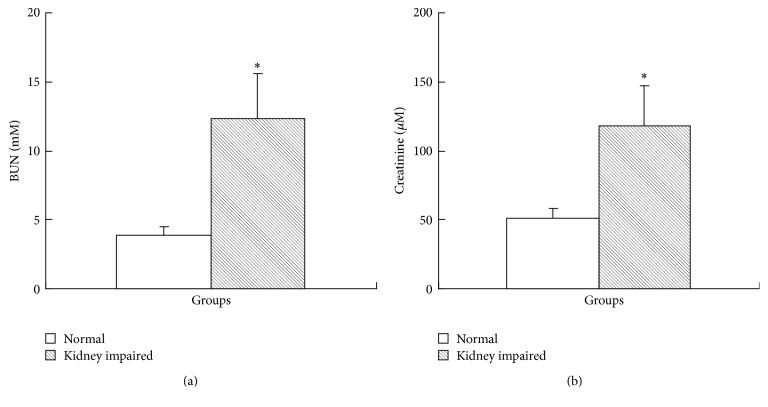
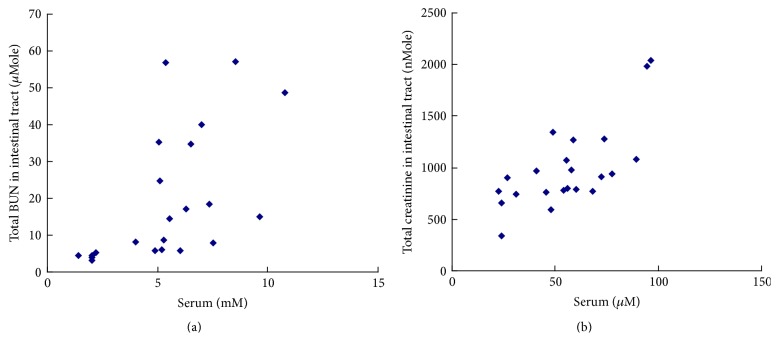
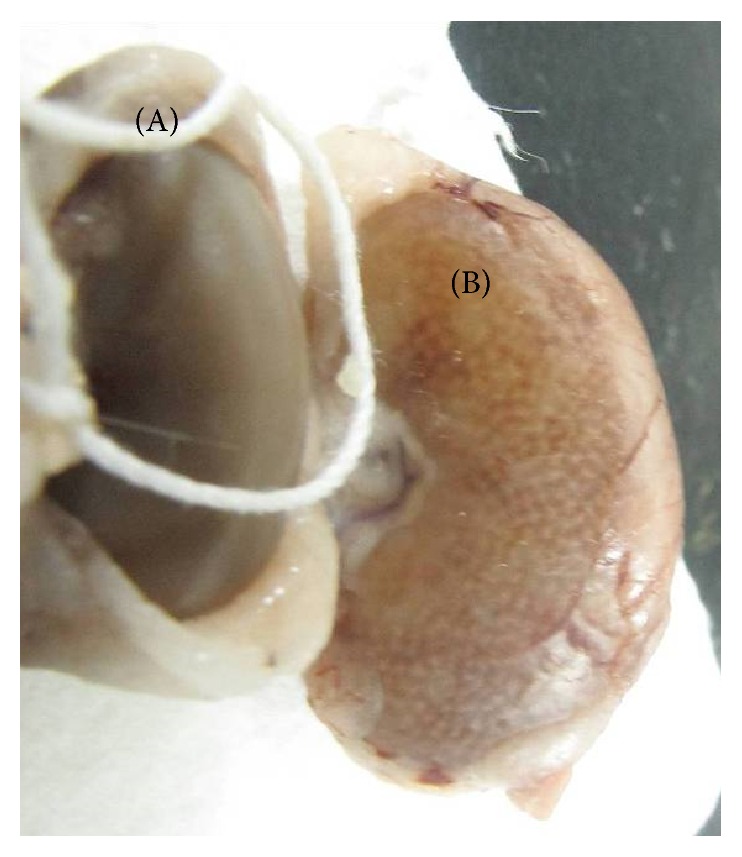
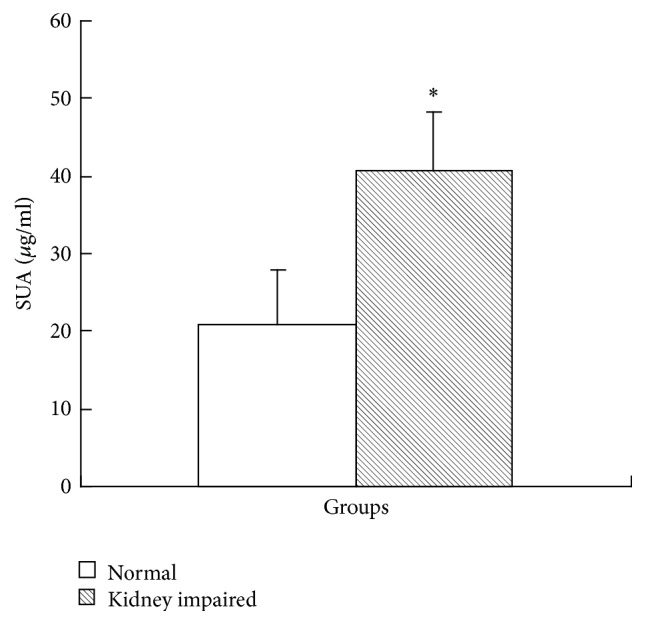
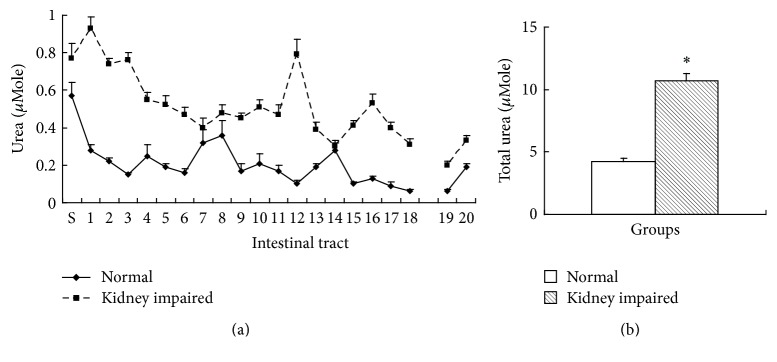
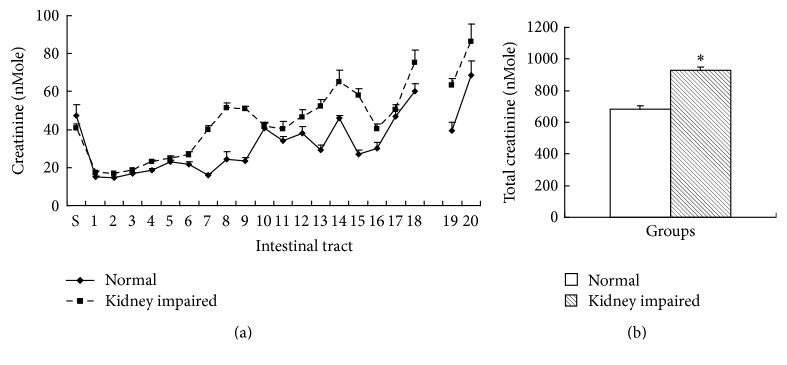
The main aim of the study was to prove the compensative effect of intestine for renal function. Rat kidney was impaired by intragastrically administrating adenine (400 mg per day for 5 days). Intestinal tract was harvested and equally divided into 20 segments except cecum. Kidneys were harvested and histologically examined with hematoxylin-eosin staining kits. Uric acid, urea (BUN), and creatinine in serum were determined with assay kits, and BUN and creatinine in every intestinal segment were also determined. The results showed that adenine was able to increase uric acid level in serum from 20.98 ± 6.98 g/mL to 40.77 ± 7.52 g/mL and cause renal function damage with BUN (from 3.87 ± 0.62 mM to 12.33 ± 3.27 mM) and creatinine (from 51.48 ± 6.98 M to 118.25 ± 28.63 M) increasing in serum and with abnormally micromorphological changes in kidney. The amount of BUN and creatinine distributed in intestinal tract was positively correlated with those in blood. In impaired renal function rats, the amount of BUN (from 4.26 ± 0.21 Mole to 10.72 ± 0.55 Mole) and creatinine (from 681.4 ± 23.3 nMole to 928.7 ± 21.3 nMole) distributed in intestinal tract significantly increased. All the results proved that intestinal tract had excretory function compensative for renal function.
该研究的主要目的是证明肠道对肾功能的代偿作用。通过胃内给予腺嘌呤(每天400毫克,持续5天)来损伤大鼠肾脏。除盲肠外,将肠道取出并等分为20段。取出肾脏,用苏木精-伊红染色试剂盒进行组织学检查。用检测试剂盒测定血清中的尿酸、尿素(BUN)和肌酐,同时也测定每个肠段中的BUN和肌酐。结果表明,腺嘌呤能够使血清尿酸水平从20.98±6.98微克/毫升升高至40.77±7.52微克/毫升,并导致肾功能损害,血清中BUN(从3.87±0.62毫摩尔升至12.33±3.27毫摩尔)和肌酐(从51.48±6.98微摩尔升至118.25±28.63微摩尔)升高,且肾脏出现异常微观形态变化。肠道中分布的BUN和肌酐量与血液中的呈正相关。在肾功能受损的大鼠中,肠道中分布的BUN(从4.26±0.21微摩尔升至10.72±0.55微摩尔)和肌酐(从681.4±23.3纳摩尔升至928.7±21.3纳摩尔)显著增加。所有结果证明肠道具有对肾功能的排泄功能代偿作用。