Adedeji Adekunle, Witt Stefanie, Innig Florian, Alves Inês, Provasi Chiara, Sessa Marco, Mohnike Klaus, Quitmann Julia
Department of Social Work, Hamburg University of Applied Sciences, Hamburg, Germany.
Department of Medical Psychology, University Medical Center, Hamburg-Eppendorf, Hamburg, Germany.
Front Med (Lausanne). 2025 May 30;12:1500389. doi: 10.3389/fmed.2025.1500389. eCollection 2025.
Caring for individuals with a chronic disease imposes a substantial burden on parents, significantly impacting their quality of life. For parents of children with achondroplasia, caregiving has notable implications for coping mechanisms and overall wellbeing. This review summarizes findings on these parents' coping strategies and quality of life.
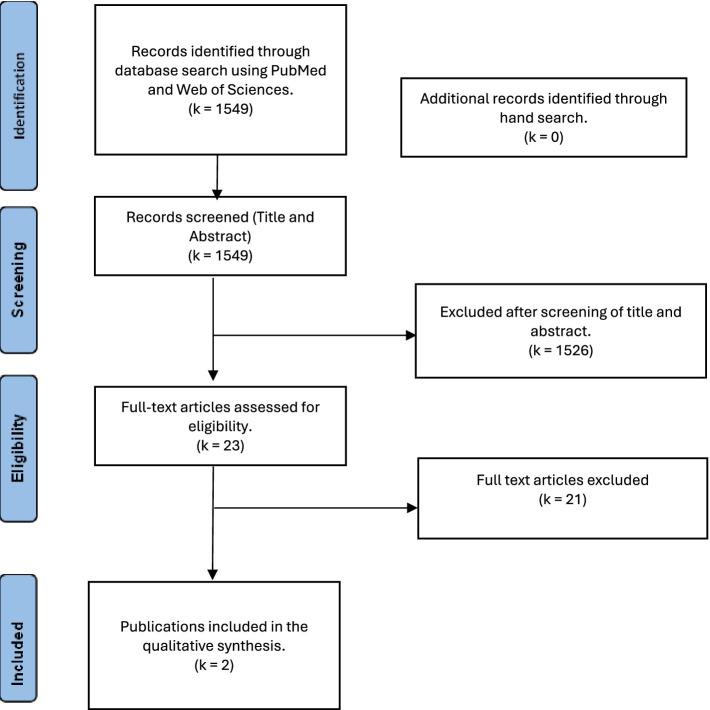
A narrative approach was employed to synthesize research on parental outcomes related to caring for a child with achondroplasia. The PRISMA chart flow was utilized to present the article screening strategy and results, following established guidelines for systematic reviews.
The review reveals a scarcity of studies examining the impact of caring for a child with achondroplasia on parental outcomes, with only two studies meeting the inclusion criteria. These studies suggest that having a child with achondroplasia significantly affects parental coping and quality of life, indicating substantial emotional and social implications. Additionally, no specific tools or measures to assess outcomes for these parents, highlighting a significant gap in research and resources.
The parental experience of caring for a child with achondroplasia involves significant emotional and social challenges. Stressors from emotional distress, social isolation, altered family dynamics, and demanding healthcare interactions underscore the need for robust support systems. Addressing the research gaps requires developing and validating specific measures to assess the outcomes for parents of children with achondroplasia accurately. This will encourage further research and guide the development and evaluation of interventions to improve the coping and QoL of parents of children with achondroplasia.
照顾慢性病患者会给父母带来沉重负担,严重影响他们的生活质量。对于软骨发育不全患儿的父母来说,护理对他们的应对机制和整体幸福感有着显著影响。本综述总结了关于这些父母应对策略和生活质量的研究结果。
采用叙述性方法综合有关照顾软骨发育不全患儿的父母结局的研究。按照系统评价的既定指南,使用PRISMA流程图展示文章筛选策略和结果。
该综述发现,研究照顾软骨发育不全患儿对父母结局影响的研究较少,只有两项研究符合纳入标准。这些研究表明,孩子患有软骨发育不全对父母的应对能力和生活质量有显著影响,这表明存在重大的情感和社会影响。此外,没有评估这些父母结局的具体工具或措施,这凸显了研究和资源方面的重大差距。
照顾软骨发育不全患儿的父母经历涉及重大的情感和社会挑战。情感困扰、社会孤立、家庭动态改变以及医疗互动需求等压力源凸显了建立强大支持系统的必要性。解决研究差距需要开发并验证具体措施,以准确评估软骨发育不全患儿父母的结局。这将鼓励进一步的研究,并指导干预措施的开发和评估,以改善软骨发育不全患儿父母的应对能力和生活质量。