Paradiso Annalisa, Caretto Sofia, Leone Antonella, Bove Anna, Nisi Rossella, De Gara Laura
Dipartimento di Biologia, Università degli Studi di Bari Aldo Moro Bari, Italy.
Consiglio Nazionale delle Ricerche, Istituto di Scienze delle Produzioni Alimentari Lecce, Italy.
Front Plant Sci. 2016 Dec 1;7:1803. doi: 10.3389/fpls.2016.01803. eCollection 2016.
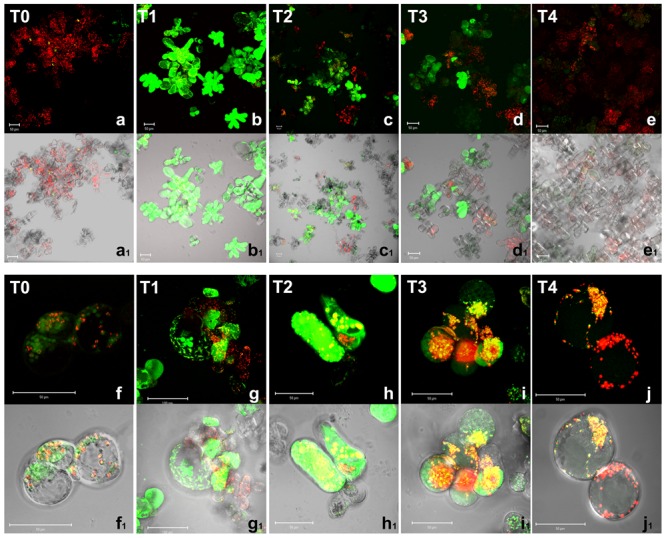
Plants can frequently experience low oxygen concentrations due to environmental factors such as flooding or waterlogging. It has been reported that both anoxia and the transition from anoxia to re-oxygenation determine a strong imbalance in the cellular redox state involving the production of reactive oxygen species (ROS) and nitric oxide (NO). Plant cell cultures can be a suitable system to study the response to oxygen deprivation stress since a close control of physicochemical parameters is available when using bioreactors. For this purpose, cell suspension cultures grown in a stirred bioreactor were subjected to a severe anoxic stress and analyzed during anoxia and re-oxygenation for alteration in ROS and NO as well as in antioxidant enzymes and metabolites. The results obtained by confocal microscopy showed the dramatic increase of ROS, HO, and NO during the anoxic shock. All the ascorbate-glutathione related parameters were altered during anoxia but restored during re-oxygenation. Anoxia also induced a slight but significant increase of α-tocopherol levels measured at the end of the treatment. Overall, the evaluation of cell defenses during anoxia and re-oxygenation in cell cultures revealed that the immediate response involving the overproduction of reactive species activated the antioxidant machinery including ascorbate-glutathione system, α-tocopherol and the ROS-scavenging enzymes ascorbate peroxidase, catalase, and peroxidase making cells able to counteract the stress toward cell survival.
由于洪水或涝灾等环境因素,植物经常会经历低氧浓度环境。据报道,缺氧以及从缺氧到复氧的转变都会导致细胞氧化还原状态的严重失衡,这涉及活性氧(ROS)和一氧化氮(NO)的产生。植物细胞培养可以作为研究对缺氧胁迫反应的合适系统,因为在使用生物反应器时可以对物理化学参数进行密切控制。为此,在搅拌式生物反应器中生长的细胞悬浮培养物受到严重缺氧胁迫,并在缺氧和复氧过程中分析ROS、NO以及抗氧化酶和代谢物的变化。共聚焦显微镜获得的结果表明,在缺氧休克期间ROS、HO和NO急剧增加。所有与抗坏血酸-谷胱甘肽相关的参数在缺氧期间都发生了变化,但在复氧期间恢复。缺氧还导致处理结束时测得的α-生育酚水平略有但显著增加。总体而言,对细胞培养物在缺氧和复氧期间的细胞防御评估表明,涉及活性物质过量产生的即时反应激活了抗氧化机制,包括抗坏血酸-谷胱甘肽系统、α-生育酚以及ROS清除酶抗坏血酸过氧化物酶、过氧化氢酶和过氧化物酶,使细胞能够抵抗对细胞存活的胁迫。