Park Ryan J, Wang Tim, Koundakjian Dylan, Hultquist Judd F, Lamothe-Molina Pedro, Monel Blandine, Schumann Kathrin, Yu Haiyan, Krupzcak Kevin M, Garcia-Beltran Wilfredo, Piechocka-Trocha Alicja, Krogan Nevan J, Marson Alexander, Sabatini David M, Lander Eric S, Hacohen Nir, Walker Bruce D
Ragon Institute of Massachusetts General Hospital (MGH), Massachusetts Institute of Technology (MIT), and Harvard University, Cambridge, Massachusetts, USA.
Harvard-MIT Health Sciences and Technology, Harvard Medical School, Boston, Massachusetts, USA.
Nat Genet. 2017 Feb;49(2):193-203. doi: 10.1038/ng.3741. Epub 2016 Dec 19.
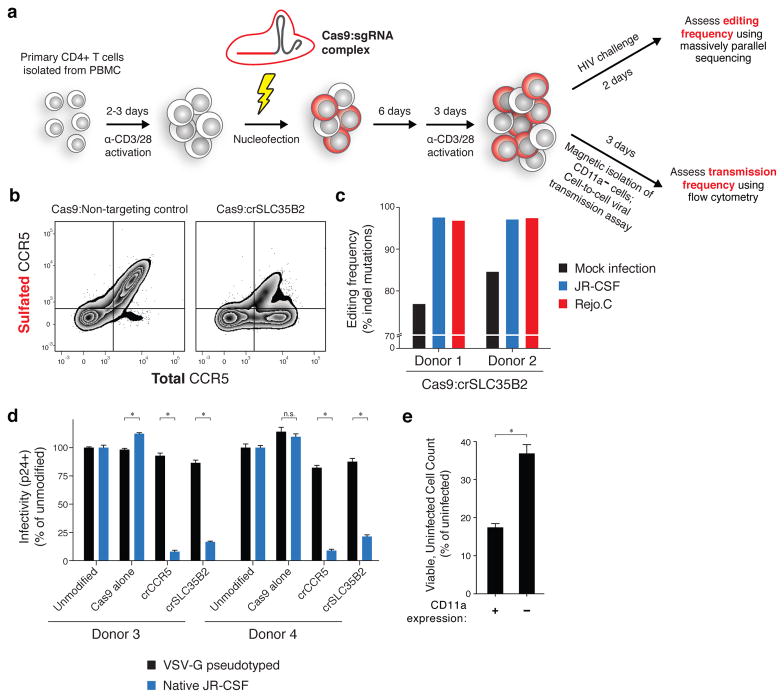
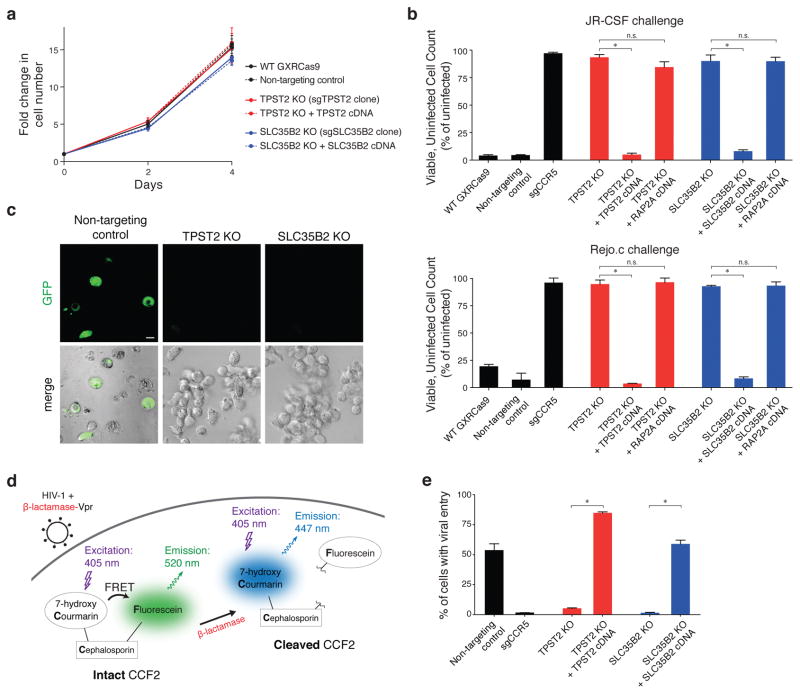
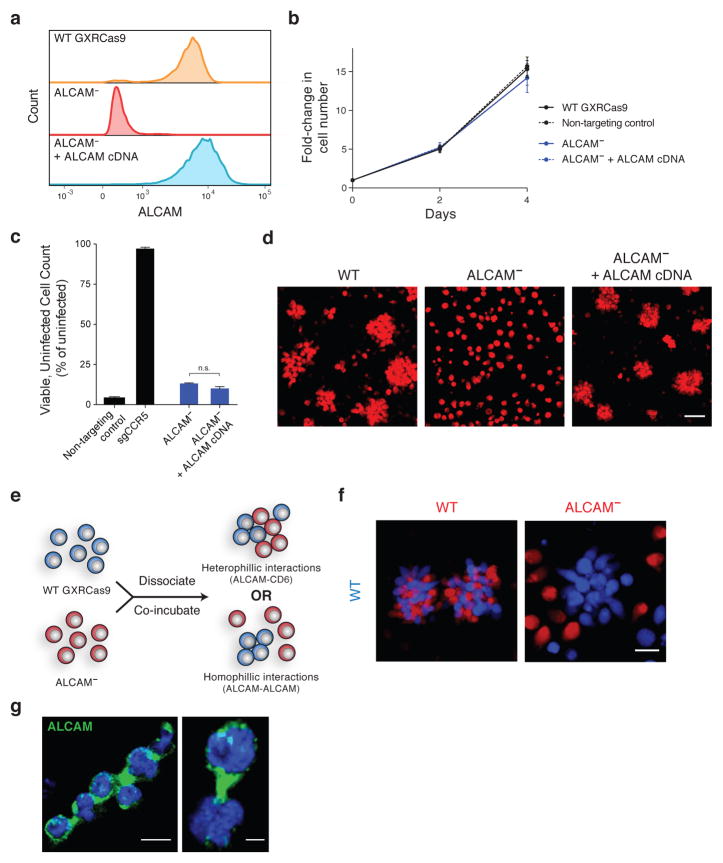
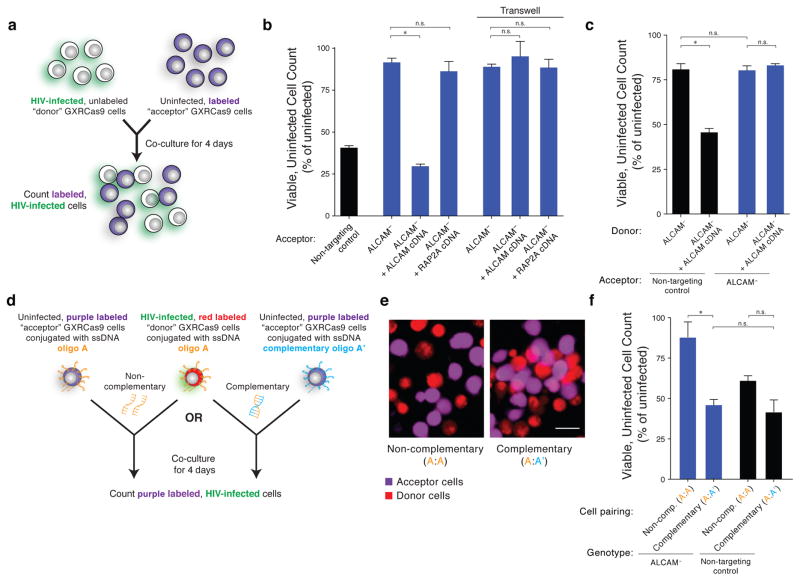
Host proteins are essential for HIV entry and replication and can be important nonviral therapeutic targets. Large-scale RNA interference (RNAi)-based screens have identified nearly a thousand candidate host factors, but there is little agreement among studies and few factors have been validated. Here we demonstrate that a genome-wide CRISPR-based screen identifies host factors in a physiologically relevant cell system. We identify five factors, including the HIV co-receptors CD4 and CCR5, that are required for HIV infection yet are dispensable for cellular proliferation and viability. Tyrosylprotein sulfotransferase 2 (TPST2) and solute carrier family 35 member B2 (SLC35B2) function in a common pathway to sulfate CCR5 on extracellular tyrosine residues, facilitating CCR5 recognition by the HIV envelope. Activated leukocyte cell adhesion molecule (ALCAM) mediates cell aggregation, which is required for cell-to-cell HIV transmission. We validated these pathways in primary human CD4 T cells through Cas9-mediated knockout and antibody blockade. Our findings indicate that HIV infection and replication rely on a limited set of host-dispensable genes and suggest that these pathways can be studied for therapeutic intervention.
宿主蛋白对HIV的进入和复制至关重要,可能成为重要的非病毒治疗靶点。大规模基于RNA干扰(RNAi)的筛选已鉴定出近千种候选宿主因子,但各研究之间几乎没有达成共识,且仅有少数因子得到验证。在此,我们证明基于全基因组CRISPR的筛选可在生理相关细胞系统中鉴定宿主因子。我们鉴定出五个因子,包括HIV共受体CD4和CCR5,它们是HIV感染所必需的,但对细胞增殖和活力并非不可或缺。酪氨酰蛋白硫酸转移酶2(TPST2)和溶质载体家族35成员B2(SLC35B2)在一条共同途径中发挥作用,对细胞外酪氨酸残基上的CCR5进行硫酸化,促进HIV包膜对CCR5的识别。活化白细胞细胞黏附分子(ALCAM)介导细胞聚集,这是细胞间HIV传播所必需的。我们通过Cas9介导的基因敲除和抗体阻断在原代人CD4 T细胞中验证了这些途径。我们的研究结果表明,HIV感染和复制依赖于一组有限的宿主非必需基因,并提示这些途径可用于治疗干预研究。