Wang Tim, Lander Eric S, Sabatini David M
Department of Biology, Massachusetts Institute of Technology, Cambridge, Massachusetts 02139; Whitehead Institute for Biomedical Research, Cambridge, Massachusetts 02142; Broad Institute of MIT and Harvard, Cambridge, Massachusetts 02142; David H. Koch Institute for Integrative Cancer Research at MIT, Cambridge, Massachusetts 02139; Howard Hughes Medical Institute, Department of Biology, Massachusetts Institute of Technology, Cambridge, Massachusetts 02139;
Department of Biology, Massachusetts Institute of Technology, Cambridge, Massachusetts 02139; Broad Institute of MIT and Harvard, Cambridge, Massachusetts 02142; Department of Systems Biology, Harvard Medical School, Boston, Massachusetts 02115.
Cold Spring Harb Protoc. 2016 Mar 1;2016(3):pdb.top086892. doi: 10.1101/pdb.top086892.
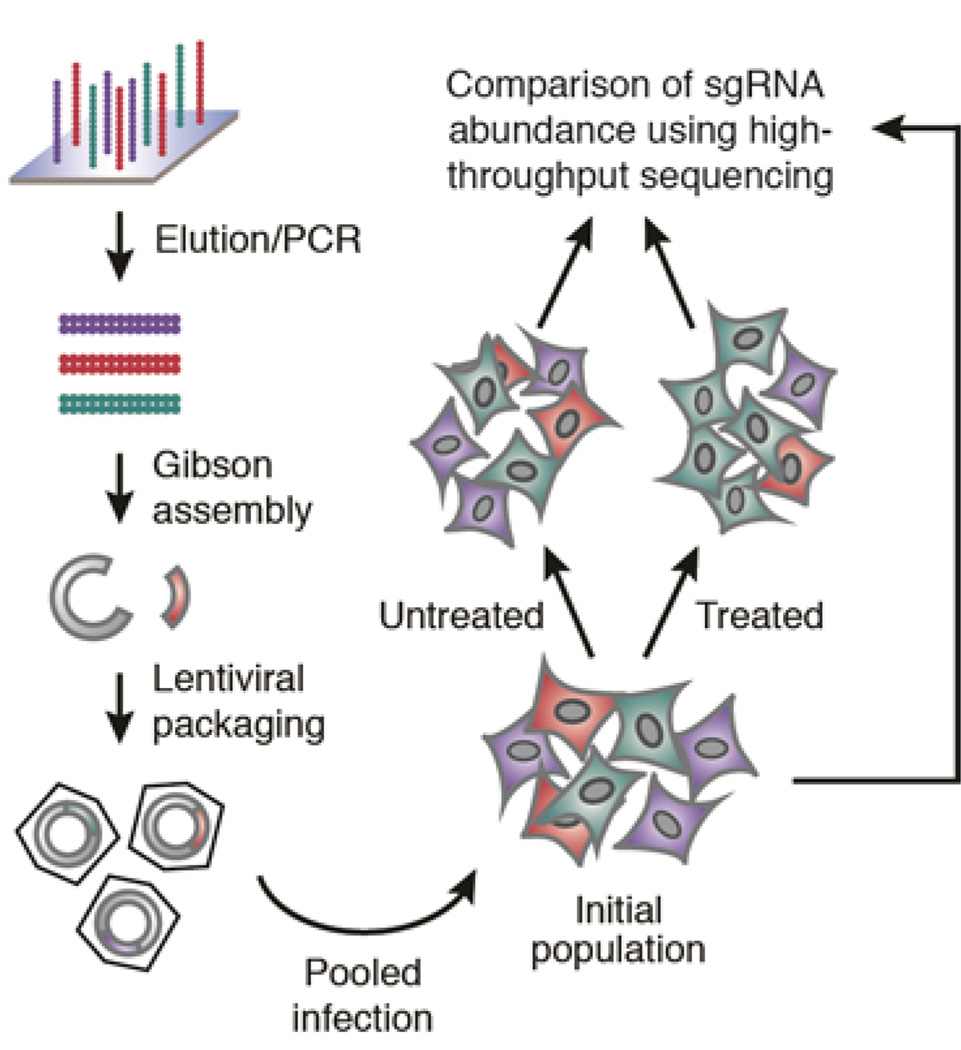
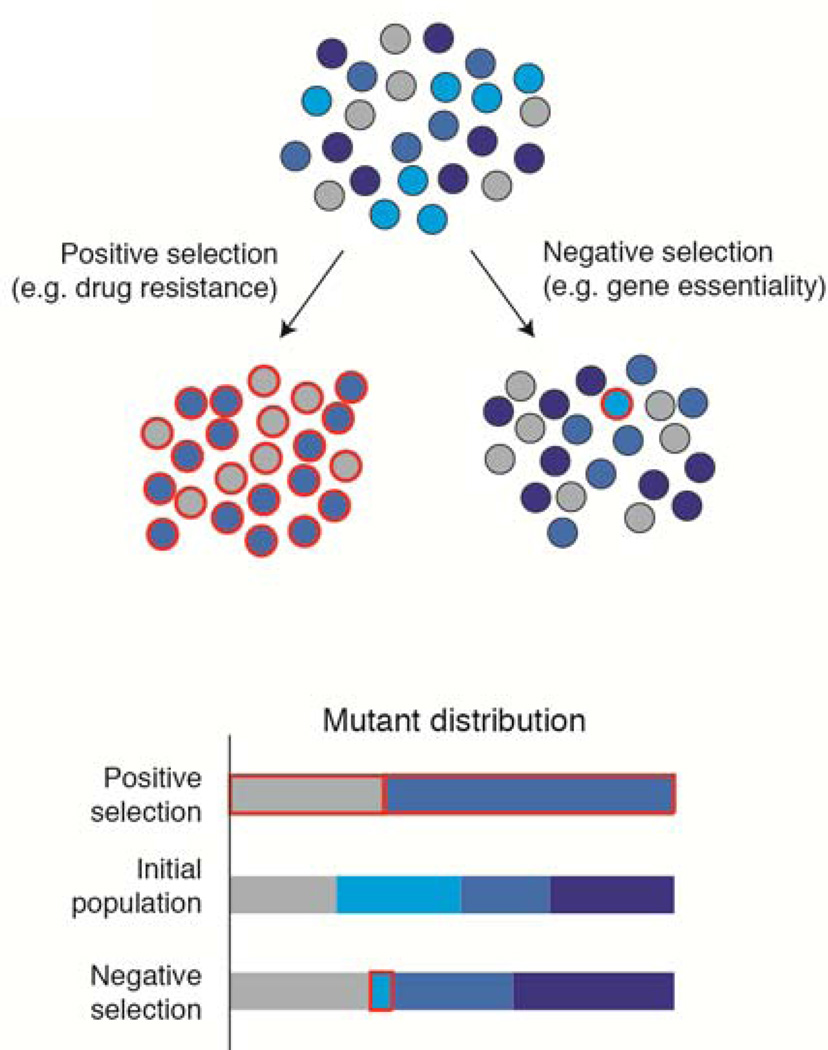
The ability to systematically disrupt genes serves as a powerful tool for understanding their function. The programmable CRISPR-Cas9 system enables efficient targeting of large numbers of genes through the use of single guide RNA (sgRNA) libraries. In cultured mammalian cells, collections of knockout mutants can be readily generated by means of transduction of Cas9-sgRNA lentiviral pools, screened for a phenotype of interest, and counted using high-throughput DNA sequencing. This technique represents the first general method for undertaking systematic loss-of-function genetic screens in mammalian cells. Here, we introduce the methodology and rationale for conducting CRISPR-based screens, focusing on distinguishing positive and negative selection strategies.
系统地破坏基因的能力是理解其功能的有力工具。可编程的CRISPR-Cas9系统通过使用单向导RNA(sgRNA)文库实现对大量基因的高效靶向。在培养的哺乳动物细胞中,通过转导Cas9-sgRNA慢病毒文库可以轻松生成基因敲除突变体集合,筛选感兴趣的表型,并使用高通量DNA测序进行计数。这项技术代表了在哺乳动物细胞中进行系统功能丧失遗传筛选的首个通用方法。在此,我们介绍基于CRISPR筛选的方法和基本原理,重点是区分正选择和负选择策略。