Sirohi Sunil, Van Cleef Arriel, Davis Jon F
Department of Integrative Physiology and Neuroscience, Washington State University, Pullman, WA, United States; Laboratory of Endocrine and Neuropsychiatric Disorders, Division of Basic Pharmaceutical Sciences, College of Pharmacy, Xavier University of Louisiana, New Orleans, LA, United States.
Department of Integrative Physiology and Neuroscience, Washington State University, Pullman, WA, United States.
Pharmacol Biochem Behav. 2017 Feb;153:105-115. doi: 10.1016/j.pbb.2016.12.009. Epub 2016 Dec 18.
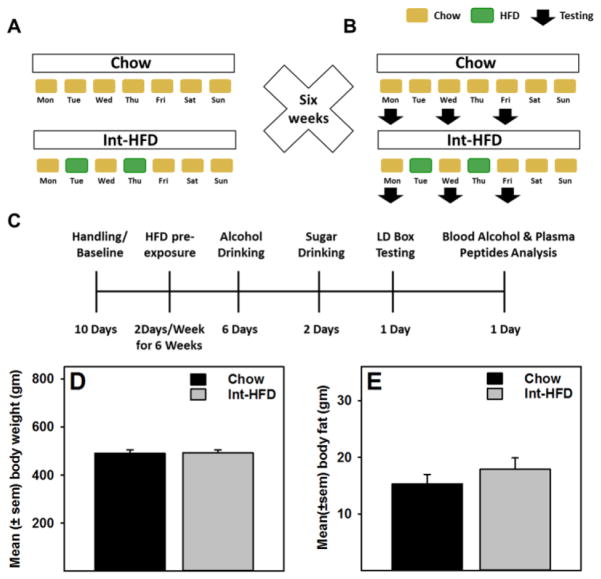
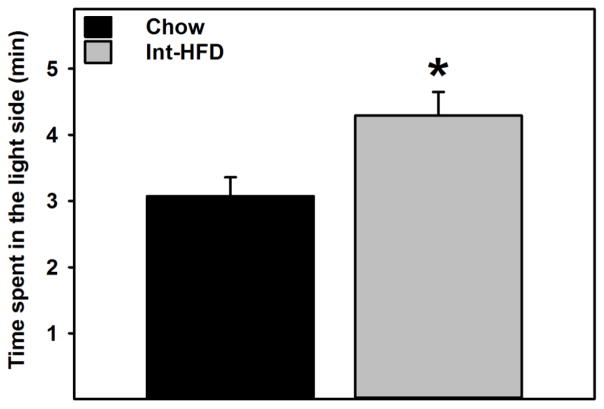
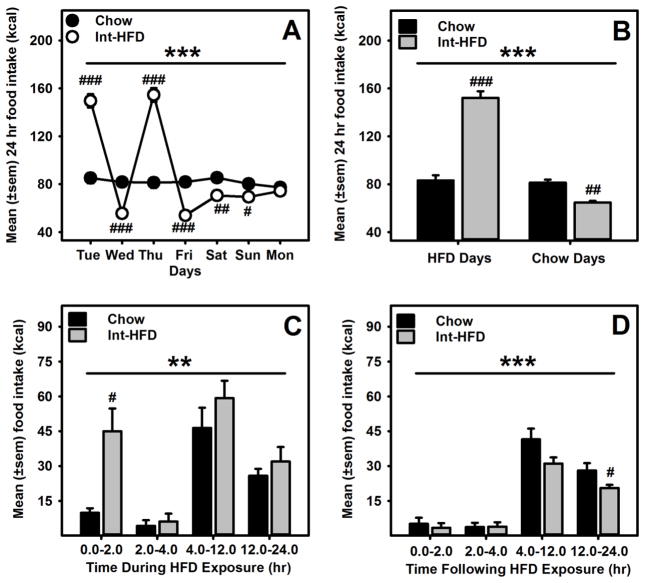
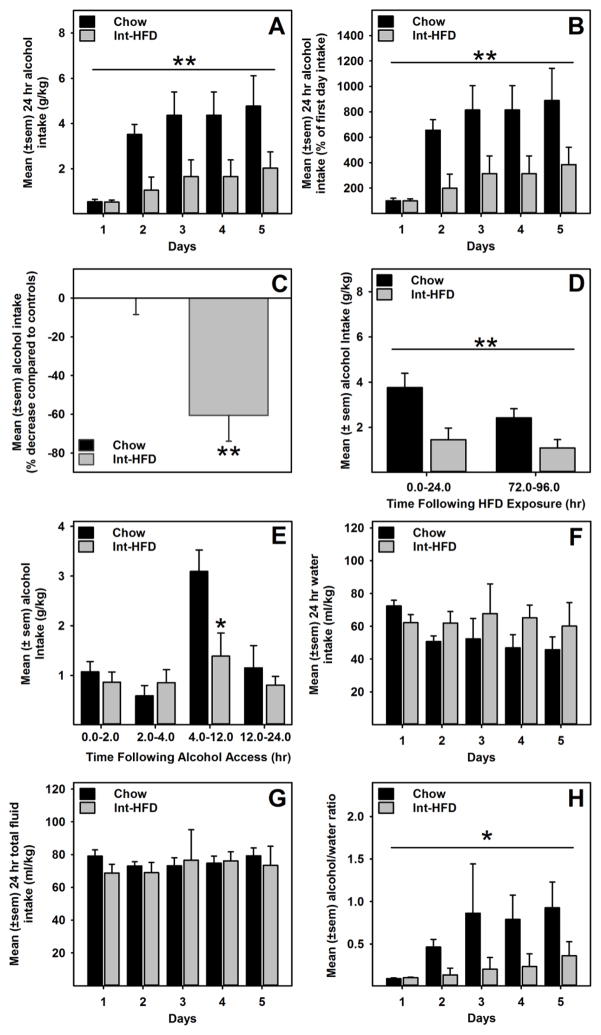
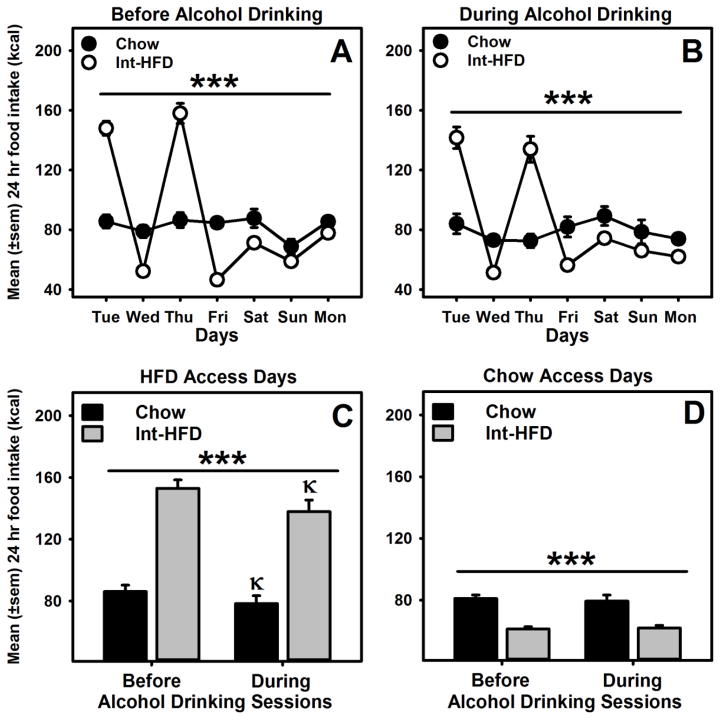
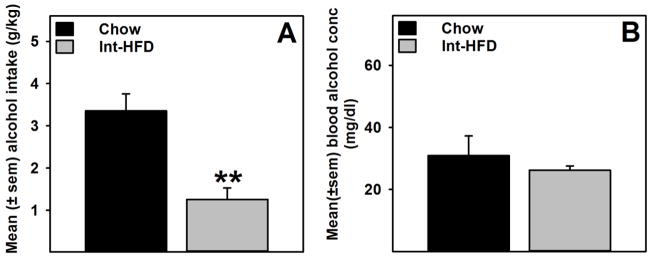
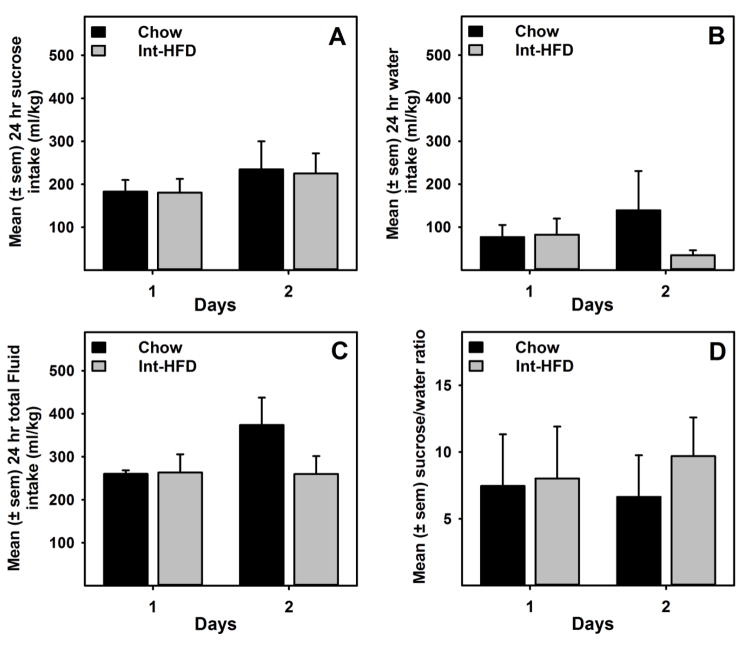
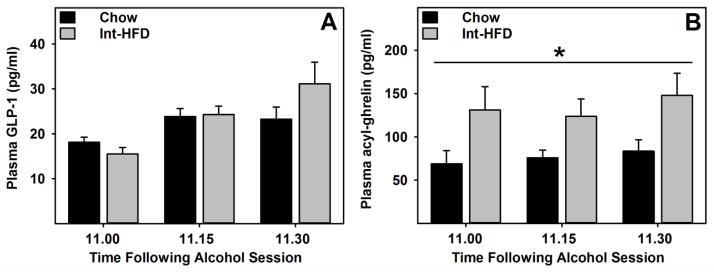
Binge eating disorder and alcohol use disorder (AUD) frequently co-occur in the presence of other psychiatric conditions. Data suggest that binge eating engages similar behavioral and neurochemical processes common to AUD, which might contribute to the etiology or maintenance of alcoholism. However, it is unclear how binge feeding behavior and alcohol intake interact to promote initiation or maintenance of AUD. We investigated the impact of binge-like feeding on alcohol intake and anxiety-like behavior in male Long Evans rats. Rats received chow (controls) or extended intermittent access (24h twice a week; Int-HFD) to a nutritionally complete high-fat diet for six weeks. Standard rodent chow was available ad-libitum to all groups and food intake was measured. Following HFD exposure, 20.0% ethanol, 2.0% sucrose intake and endocrine peptide levels were evaluated. Anxiety-like behavior was measured using a light-dark (LD) box apparatus. Rats in the Int-HFD group displayed a binge-like pattern of feeding (alternations between caloric overconsumption and voluntary caloric restriction). Surprisingly, alcohol intake was significantly attenuated in the Int-HFD group whereas sugar consumption was unaffected. Plasma acyl-ghrelin levels were significantly elevated in the Int-HFD group, whereas glucagon-like peptide-1 levels did not change. Moreover, rats in the Int-HFD group spent more time in the light side of the LD box compared to controls, indicating that binge-like feeding induced anxiolytic effects. Collectively, these data suggest that intermittent access to HFD attenuates alcohol intake through reducing anxiety-like behavior, a process potentially controlled by elevated plasma ghrelin levels.
暴饮暴食症和酒精使用障碍(AUD)经常与其他精神疾病同时出现。数据表明,暴饮暴食涉及与AUD常见的类似行为和神经化学过程,这可能有助于酒精中毒的病因或维持。然而,尚不清楚暴饮暴食行为和酒精摄入如何相互作用以促进AUD的起始或维持。我们研究了类似暴饮暴食的进食对雄性长 Evans 大鼠酒精摄入和焦虑样行为的影响。大鼠接受普通饲料(对照组)或延长间歇性获取(每周两次,每次24小时;Int-HFD)营养完全的高脂肪饮食,持续六周。所有组均可随意获取标准啮齿动物饲料,并测量食物摄入量。在暴露于高脂肪饮食后,评估20.0%乙醇、2.0%蔗糖摄入量和内分泌肽水平。使用明暗(LD)箱装置测量焦虑样行为。Int-HFD组的大鼠表现出类似暴饮暴食的进食模式(热量过度摄入和自愿热量限制之间的交替)。令人惊讶的是,Int-HFD组的酒精摄入量显著降低,而糖消耗量不受影响。Int-HFD组的血浆酰基胃泌素水平显著升高,而胰高血糖素样肽-1水平没有变化。此外,与对照组相比,Int-HFD组的大鼠在LD箱亮侧花费的时间更多,表明类似暴饮暴食的进食诱导了抗焦虑作用。总体而言,这些数据表明,间歇性获取高脂肪饮食通过减少焦虑样行为来降低酒精摄入量,这一过程可能由血浆胃泌素水平升高所控制。