Wang Dandan, Markus Josua, Kim Yeon-Ju, Wang Chao, Jiménez Pérez Zuly Elizabeth, Ahn Sungeun, Aceituno Verónica Castro, Mathiyalagan Ramya, Yang Deok Chun
Department of Oriental Medicine Biotechnology and Ginseng Bank.
Department of Biotechnology and Ginseng Bank, College of Life Sciences, Kyung Hee University, Yongin, Republic of Korea.
Int J Nanomedicine. 2016 Dec 8;11:6621-6634. doi: 10.2147/IJN.S113692. eCollection 2016.
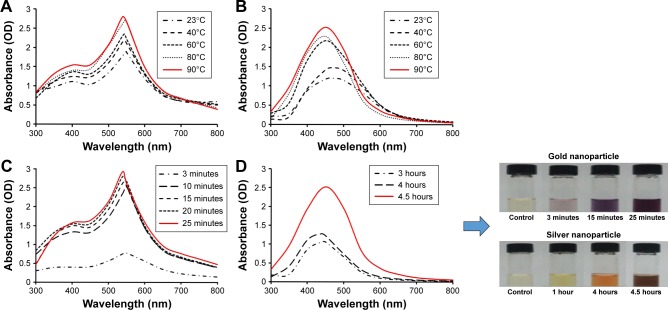
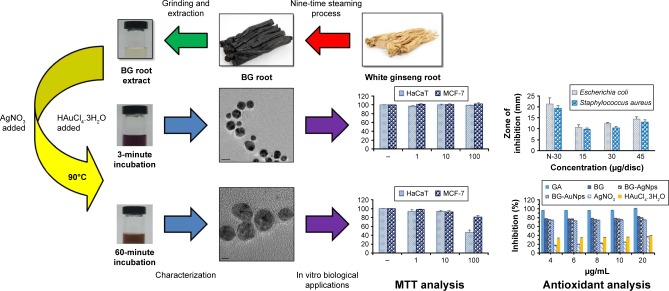
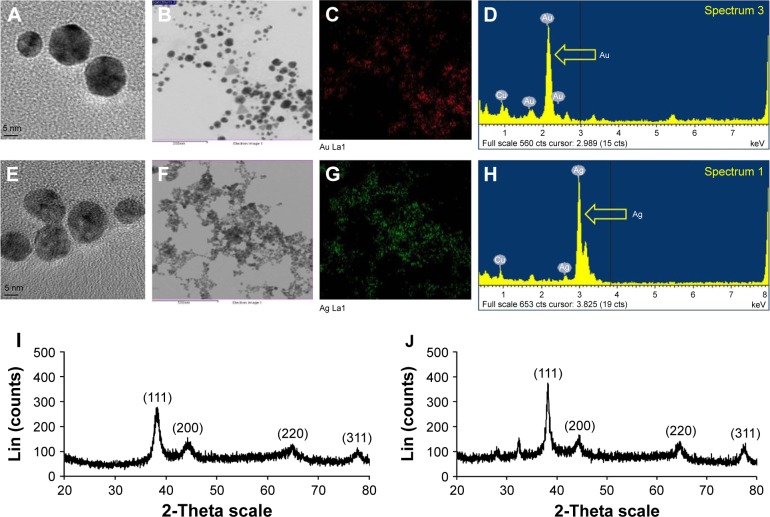
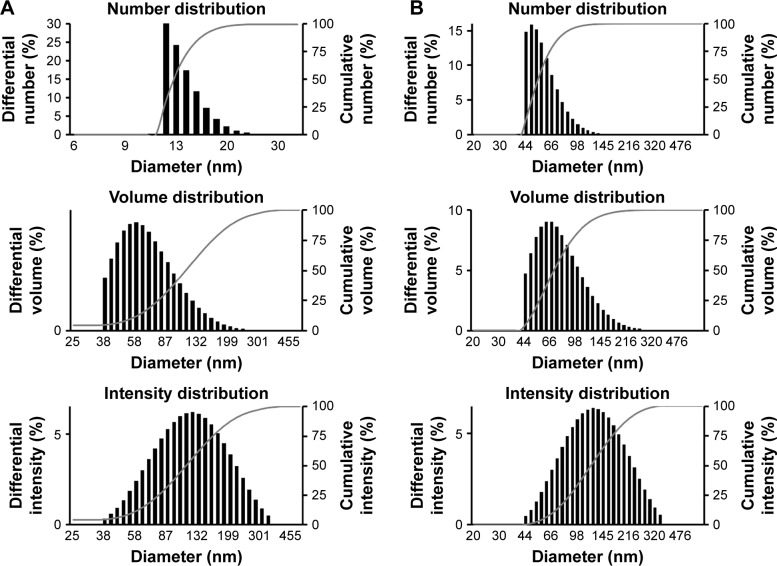
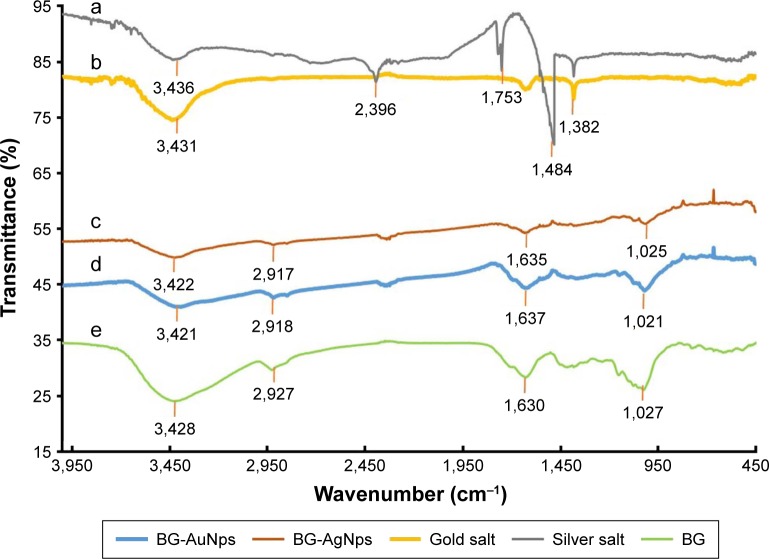
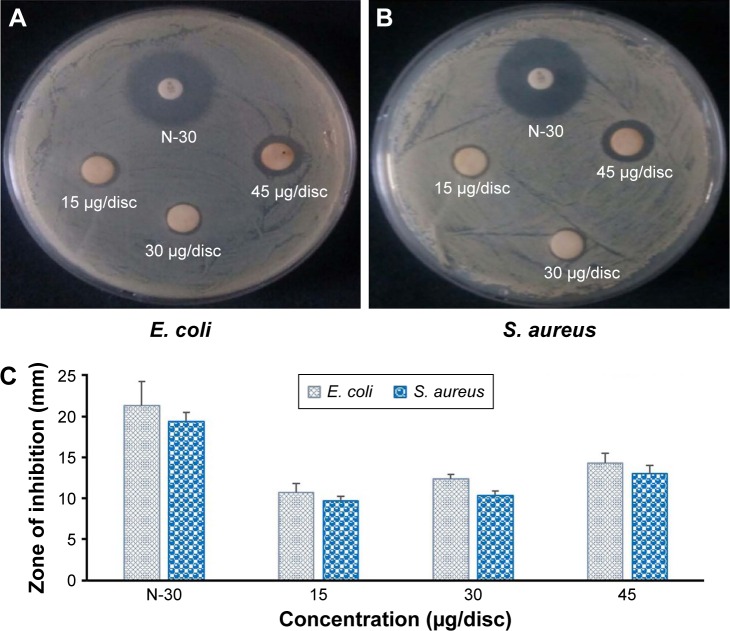
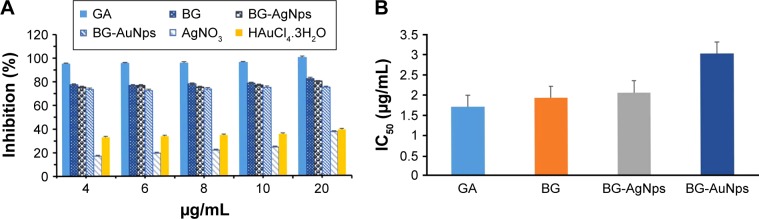
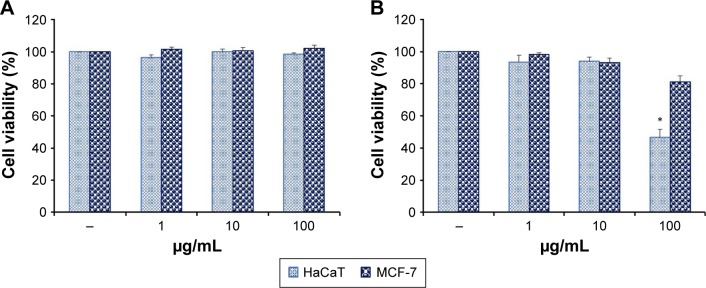
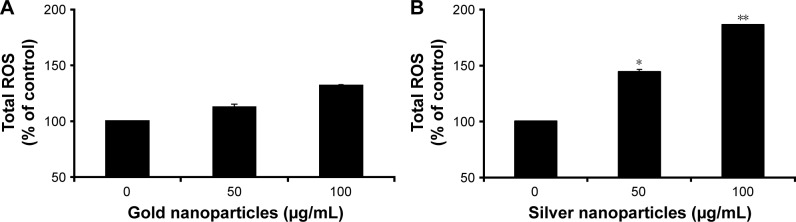
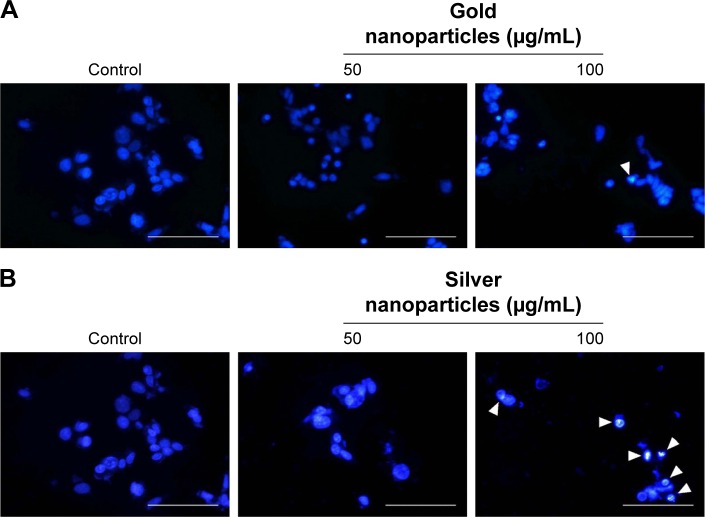
A rapid biological synthesis of multifunctional gold nanoparticle (AuNp) and monodisperse silver nanoparticle (AgNp) was achieved by an aqueous extract of black Meyer root. The physicochemical transformation into black ginseng (BG) greatly enhanced the pharmacological activities of white ginseng and its minor ginsenoside content. The optimal temperature conditions and kinetics of bioreduction were investigated. Formation of BG-AuNps and BG-AgNps was verified by ultraviolet-visible spectrophotometry at 548 and 412 nm, respectively. The biosynthesized BG-AgNps were spherical and monodisperse with narrow distribution, while BG-AuNps were icosahedral-shaped and moderately polydisperse. Synthesized nanoparticles exhibited long-term stability in buffers of pH 7.0-8.0 and biological media (5% bovine serum albumin) at an ambient temperature and at 37°C. BG-AgNps showed effective antibacterial activity against and . BG-AuNps and BG-AgNps demonstrated increased scavenging activity against 2,2-diphenyl-1-picrylhydrazyl free radicals. In addition, BG-AuNps and BG-AgNps were nontoxic to HaCaT and MCF-7 cells; the latter showed no cytotoxicity at concentrations lower than 10 µg/mL. At higher concentrations, BG-AgNps exhibited apparent apoptotic activity in MCF-7 breast cancer cell line through reactive oxygen species generation and nuclear fragmentation.
通过黑迈耶根的水提取物实现了多功能金纳米颗粒(AuNp)和单分散银纳米颗粒(AgNp)的快速生物合成。向黑参(BG)的物理化学转化极大地增强了白参的药理活性及其次要人参皂苷含量。研究了生物还原的最佳温度条件和动力学。分别通过在548和412nm处的紫外可见分光光度法验证了BG-AuNps和BG-AgNps的形成。生物合成的BG-AgNps呈球形且单分散,分布狭窄,而BG-AuNps呈二十面体形状且多分散性适中。合成的纳米颗粒在环境温度和37°C下于pH 7.0 - 8.0的缓冲液和生物介质(5%牛血清白蛋白)中表现出长期稳定性。BG-AgNps对[具体细菌名称1]和[具体细菌名称2]显示出有效的抗菌活性。BG-AuNps和BG-AgNps对2,2-二苯基-1-苦基肼自由基表现出增强的清除活性。此外,BG-AuNps和BG-AgNps对HaCaT和MCF-7细胞无毒;后者在浓度低于10μg/mL时无细胞毒性。在较高浓度下,BG-AgNps通过活性氧生成和核碎片化在MCF-7乳腺癌细胞系中表现出明显的凋亡活性。