Cudalbeanu Mihaela, Peitinho David, Silva Francisco, Marques Rosa, Pinheiro Teresa, Ferreira Ana C, Marques Fernanda, Paulo António, Soeiro Catarina F, Sousa Sílvia Andreia, Leitão Jorge Humberto, Tăbăcaru Aurel, Avramescu Sorin Marius, Dinica Rodica Mihaela, Campello Maria Paula Cabral
Faculty of Sciences and Environment, Department of Chemistry Physical and Environment, "Dunărea de Jos" University of Galati, 111 Domnească Street, 800201 Galati, Romania.
Research Center for Environmental Protection and Waste Management, University of Bucharest, 91-95 Splaiul Independentei, 050095 Bucharest, Romania.
Nanomaterials (Basel). 2021 Jun 14;11(6):1562. doi: 10.3390/nano11061562.
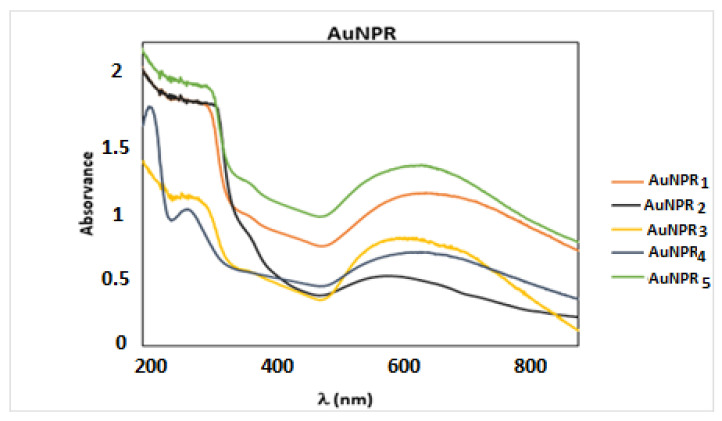
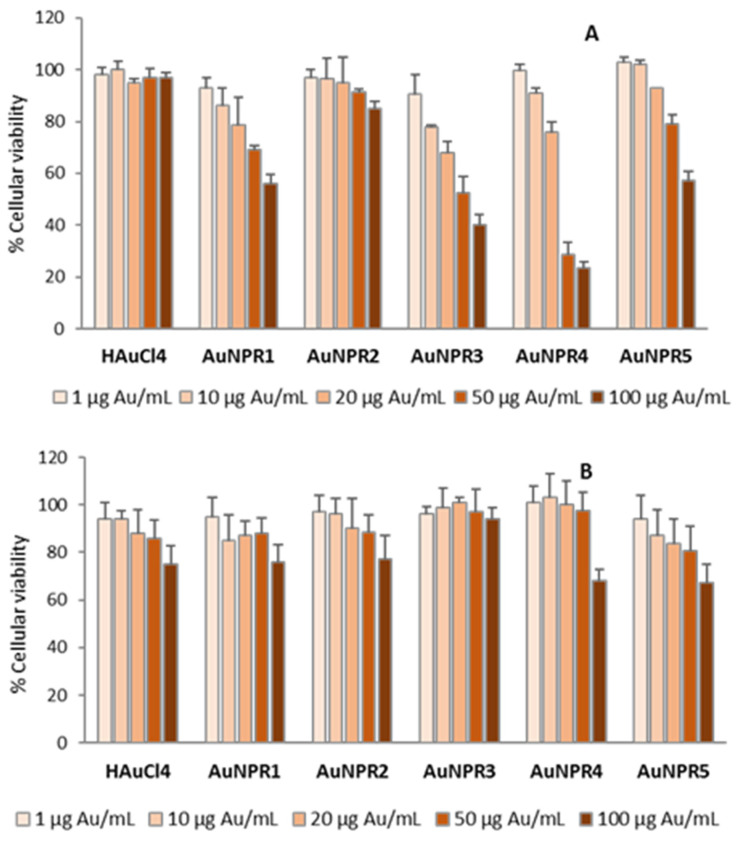
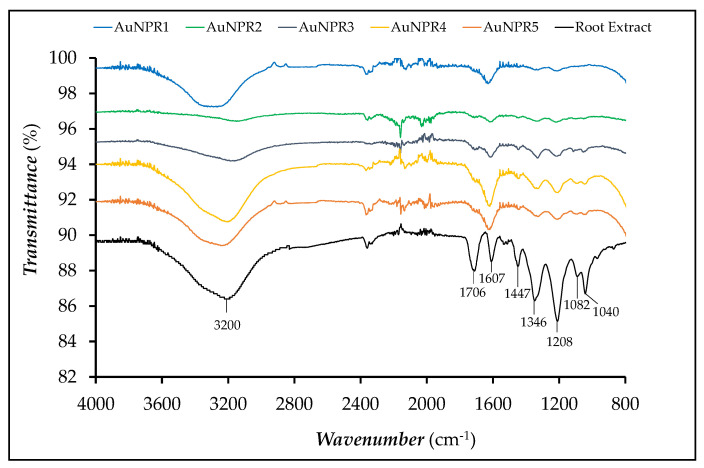
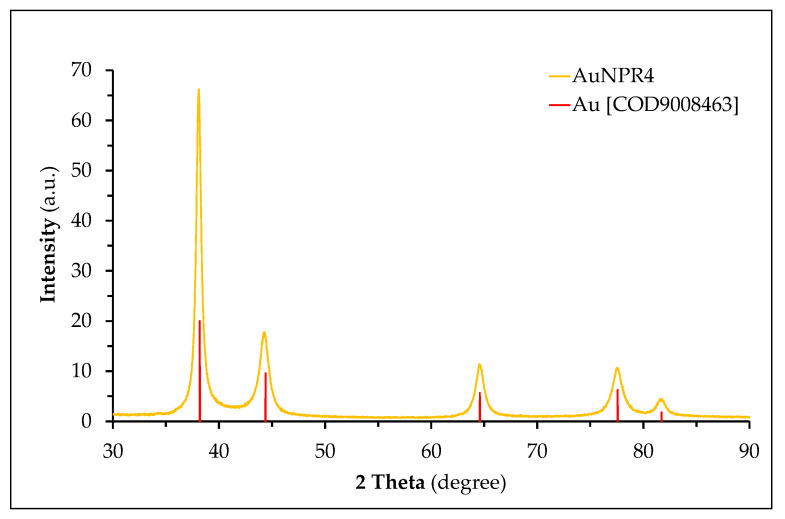
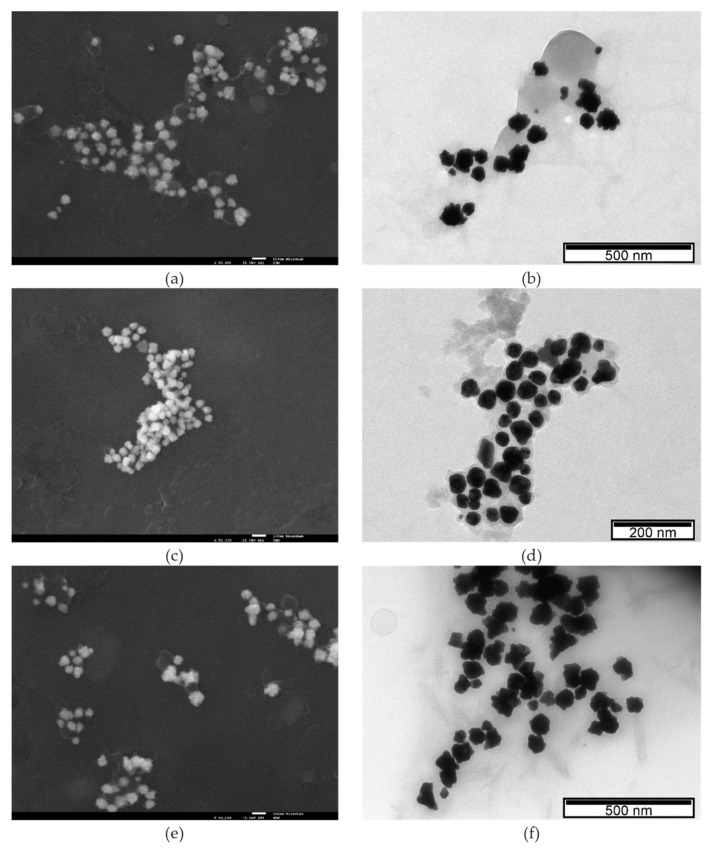
Root extracts from Danube were used to prepare gold nanoparticles (AuNPR) by reducing HAuCl at different pHs (6.4-8.4) using ultrasonic irradiation: an easy, cheap, eco-friendly and green approach. Their antibacterial and anticancer activities were evaluated against and , and A2780 ovarian cancer cells, respectively. The AuNPR were characterized concerning their phytoconstituents (polyphenols, flavonoids and condensed tannins) and gold content. All of the nanoparticles were negatively charged. AuNPR exhibited a hydrodynamic size distribution ranging from 32 nm to 280 nm, with the larger nanoparticles being obtained with an Au/root extract ratio of 0.56, pH 7 and 10 min of sonication (AuNPR), whereas the smallest were obtained with an Au/root extract ratio of 0.24, pH 7.8 and 40 min of sonication (AuNPR). The TEM/SEM images showed that the AuNPR had different shapes. The ATR-FTIR indicated that AuNPRn interact mainly with hydroxyl groups present in the polyphenol compounds, which also confirm their high antioxidant capacity, except for AuNPR obtained at pH 6.4. Among the AuNPR, the smallest ones exhibited enhanced antimicrobial and anticancer activities.
多瑙河的根提取物通过在不同pH值(6.4 - 8.4)下使用超声辐射还原氯金酸来制备金纳米颗粒(AuNPR):这是一种简便、廉价、环保且绿色的方法。分别针对[具体细菌名称1]、[具体细菌名称2]和A2780卵巢癌细胞评估了它们的抗菌和抗癌活性。对AuNPR的植物成分(多酚、黄酮类化合物和缩合单宁)和金含量进行了表征。所有纳米颗粒均带负电荷。AuNPR的流体动力学尺寸分布范围为32纳米至280纳米,当金/根提取物比例为0.56、pH值为7且超声处理10分钟时可获得较大的纳米颗粒(AuNPR),而当金/根提取物比例为0.24、pH值为7.8且超声处理40分钟时可获得最小的纳米颗粒(AuNPR)。透射电子显微镜/扫描电子显微镜图像显示AuNPR具有不同的形状。衰减全反射傅里叶变换红外光谱表明AuNPRn主要与多酚化合物中存在的羟基相互作用,这也证实了它们除在pH值为6.4时获得的AuNPR外具有较高的抗氧化能力。在AuNPR中,最小的纳米颗粒表现出增强的抗菌和抗癌活性。