Brooks-Bartlett Jonathan C, Batters Rebecca A, Bury Charles S, Lowe Edward D, Ginn Helen Mary, Round Adam, Garman Elspeth F
Department of Biochemistry, University of Oxford, Oxford OX1 3QU, UK.
Division of Structural Biology, Wellcome Trust Centre for Human Genetics, Roosevelt Drive, Oxford OX3 7BN, UK.
J Synchrotron Radiat. 2017 Jan 1;24(Pt 1):63-72. doi: 10.1107/S1600577516015083.
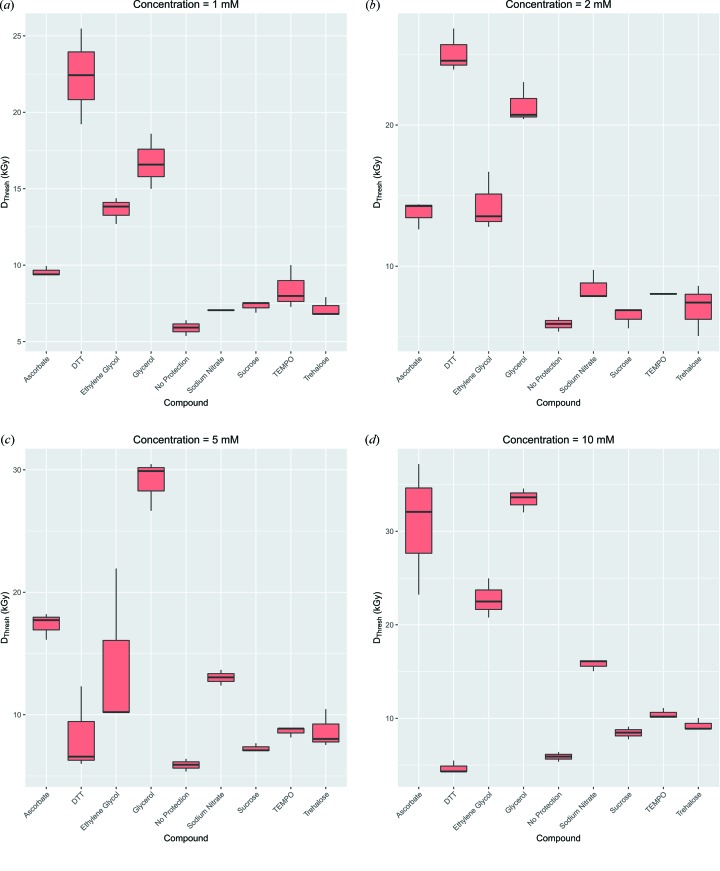
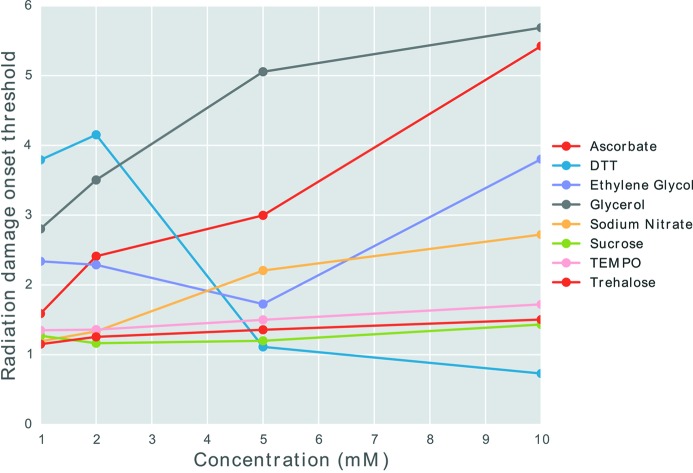
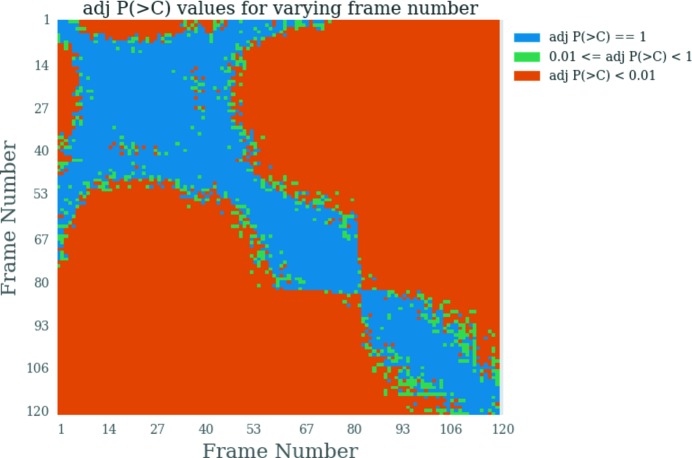
Biological small-angle X-ray scattering (SAXS) is an increasingly popular technique used to obtain nanoscale structural information on macromolecules in solution. However, radiation damage to the samples limits the amount of useful data that can be collected from a single sample. In contrast to the extensive analytical resources available for macromolecular crystallography (MX), there are relatively few tools to quantitate radiation damage for SAXS, some of which require a significant level of manual characterization, with the potential of leading to conflicting results from different studies. Here, computational tools have been developed to automate and standardize radiation damage analysis for SAXS data. RADDOSE-3D, a dose calculation software utility originally written for MX experiments, has been extended to account for the cylindrical geometry of the capillary tube, the liquid composition of the sample and the attenuation of the beam by the capillary material to allow doses to be calculated for many SAXS experiments. Furthermore, a library has been written to visualize and explore the pairwise similarity of frames. The calculated dose for the frame at which three subsequent frames are determined to be dissimilar is defined as the radiation damage onset threshold (RDOT). Analysis of RDOTs has been used to compare the efficacy of radioprotectant compounds to extend the useful lifetime of SAXS samples. Comparison of the RDOTs shows that, for radioprotectant compounds at 5 and 10 mM concentration, glycerol is the most effective compound. However, at 1 and 2 mM concentrations, dithiothreitol (DTT) appears to be most effective. Our newly developed visualization library contains methods that highlight the unusual radiation damage results given by SAXS data collected using higher concentrations of DTT: these observations should pave the way to the development of more sophisticated frame merging strategies.
生物小角X射线散射(SAXS)是一种越来越受欢迎的技术,用于获取溶液中大分子的纳米级结构信息。然而,样品的辐射损伤限制了从单个样品中可收集的有用数据量。与大分子晶体学(MX)可用的大量分析资源相比,用于定量SAXS辐射损伤的工具相对较少,其中一些需要大量的手动表征,可能导致不同研究结果相互矛盾。在这里,已经开发了计算工具来自动化和标准化SAXS数据的辐射损伤分析。RADDOSE-3D是一个最初为MX实验编写的剂量计算软件实用程序,已扩展到考虑毛细管的圆柱形几何形状、样品的液体成分以及毛细管材料对光束的衰减,以便为许多SAXS实验计算剂量。此外,还编写了一个库来可视化和探索帧的成对相似性。将确定三个后续帧不同的帧的计算剂量定义为辐射损伤起始阈值(RDOT)。对RDOT的分析已用于比较辐射防护化合物延长SAXS样品使用寿命的功效。RDOT的比较表明,对于浓度为5和10 mM的辐射防护化合物,甘油是最有效的化合物。然而,在浓度为1和2 mM时,二硫苏糖醇(DTT)似乎最有效。我们新开发的可视化库包含一些方法,这些方法突出了使用较高浓度DTT收集的SAXS数据给出的异常辐射损伤结果:这些观察结果应该为开发更复杂的帧合并策略铺平道路