Robin Charlotte, Bettridge Judy, McMaster Fiona
Department of Epidemiology and Population Health, Institute of Infection and Global Health, School of Veterinary Science, University of Liverpool, Leahurst Campus, Neston, CH64 7TE, United Kingdom; NIHR Health Protection Research Unit, University of Liverpool, Ronald Ross Building, Liverpool, L69 7BE, United Kingdom.
Department of Epidemiology and Population Health, Institute of Infection and Global Health, School of Veterinary Science, University of Liverpool, Leahurst Campus, Neston, CH64 7TE, United Kingdom; International Livestock Research Institute, Old Naivasha Road, PO Box 30709-00100, Nairobi, Kenya.
Prev Vet Med. 2017 Jan 1;136:39-48. doi: 10.1016/j.prevetmed.2016.11.015. Epub 2016 Nov 23.
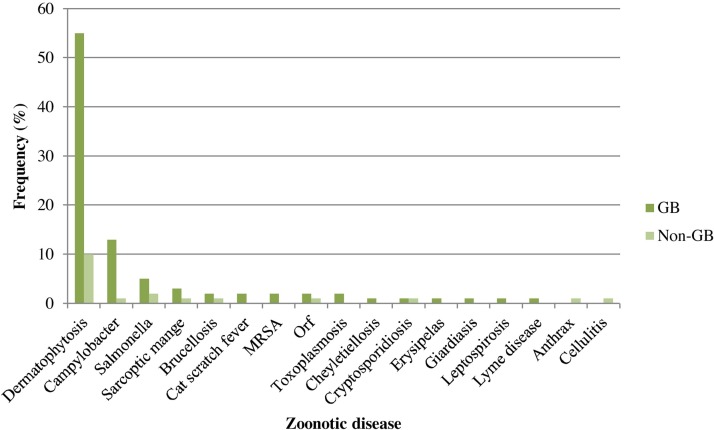
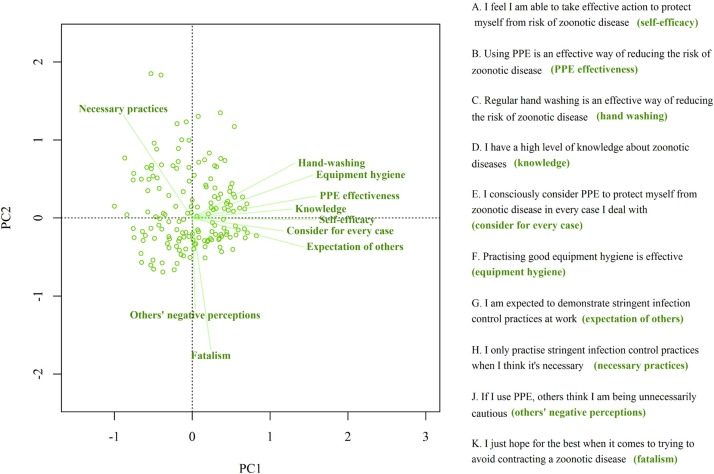
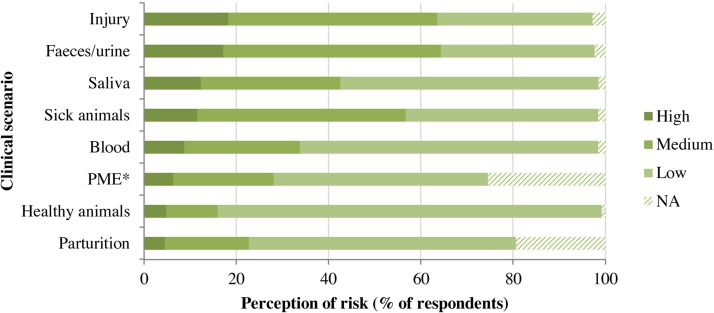
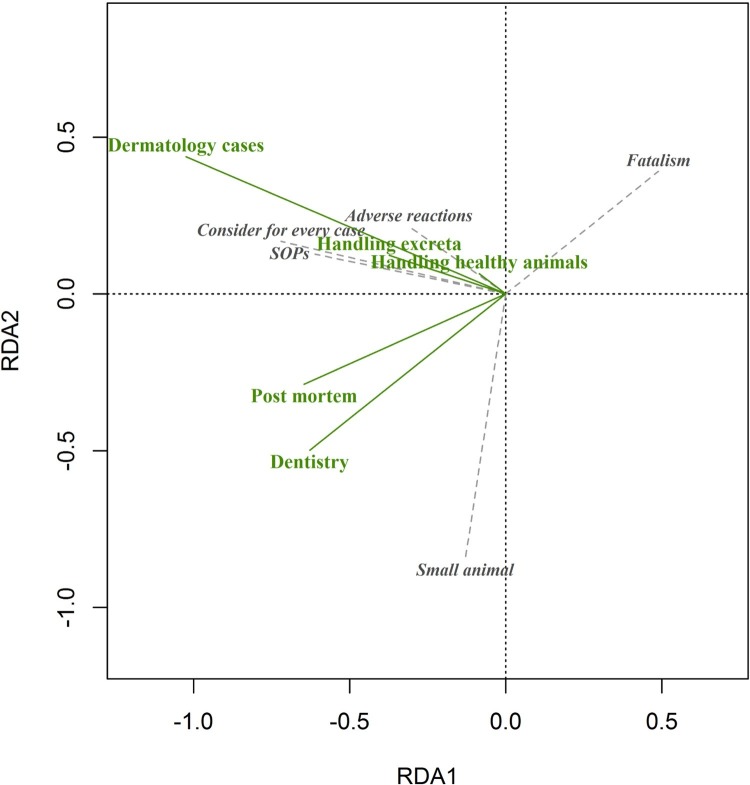
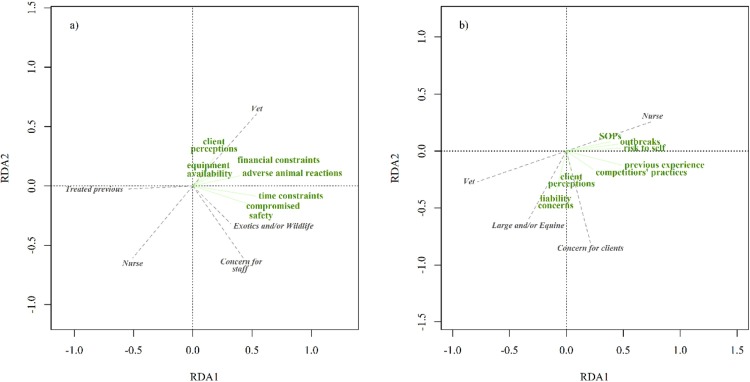
In human and veterinary medicine, reducing the risk of occupationally-acquired infections relies on effective infection prevention and control practices (IPCs). In veterinary medicine, zoonoses present a risk to practitioners, yet little is known about how these risks are understood and how this translates into health protective behaviour. This study aimed to explore risk perceptions within the British veterinary profession and identify motivators and barriers to compliance with IPCs. A cross-sectional study was conducted using veterinary practices registered with the Royal College of Veterinary Surgeons. Here we demonstrate that compliance with IPCs is influenced by more than just knowledge and experience, and understanding of risk is complex and multifactorial. Out of 252 respondents, the majority were not concerned about the risk of zoonoses (57.5%); however, a considerable proportion (34.9%) was. Overall, 44.0% of respondents reported contracting a confirmed or suspected zoonoses, most frequently dermatophytosis (58.6%). In veterinary professionals who had previous experience of managing zoonotic cases, time or financial constraints and a concern for adverse animal reactions were not perceived as barriers to use of personal protective equipment (PPE). For those working in large animal practice, the most significant motivator for using PPE was concerns over liability. When assessing responses to a range of different "infection control attitudes", veterinary nurses tended to have a more positive perspective, compared with veterinary surgeons. Our results demonstrate that IPCs are not always adhered to, and factors influencing motivators and barriers to compliance are not simply based on knowledge and experience. Educating veterinary professionals may help improve compliance to a certain extent, however increased knowledge does not necessarily equate to an increase in risk-mitigating behaviour. This highlights that the construction of risk is complex and circumstance-specific and to get a real grasp on compliance with IPCs, this construction needs to be explored in more depth.
在人类医学和兽医学中,降低职业性感染风险依赖于有效的感染预防与控制措施(IPCs)。在兽医学中,人畜共患病对从业者构成风险,但对于这些风险如何被认知以及如何转化为健康保护行为,我们知之甚少。本研究旨在探究英国兽医行业内的风险认知,并确定遵守IPCs的动机和障碍。我们对皇家兽医学院注册的兽医诊所进行了一项横断面研究。在此,我们证明遵守IPCs不仅仅受到知识和经验的影响,对风险的理解是复杂且多因素的。在252名受访者中,大多数人并不担心人畜共患病的风险(57.5%);然而,相当一部分人(34.9%)对此表示担忧。总体而言,44.0%的受访者报告感染了确诊或疑似的人畜共患病,最常见的是皮肤癣菌病(58.6%)。在有处理人畜共患病病例经验的兽医专业人员中,时间或经济限制以及对动物不良反应的担忧并未被视为使用个人防护装备(PPE)的障碍。对于从事大型动物诊疗的人员来说,使用PPE的最重要动机是对责任的担忧。在评估对一系列不同“感染控制态度”的反应时,与兽医外科医生相比,兽医护士往往持有更积极的观点。我们的结果表明,IPCs并非总是得到遵守,影响遵守动机和障碍的因素并非仅仅基于知识和经验。对兽医专业人员进行教育可能在一定程度上有助于提高遵守率,然而知识的增加并不一定等同于降低风险行为的增加。这凸显出风险的构建是复杂且因具体情况而异的,要真正掌握对IPCs的遵守情况,需要更深入地探究这种构建。