Brescia AnneMarie C, Simonds Megan M, Sullivan Kathleen E, Rose Carlos D
Nemours/Thomas Jefferson University, Wilmington, DE, USA.
Nemours Biomedical Research, Wilmington, DE, USA.
Proteomics Clin Appl. 2017 May;11(5-6). doi: 10.1002/prca.201600088. Epub 2017 Jan 17.
The goal is to investigate the specific contribution of fibroblast-like synoviocytes (FLS) to the inflammatory milieu of the synovium in juvenile idiopathic arthritis (JIA) through detection of secreted proteins.
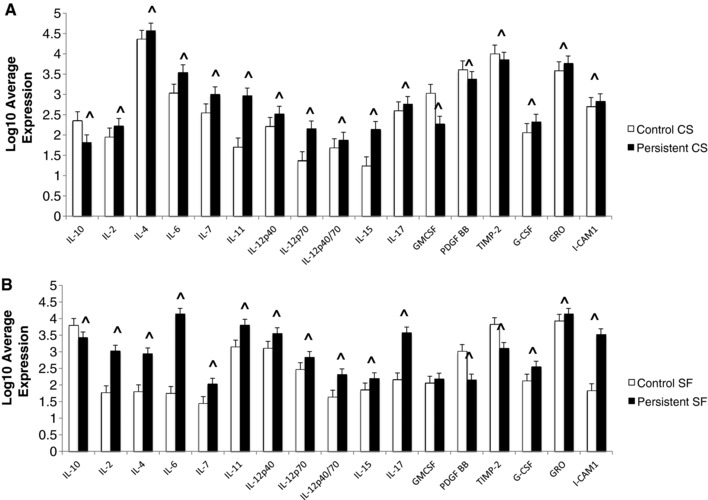
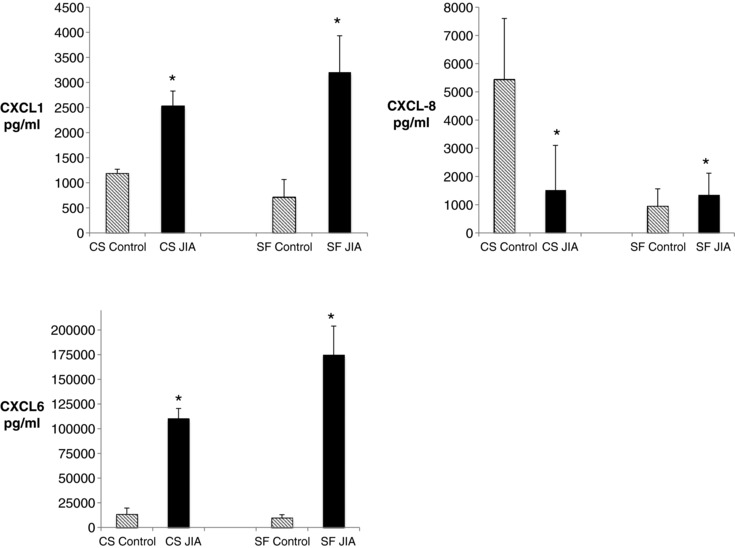
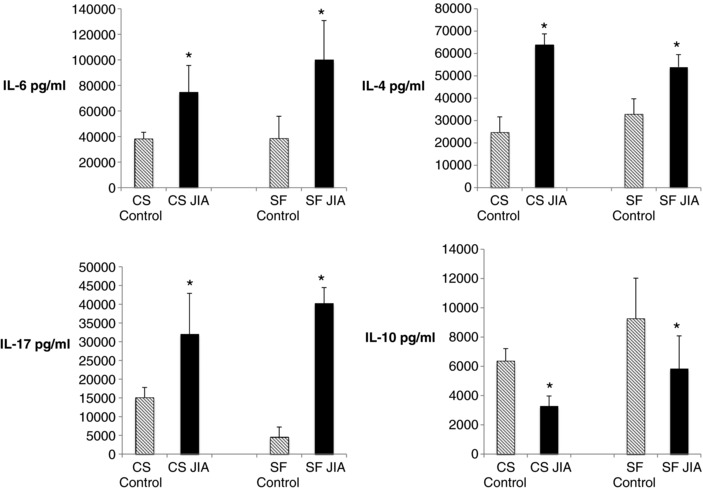
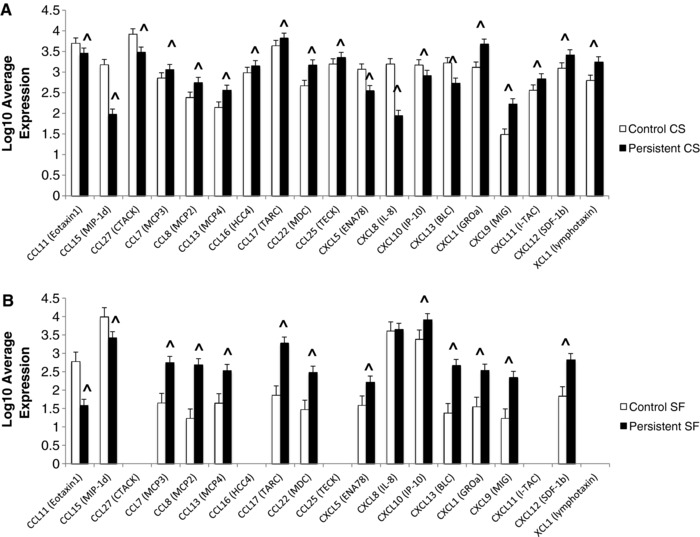
Expression of 89 cytokines and chemokines is determined on unprocessed synovial fluid from controls and JIA patients using antibody arrays. Supernatants from pure cell cultures of FLS grown from synovial fluids or tissues from JIA and controls are also examined for protein expression. Ingenuity Pathway Analysis (IPA) is revealed top pathways and upstream regulators of significant proteins.
Protein studies is revealed that JIA FLS release pro-inflammatory cytokines and chemokines, including IL-4, IL-6, IL-17, CXCL1, and CXCL6, and lose expression of important regulator signals, such as IL-10 and TIMP2. Of the 84 proteins differentially expressed between controls and JIA in the synovial fluid, 1/3 (29 proteins) are differentially expressed in the cell culture supernatants of JIA and control FLS. ELISA of cell culture supernatants and synovial fluid confirmed seven key proteins.
JIA FLS are central to perpetuation of inflammation in JIA, including trafficking of inflammatory cells and effects on the extracellular matrix. These cells express key disease-specific chemokines that, with further refinement, may allow us to tailor therapy appropriately.
通过检测分泌蛋白来研究成纤维样滑膜细胞(FLS)对幼年特发性关节炎(JIA)滑膜炎症环境的具体贡献。
使用抗体阵列测定来自对照组和JIA患者未经处理的滑液中89种细胞因子和趋化因子的表达。还检测了从JIA和对照组的滑液或组织中培养的FLS纯细胞培养上清液中的蛋白质表达。 Ingenuity通路分析(IPA)揭示了重要蛋白质的顶级通路和上游调节因子。
蛋白质研究表明,JIA FLS释放促炎细胞因子和趋化因子,包括IL-4、IL-6、IL-17、CXCL1和CXCL6,并失去重要调节信号如IL-10和TIMP2的表达。在滑液中对照组和JIA之间差异表达的84种蛋白质中,1/3(29种蛋白质)在JIA和对照FLS的细胞培养上清液中差异表达。细胞培养上清液和滑液的ELISA证实了七种关键蛋白质。
JIA FLS对于JIA炎症的持续存在至关重要,包括炎症细胞的运输和对细胞外基质的影响。这些细胞表达关键的疾病特异性趋化因子,随着进一步的细化,可能使我们能够适当地调整治疗方案。