Han Shengcai, Li Dan, Trost Eva, Mayer Klaus F, Vlot A Corina, Heller Werner, Schmid Michael, Hartmann Anton, Rothballer Michael
Research Unit Microbe-Plant Interactions, Department Environmental Sciences, Helmholtz Zentrum München, German Research Center for Environmental Health (GmbH) Neuherberg, Germany.
Research Unit Plant Genome and Systems Biology, Department Environmental Sciences, Helmholtz Zentrum München, German Research Center for Environmental Health (GmbH) Neuherberg, Germany.
Front Plant Sci. 2016 Dec 12;7:1868. doi: 10.3389/fpls.2016.01868. eCollection 2016.
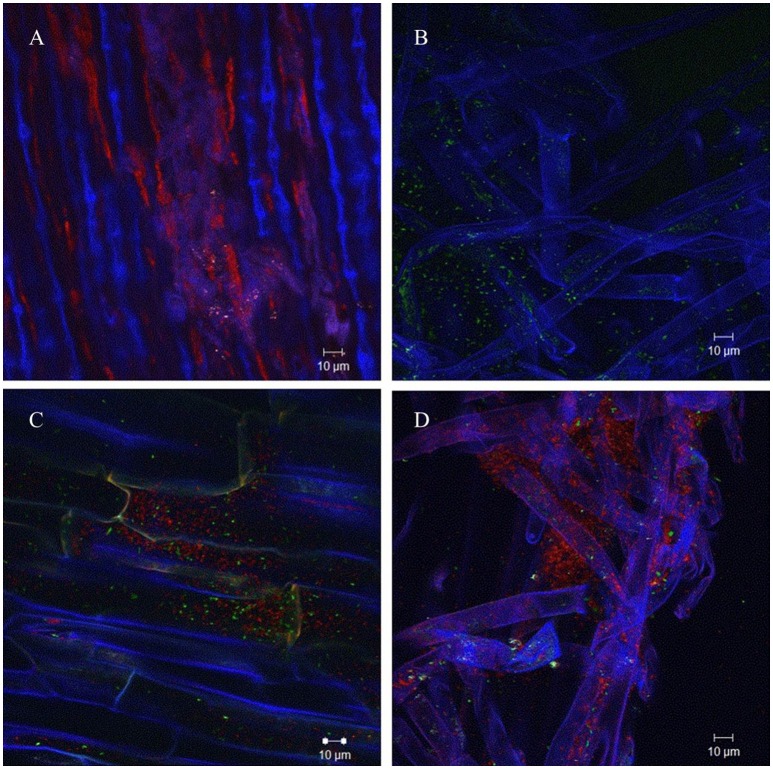
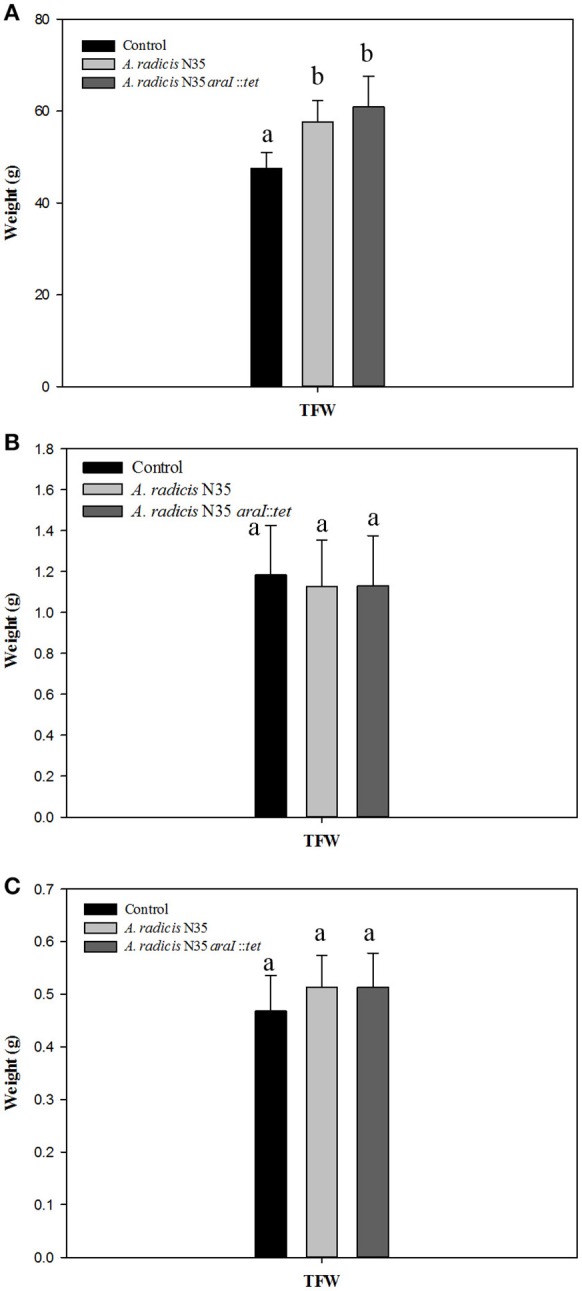
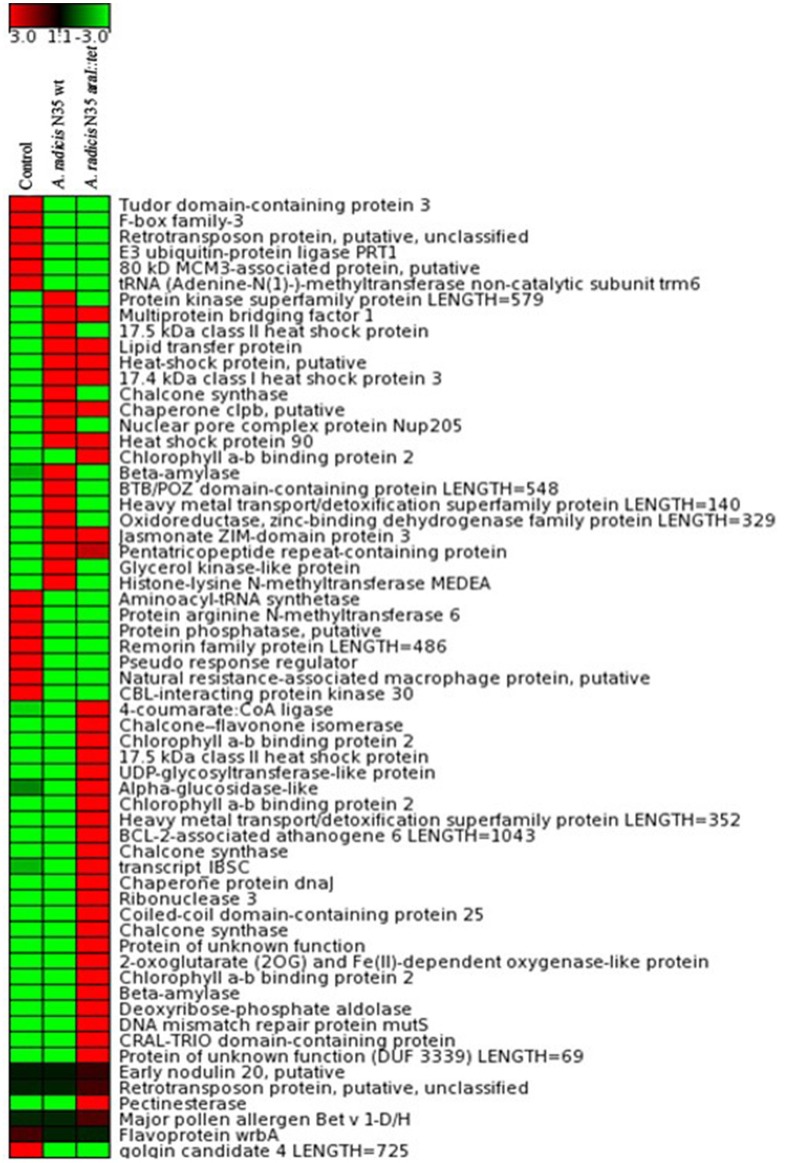
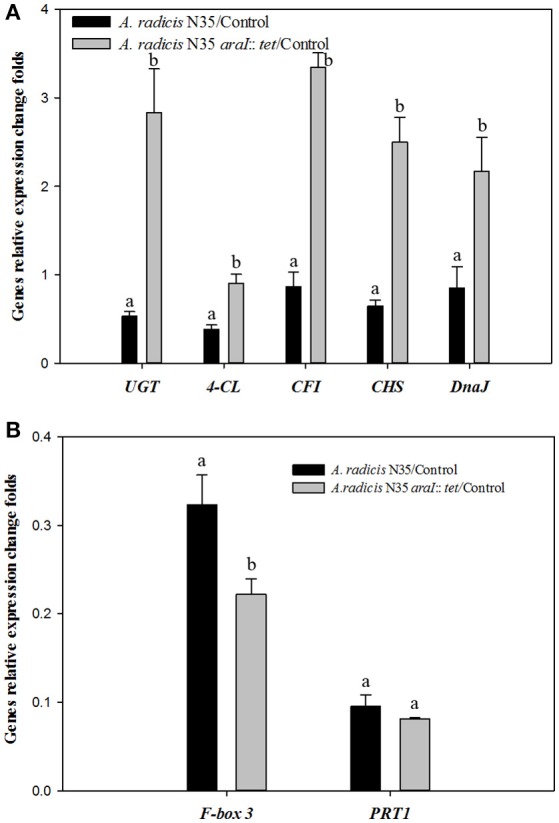
Quorum sensing auto-inducers of the -acyl homoserine lactone (AHL) type produced by Gram-negative bacteria have different effects on plants including stimulation on root growth and/or priming or acquirement of systemic resistance in plants. In this communication the influence of AHL production of the plant growth promoting endophytic rhizosphere bacterium N35 on barley seedlings was investigated. N35 produces 3-hydroxy-C10-homoserine lactone (3-OH-C10-HSL) as the major AHL compound. To study the influence of this QS autoinducer on the interaction with barley, the -biosynthesis gene was deleted. The comparison of inoculation effects of the N35 wild type and the mutant resulted in remarkable differences. While the N35 wild type colonized plant roots effectively in microcolonies, the mutant occurred at the root surface as single cells. Furthermore, in a mixed inoculum the wild type was much more prevalent in colonization than the mutant documenting that the mutation affected root colonization. Nevertheless, a significant plant growth promoting effect could be shown after inoculation of barley with the wild type and the mutant in soil after 2 months cultivation. While N35 wild type showed only a very weak induction of early defense responses in plant RNA expression analysis, the mutant caused increased expression of flavonoid biosynthesis genes. This was corroborated by the accumulation of several flavonoid compounds such as saponarin and lutonarin in leaves of root inoculated barley seedlings. Thus, although the exact role of the flavonoids in this plant response is not clear yet, it can be concluded, that the synthesis of AHLs by has implications on the perception by the host plant barley and thereby contributes to the establishment and function of the bacteria-plant interaction.
革兰氏阴性菌产生的酰基高丝氨酸内酯(AHL)型群体感应自诱导物对植物有不同影响,包括刺激根系生长和/或引发或获得植物的系统抗性。在本通讯中,研究了促进植物生长的内生根际细菌N35产生的AHL对大麦幼苗的影响。N35产生3-羟基-C10-高丝氨酸内酯(3-OH-C10-HSL)作为主要的AHL化合物。为了研究这种群体感应自诱导物对与大麦相互作用的影响,删除了其生物合成基因。比较N35野生型和突变体的接种效果产生了显著差异。虽然N35野生型以微菌落的形式有效地定殖在植物根部,但突变体以单细胞形式出现在根表面。此外,在混合接种物中,野生型在定殖中的普遍性远高于突变体,证明该突变影响了根部定殖。然而,在土壤中种植2个月后,用野生型和突变体接种大麦后,可显示出显著的促进植物生长的效果。在植物RNA表达分析中,N35野生型仅显示出对早期防御反应的非常微弱的诱导,而突变体导致类黄酮生物合成基因的表达增加。接种根部的大麦幼苗叶片中几种类黄酮化合物如皂草苷和卢氏黄烷酮的积累证实了这一点。因此,虽然类黄酮在这种植物反应中的确切作用尚不清楚,但可以得出结论,N35合成AHL对宿主植物大麦的感知有影响,从而有助于细菌与植物相互作用的建立和功能。