Ishijima Junko, Uno Yoshinobu, Nunome Mitsuo, Nishida Chizuko, Kuraku Shigehiro, Matsuda Yoichi
Laboratory of Animal Cytogenetics, Department of Biological Sciences, Graduate School of Science, Hokkaido University, Sapporo, Hokkaido 060-0810, Japan.
Laboratory of Animal Genetics, Department of Applied Molecular Biosciences, Nagoya University, Nagoya, Aichi 464-8601, Japan.
DNA Res. 2017 Feb 1;24(1):93-101. doi: 10.1093/dnares/dsw053.
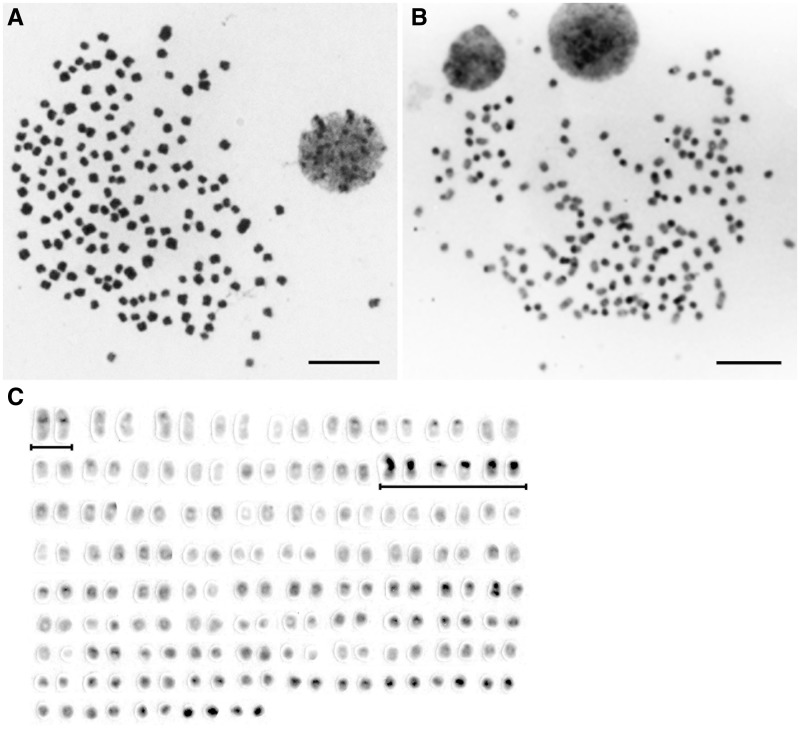
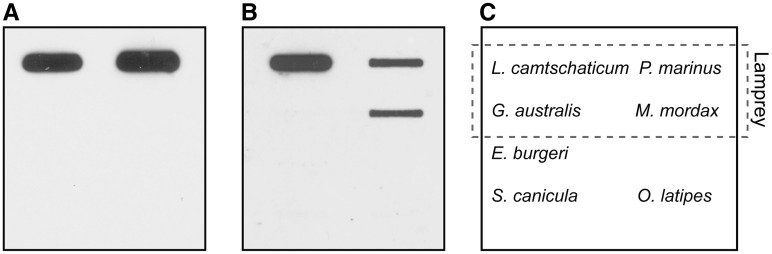
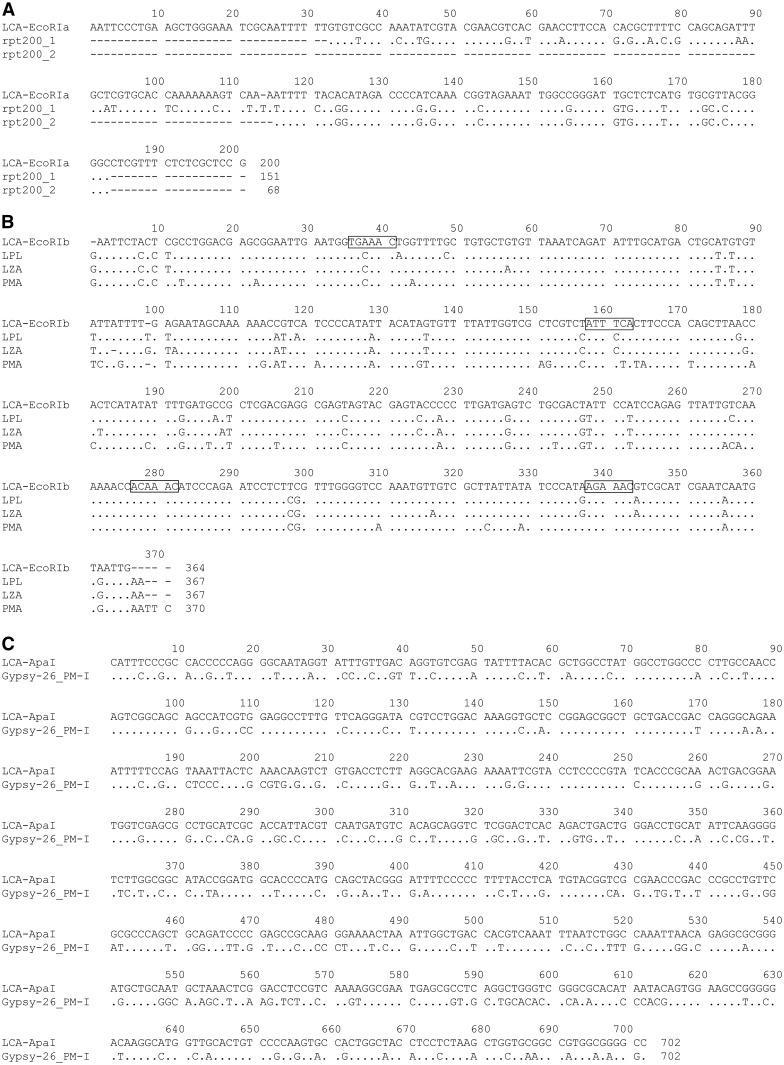
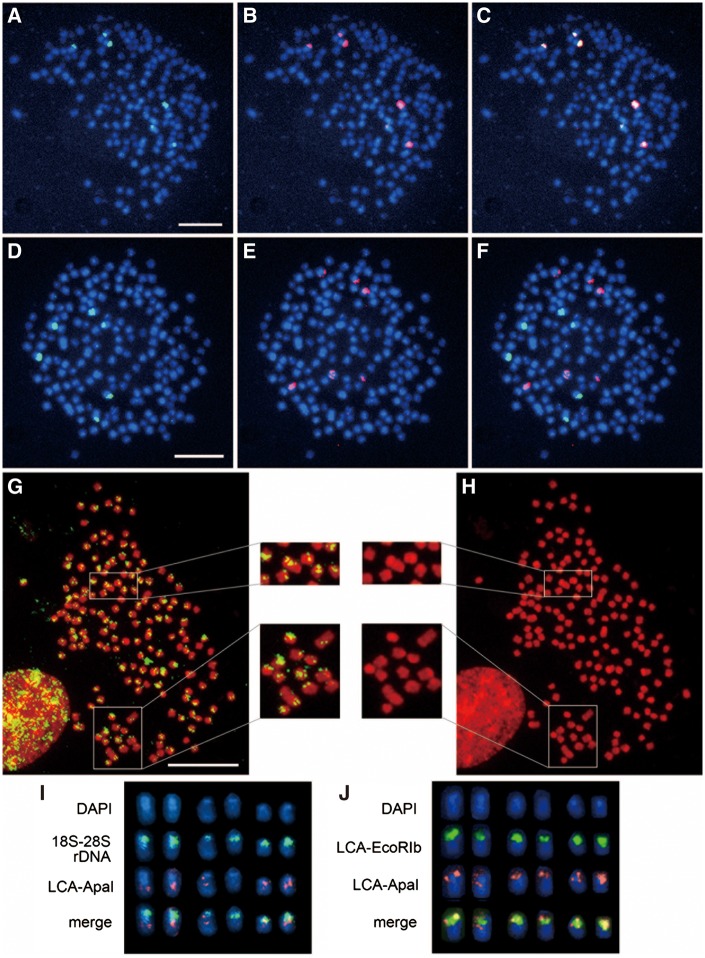
All extant lamprey karyotypes are characterized by almost all dot-shaped microchromosomes. To understand the molecular basis of chromosome structure in lampreys, we performed chromosome C-banding and silver staining and chromosome mapping of the 18S-28S and 5S ribosomal RNA (rRNA) genes and telomeric TTAGGG repeats in the Arctic lamprey (Lethenteron camtschaticum). In addition, we cloned chromosome site-specific repetitive DNA sequences and characterized them by nucleotide sequencing, chromosome in situ hybridization, and filter hybridization. Three types of repetitive sequences were detected; a 200-bp AT-rich repetitive sequence, LCA-EcoRIa that co-localized with the 18S-28S rRNA gene clusters of 3 chromosomal pairs; a 364-bp AT-rich LCA-EcoRIb sequence that showed homology to the EcoRI sequence family from the sea lamprey (Petromyzon marinus), which contains short repeats as centromeric motifs; and a GC-rich 702-bp LCA-ApaI sequence that was distributed on nearly all chromosomes and showed significant homology with the integrase-coding region of a Ty3/Gypsy family long terminal repeat (LTR) retrotransposon. All three repetitive sequences are highly conserved within the Petromyzontidae or within Petromyzontidae and Mordaciidae. Molecular cytogenetic characterization of these site-specific repeats showed that they may be correlated with programed genome rearrangement (LCA-EcoRIa), centromere structure and function (LCA-EcoRIb), and site-specific amplification of LTR retroelements through homogenization between non-homologous chromosomes (LCA-ApaI).
所有现存七鳃鳗的核型几乎都以点状微染色体为特征。为了解七鳃鳗染色体结构的分子基础,我们对北极七鳃鳗(Lethenteron camtschaticum)进行了染色体C显带和银染,以及18S - 28S和5S核糖体RNA(rRNA)基因和端粒TTAGGG重复序列的染色体定位。此外,我们克隆了染色体位点特异性重复DNA序列,并通过核苷酸测序、染色体原位杂交和滤膜杂交对其进行了表征。检测到三种类型的重复序列;一种200 bp富含AT的重复序列LCA - EcoRIa,它与3对染色体的18S - 28S rRNA基因簇共定位;一种364 bp富含AT的LCA - EcoRIb序列,它与海七鳃鳗(Petromyzon marinus)的EcoRI序列家族具有同源性,该家族包含短重复序列作为着丝粒基序;以及一种富含GC的702 bp LCA - ApaI序列,它分布在几乎所有染色体上,并与Ty3 / Gypsy家族长末端重复(LTR)逆转座子的整合酶编码区具有显著同源性。所有这三种重复序列在七鳃鳗科内或七鳃鳗科和短头七鳃鳗科内都高度保守。这些位点特异性重复序列的分子细胞遗传学特征表明,它们可能与程序性基因组重排(LCA - EcoRIa)、着丝粒结构和功能(LCA - EcoRIb)以及通过非同源染色体之间的均质化实现的LTR逆转元件的位点特异性扩增(LCA - ApaI)相关。