Gould Russell, Bassen David M, Chakrabarti Anirikh, Varner Jeffrey D, Butcher Jonathan
Nancy E. and Peter C. Meinig School of Biomedical Engineering, Cornell University, Ithaca, New York, United States of America.
Robert Frederick Smith School of Chemical and Biomolecular Engineering, Cornell University, Ithaca, New York, United States of America.
PLoS Comput Biol. 2016 Dec 27;12(12):e1005251. doi: 10.1371/journal.pcbi.1005251. eCollection 2016 Dec.
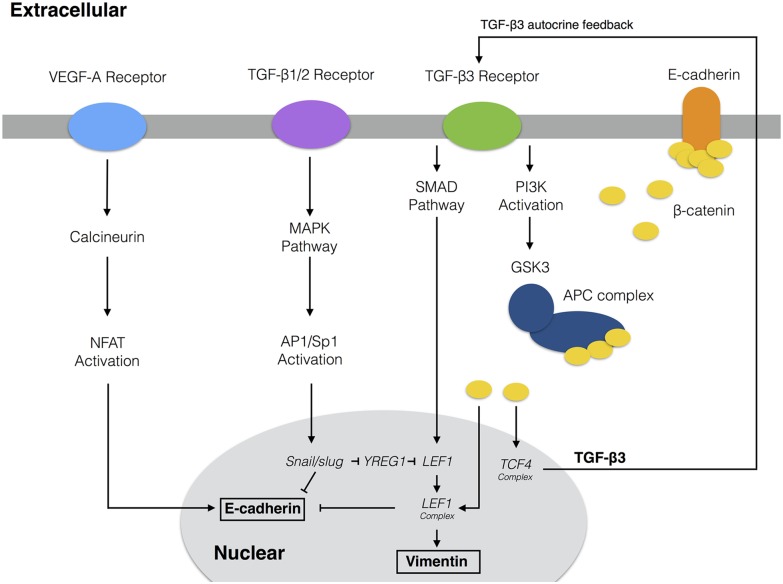
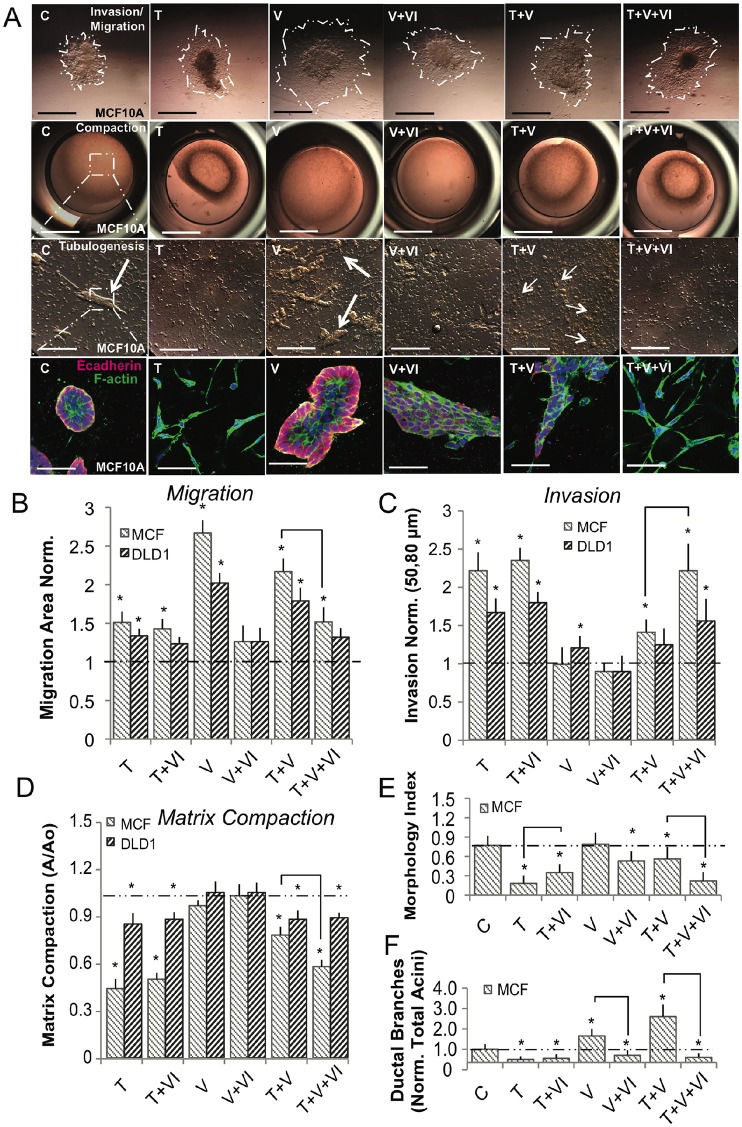
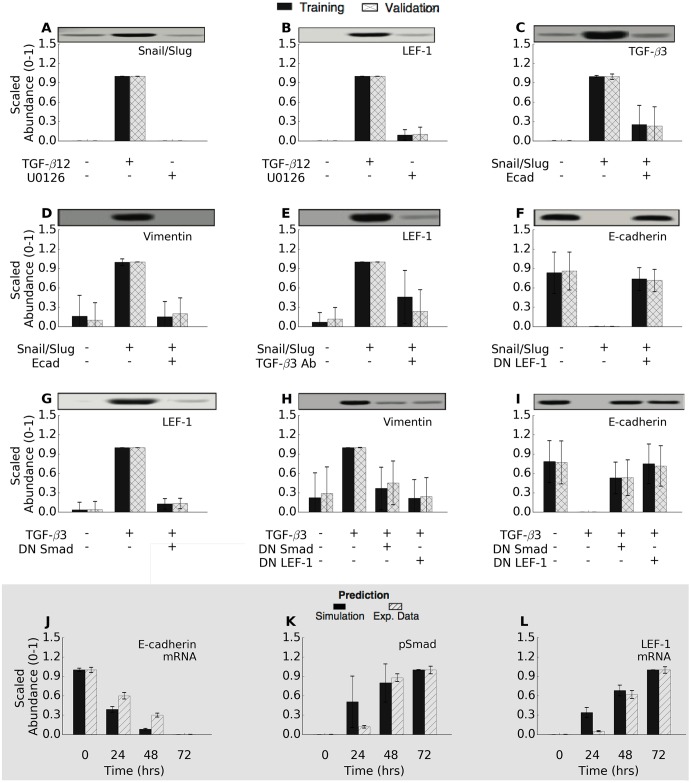
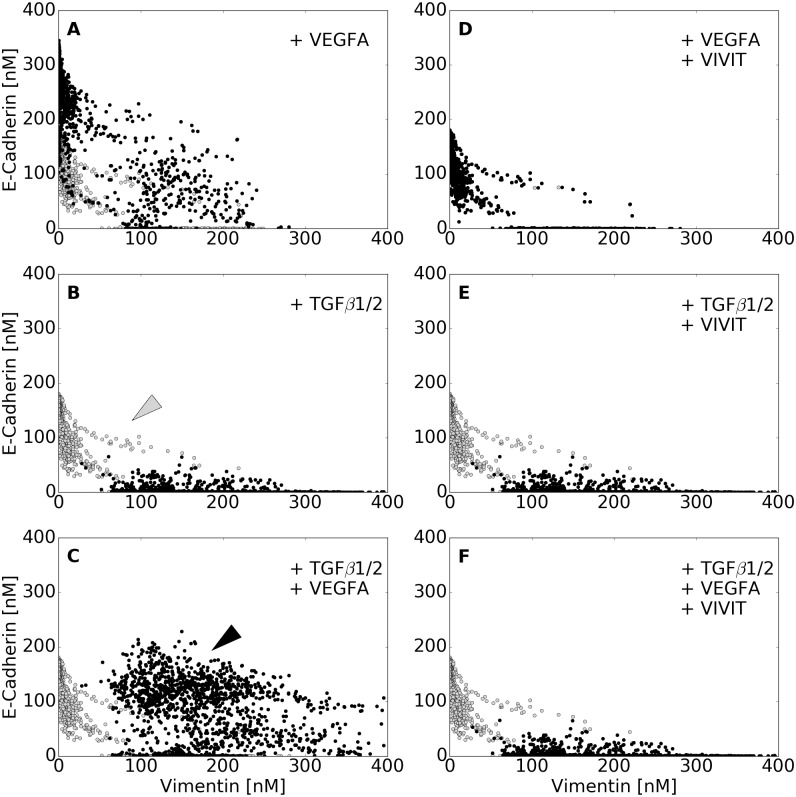
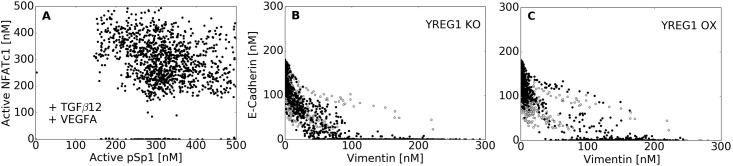
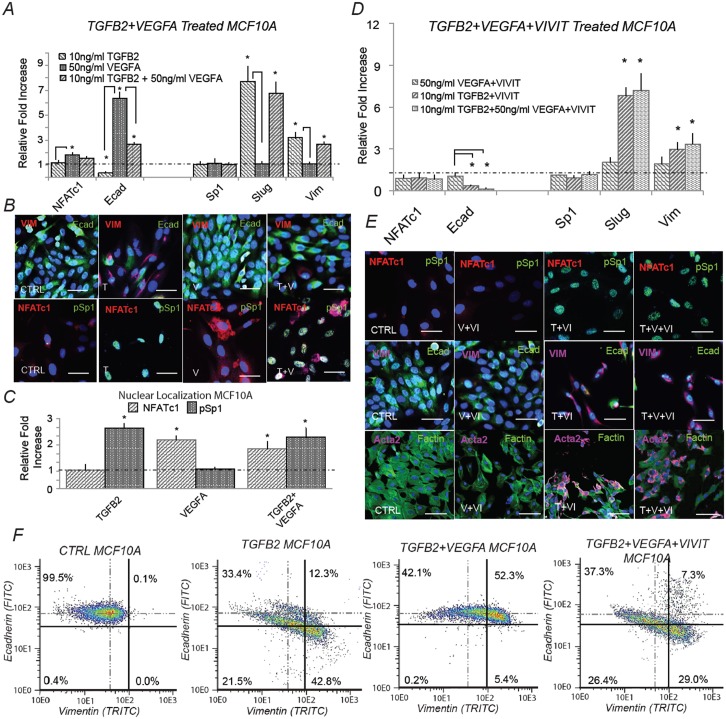
Epithelial to mesenchymal transition (EMT) is an essential differentiation program during tissue morphogenesis and remodeling. EMT is induced by soluble transforming growth factor β (TGF-β) family members, and restricted by vascular endothelial growth factor family members. While many downstream molecular regulators of EMT have been identified, these have been largely evaluated individually without considering potential crosstalk. In this study, we created an ensemble of dynamic mathematical models describing TGF-β induced EMT to better understand the operational hierarchy of this complex molecular program. We used ordinary differential equations (ODEs) to describe the transcriptional and post-translational regulatory events driving EMT. Model parameters were estimated from multiple data sets using multiobjective optimization, in combination with cross-validation. TGF-β exposure drove the model population toward a mesenchymal phenotype, while an epithelial phenotype was enhanced following vascular endothelial growth factor A (VEGF-A) exposure. Simulations predicted that the transcription factors phosphorylated SP1 and NFAT were master regulators promoting or inhibiting EMT, respectively. Surprisingly, simulations also predicted that a cellular population could exhibit phenotypic heterogeneity (characterized by a significant fraction of the population with both high epithelial and mesenchymal marker expression) if treated simultaneously with TGF-β and VEGF-A. We tested this prediction experimentally in both MCF10A and DLD1 cells and found that upwards of 45% of the cellular population acquired this hybrid state in the presence of both TGF-β and VEGF-A. We experimentally validated the predicted NFAT/Sp1 signaling axis for each phenotype response. Lastly, we found that cells in the hybrid state had significantly different functional behavior when compared to VEGF-A or TGF-β treatment alone. Together, these results establish a predictive mechanistic model of EMT susceptibility, and potentially reveal a novel signaling axis which regulates carcinoma progression through an EMT versus tubulogenesis response.
上皮-间质转化(EMT)是组织形态发生和重塑过程中一个重要的分化程序。EMT由可溶性转化生长因子β(TGF-β)家族成员诱导,并受血管内皮生长因子家族成员的限制。虽然已经鉴定出许多EMT的下游分子调节因子,但这些大多是单独评估的,没有考虑潜在的相互作用。在本研究中,我们创建了一组描述TGF-β诱导的EMT的动态数学模型,以更好地理解这个复杂分子程序的运作层次。我们使用常微分方程(ODEs)来描述驱动EMT的转录和翻译后调控事件。通过多目标优化结合交叉验证,从多个数据集估计模型参数。TGF-β暴露使模型群体趋向于间充质表型,而血管内皮生长因子A(VEGF-A)暴露后上皮表型增强。模拟预测,磷酸化的转录因子SP1和NFAT分别是促进或抑制EMT的主要调节因子。令人惊讶的是,模拟还预测,如果同时用TGF-β和VEGF-A处理,细胞群体可能表现出表型异质性(特征是群体中有很大一部分同时具有高上皮和间充质标志物表达)。我们在MCF10A和DLD1细胞中对这一预测进行了实验验证,发现在同时存在TGF-β和VEGF-A的情况下,超过45%的细胞群体获得了这种混合状态。我们通过实验验证了每种表型反应的预测NFAT/Sp1信号轴。最后,我们发现与单独用VEGF-A或TGF-β处理相比,处于混合状态的细胞具有明显不同的功能行为。总之,这些结果建立了一个EMT易感性的预测机制模型,并可能揭示一个新的信号轴,该信号轴通过EMT与管状发生反应来调节癌进展。