Hong Tian, Watanabe Kazuhide, Ta Catherine Ha, Villarreal-Ponce Alvaro, Nie Qing, Dai Xing
Department of Mathematics, University of California, Irvine, Irvine, California, United States of America.
Center for Complex Biological Systems, University of California, Irvine, Irvine, California, United States of America.
PLoS Comput Biol. 2015 Nov 10;11(11):e1004569. doi: 10.1371/journal.pcbi.1004569. eCollection 2015 Nov.
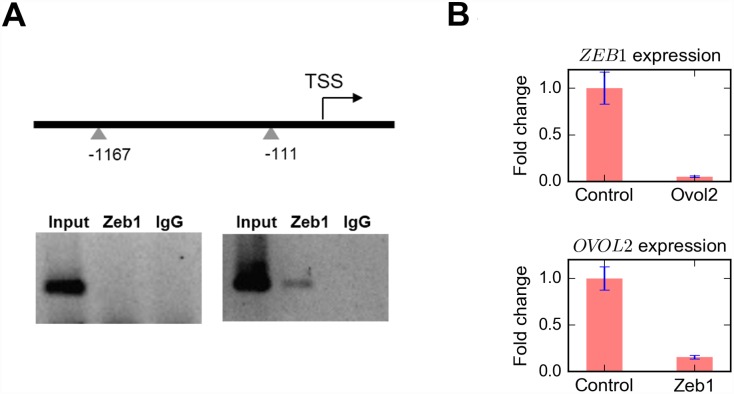
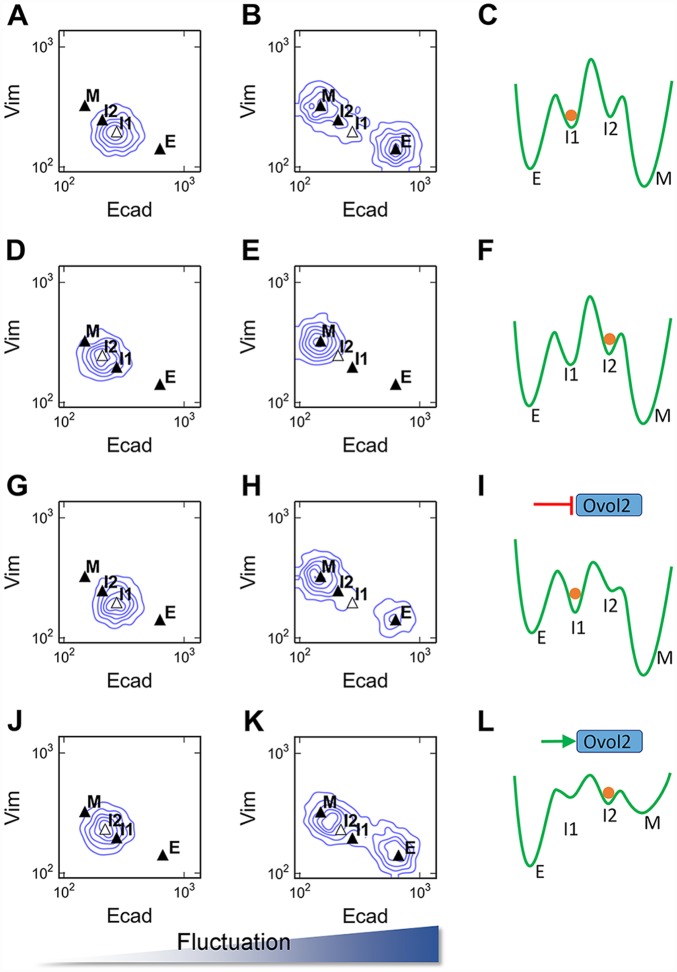
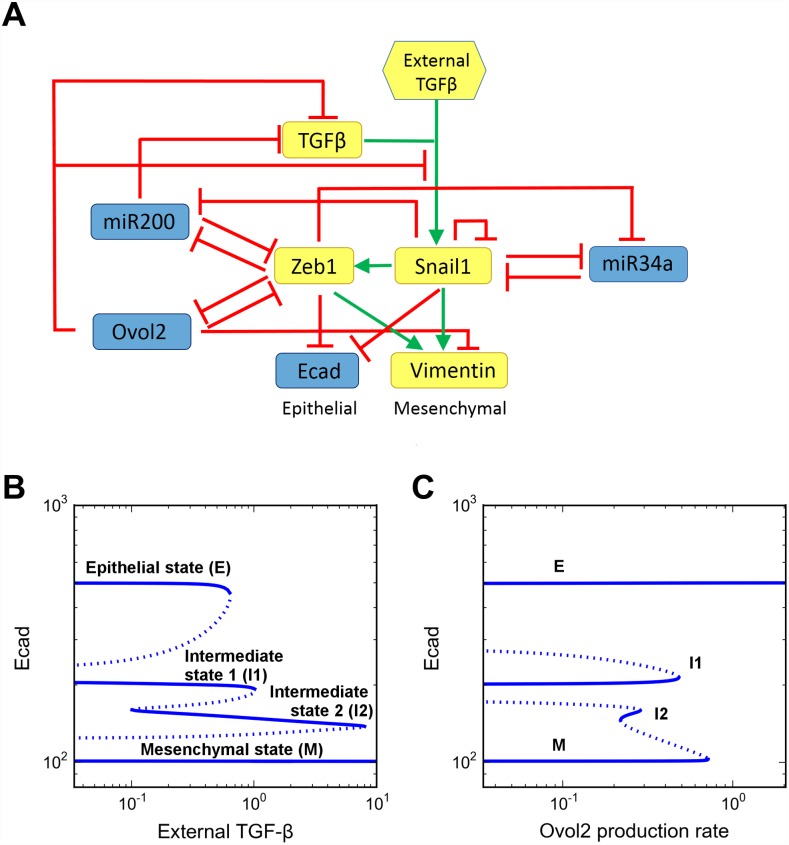
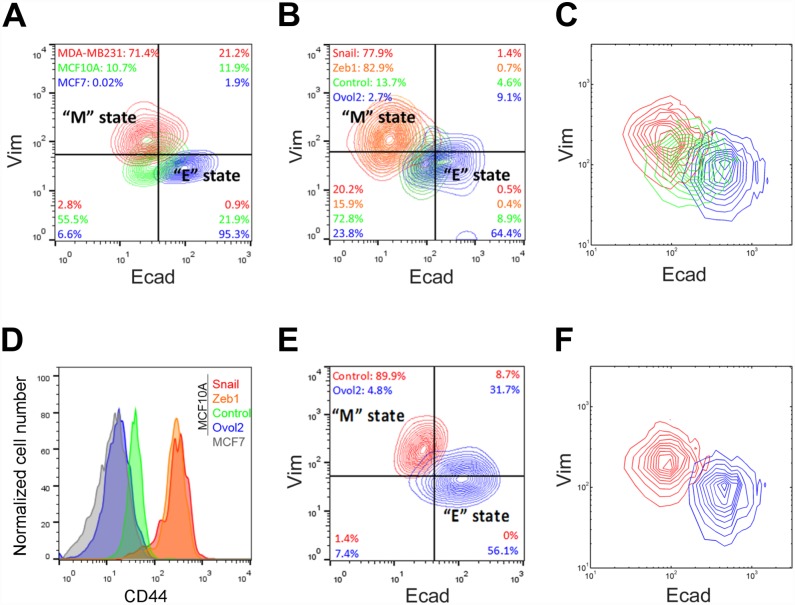
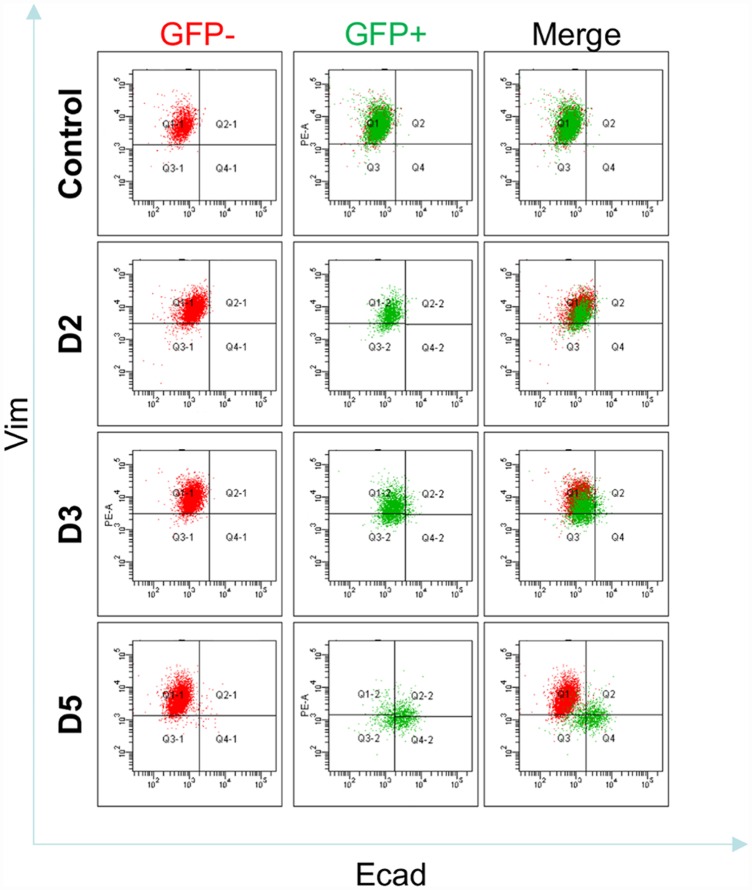
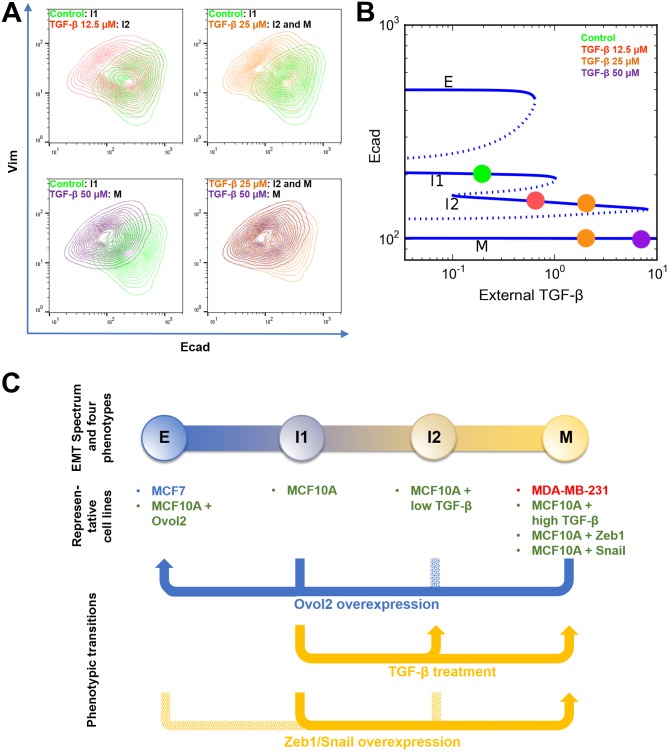
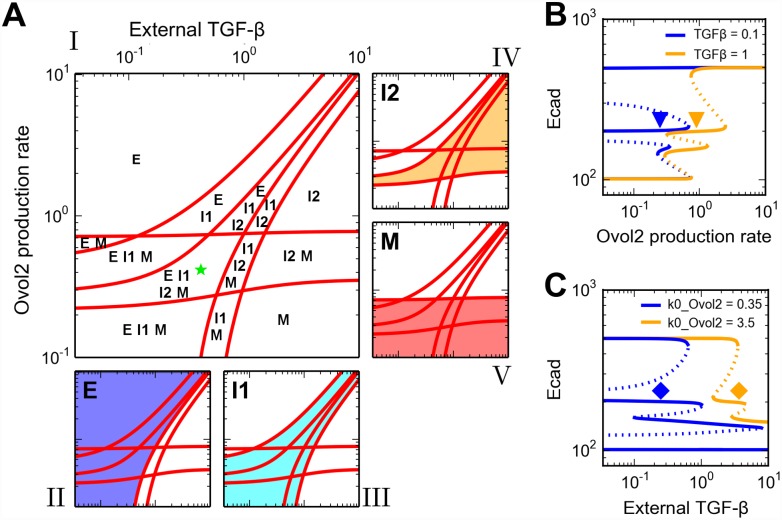
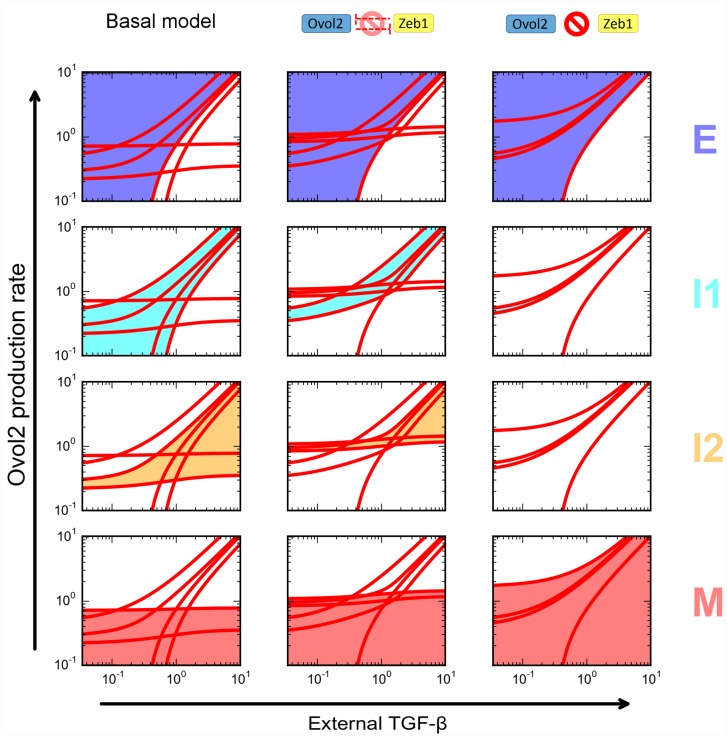
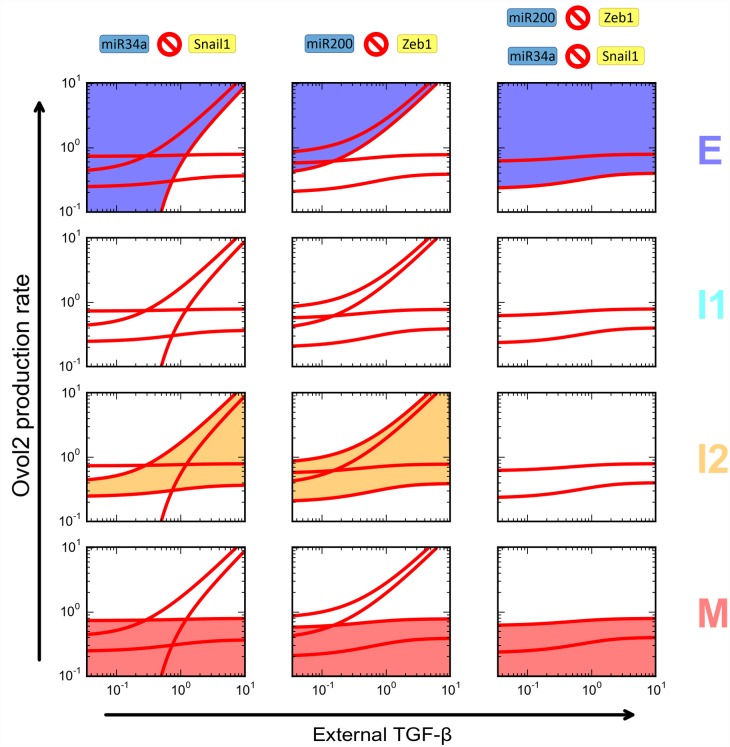
Reversible epithelial-to-mesenchymal transition (EMT) is central to tissue development, epithelial stemness, and cancer metastasis. While many regulatory elements have been identified to induce EMT, the complex process underlying such cellular plasticity remains poorly understood. Utilizing a systems biology approach integrating modeling and experiments, we found multiple intermediate states contributing to EMT and that the robustness of the transitions is modulated by transcriptional factor Ovol2. In particular, we obtained evidence for a mutual inhibition relationship between Ovol2 and EMT inducer Zeb1, and observed that adding this regulation generates a novel four-state system consisting of two distinct intermediate phenotypes that differ in differentiation propensities and are favored in different environmental conditions. We identified epithelial cells that naturally exist in an intermediate state with bidirectional differentiation potential, and found the balance between EMT-promoting and -inhibiting factors to be critical in achieving and selecting between intermediate states. Our analysis suggests a new design principle in controlling cellular plasticity through multiple intermediate cell fates and underscores the critical involvement of Ovol2 and its associated molecular regulations.
可逆性上皮-间质转化(EMT)对于组织发育、上皮干性和癌症转移至关重要。虽然已经确定了许多诱导EMT的调控元件,但这种细胞可塑性背后的复杂过程仍知之甚少。利用整合建模和实验的系统生物学方法,我们发现多个中间状态促成了EMT,并且转录因子Ovol2调节了这些转变的稳健性。特别是,我们获得了Ovol2与EMT诱导因子Zeb1之间存在相互抑制关系的证据,并观察到加入这种调控会产生一个新的四态系统,该系统由两种不同的中间表型组成,它们在分化倾向方面存在差异,并且在不同的环境条件下受到青睐。我们鉴定出自然存在于具有双向分化潜能的中间状态的上皮细胞,并发现促进EMT和抑制EMT的因子之间的平衡对于实现中间状态并在中间状态之间进行选择至关重要。我们的分析提出了一种通过多种中间细胞命运控制细胞可塑性的新设计原则,并强调了Ovol2及其相关分子调控的关键作用。