Stabell Alex C, Hawkins John, Li Manqing, Gao Xia, David Michael, Press William H, Sawyer Sara L
BioFrontiers Institute, University of Colorado Boulder, Boulder, CO, United States of America.
Institute for Computational Engineering and Sciences, University of Texas at Austin, TX, United States of America.
PLoS Pathog. 2016 Dec 27;12(12):e1006066. doi: 10.1371/journal.ppat.1006066. eCollection 2016 Dec.
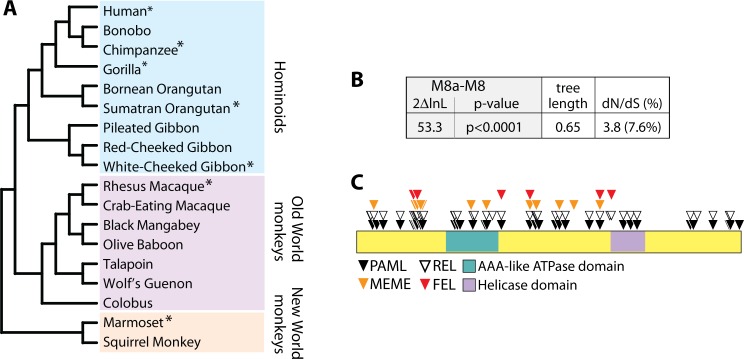
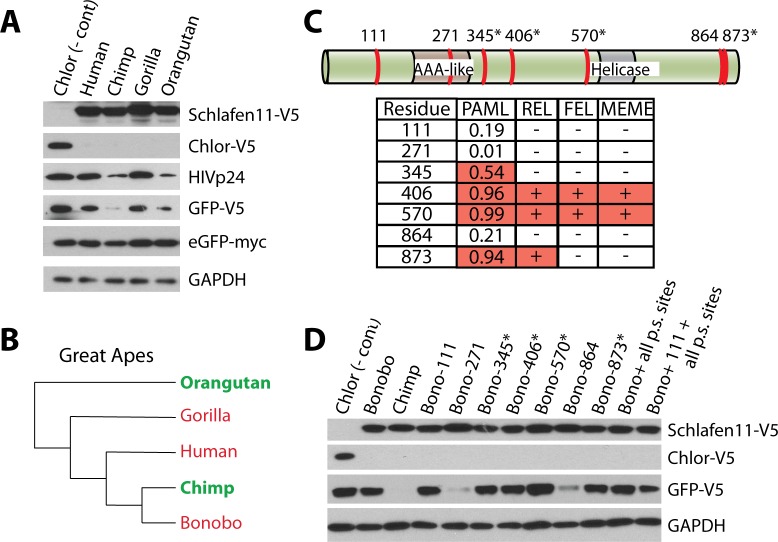
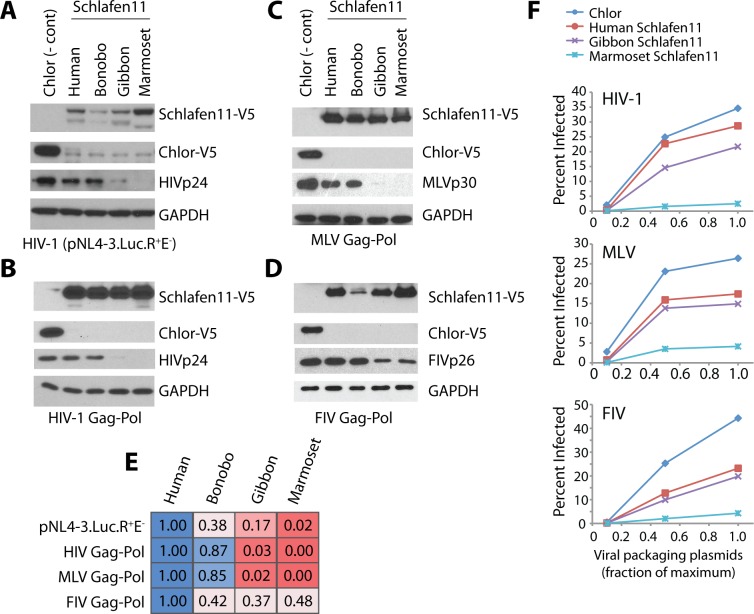
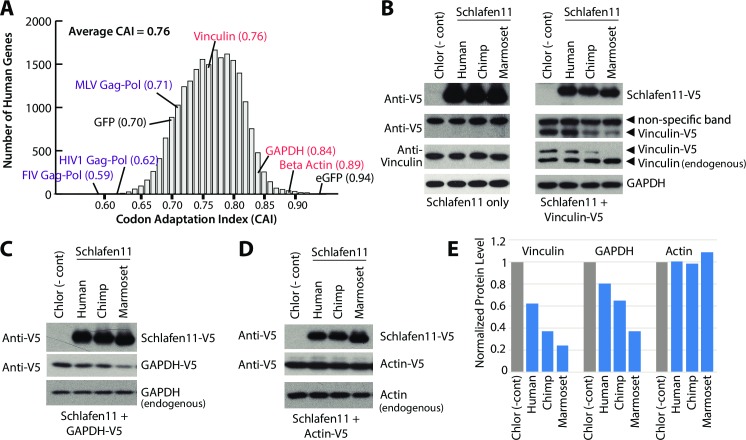
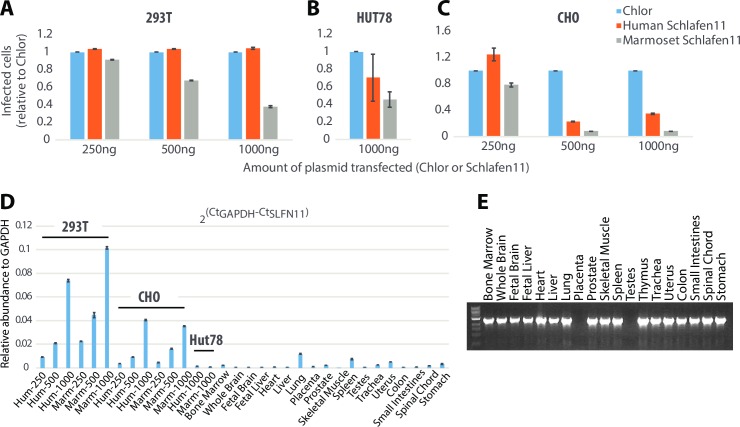
Schlafen11 (encoded by the SLFN11 gene) has been shown to inhibit the accumulation of HIV-1 proteins. We show that the SLFN11 gene is under positive selection in simian primates and is species-specific in its activity against HIV-1. The activity of human Schlafen11 is relatively weak compared to that of some other primate versions of this protein, with the versions encoded by chimpanzee, orangutan, gibbon, and marmoset being particularly potent inhibitors of HIV-1 protein production. Interestingly, we find that Schlafen11 is functional in the absence of infection and reduces protein production from certain non-viral (GFP) and even host (Vinculin and GAPDH) transcripts. This suggests that Schlafen11 may just generally block protein production from non-codon optimized transcripts. Because Schlafen11 is an interferon-stimulated gene with a broad ability to inhibit protein production from many host and viral transcripts, its role may be to create a general antiviral state in the cell. Interestingly, the strong inhibitors such as marmoset Schlafen11 consistently block protein production better than weak primate Schlafen11 proteins, regardless of the virus or host target being analyzed. Further, we show that the residues to which species-specific differences in Schlafen11 potency map are distinct from residues that have been targeted by positive selection. We speculate that the positive selection of SLFN11 could have been driven by a number of different factors, including interaction with one or more viral antagonists that have yet to be identified.
Schlafen11(由SLFN11基因编码)已被证明可抑制HIV-1蛋白的积累。我们发现,SLFN11基因在猿猴灵长类动物中受到正选择,并且在抗HIV-1活性方面具有物种特异性。与该蛋白的其他一些灵长类动物版本相比,人类Schlafen11的活性相对较弱,而由黑猩猩、猩猩、长臂猿和狨猴编码的版本是HIV-1蛋白产生的特别有效的抑制剂。有趣的是,我们发现Schlafen11在未感染的情况下也具有功能,并且可减少某些非病毒(绿色荧光蛋白)甚至宿主(纽蛋白和甘油醛-3-磷酸脱氢酶)转录本的蛋白质产生。这表明Schlafen11可能通常会阻断非密码子优化转录本的蛋白质产生。由于Schlafen11是一种干扰素刺激基因,具有广泛抑制许多宿主和病毒转录本蛋白质产生的能力,其作用可能是在细胞中建立一种普遍的抗病毒状态。有趣的是,无论分析的是何种病毒或宿主靶点,诸如狨猴Schlafen11这样的强抑制剂始终比灵长类动物的弱Schlafen11蛋白能更好地阻断蛋白质产生。此外,我们表明,Schlafen11效力的物种特异性差异所映射到的残基与受到正选择的残基不同。我们推测,SLFN11的正选择可能是由许多不同因素驱动的,包括与一种或多种尚未确定的病毒拮抗剂的相互作用。