Even-Tov Eran, Omer Bendori Shira, Pollak Shaul, Eldar Avigdor
Department of Molecular Microbiology and Biotechnology, Faculty of Life Sciences, Tel-Aviv University, Tel-Aviv, Israel.
PLoS Biol. 2016 Dec 29;14(12):e2000330. doi: 10.1371/journal.pbio.2000330. eCollection 2016 Dec.
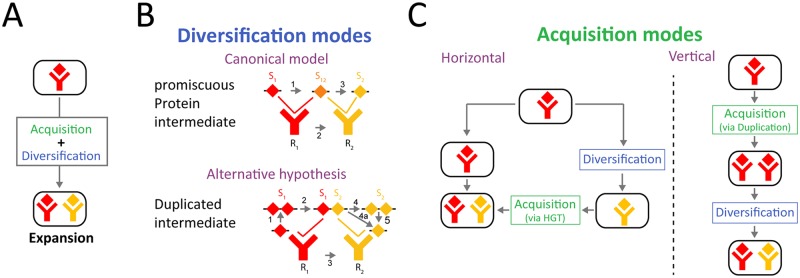
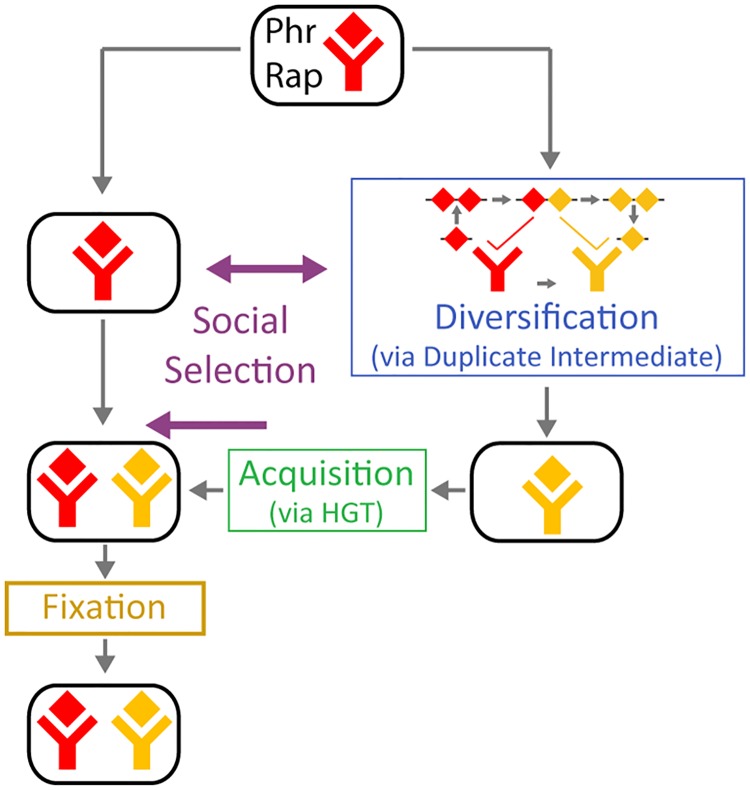
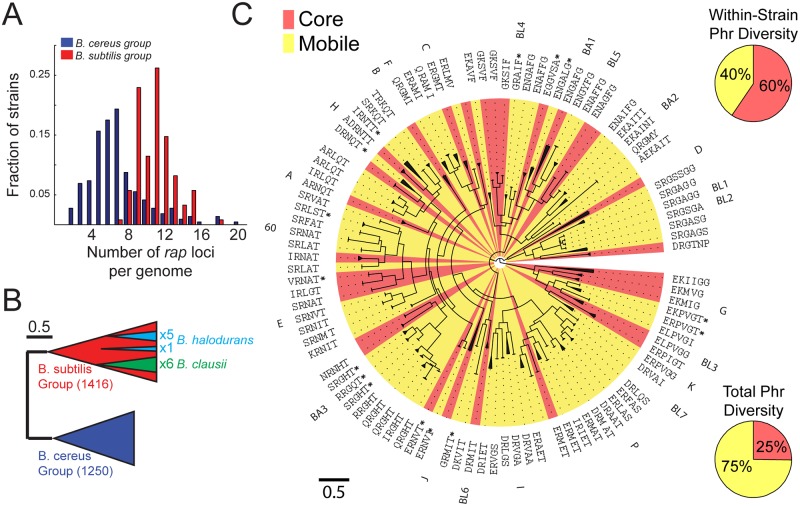
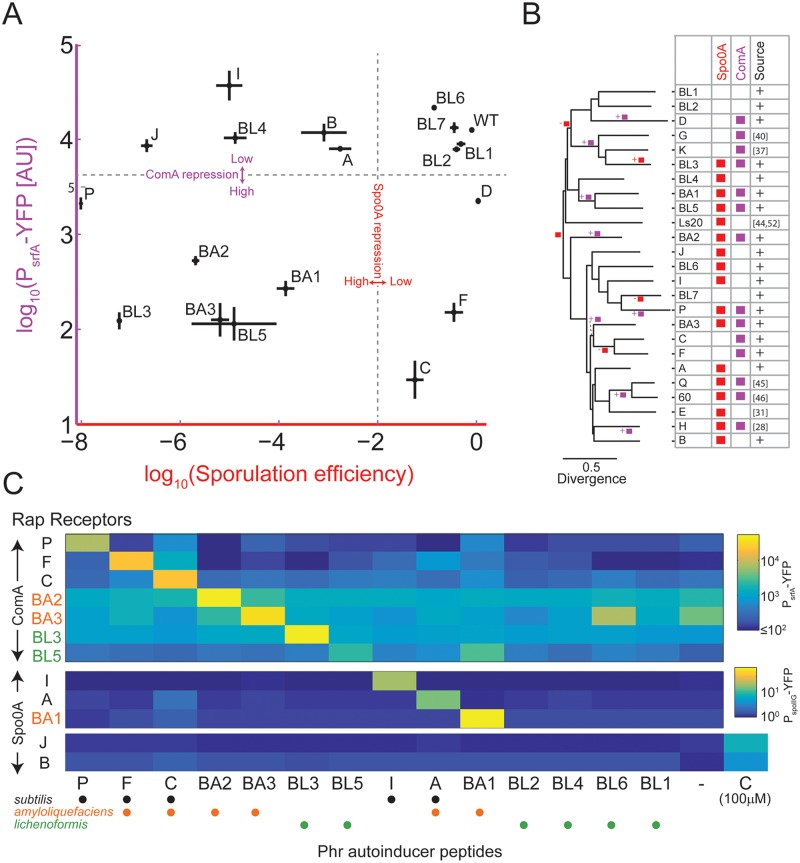
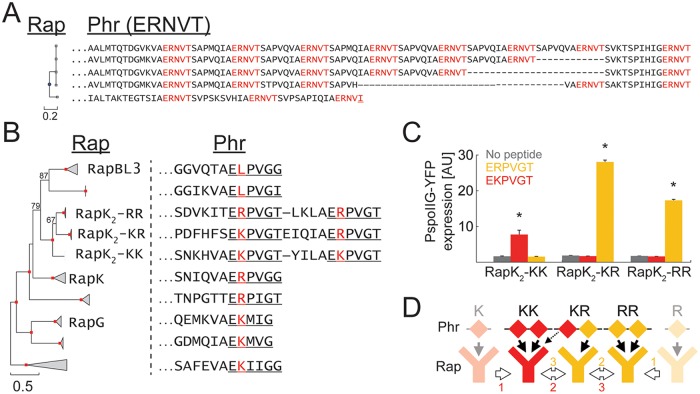
Evolutionary expansion of signaling pathway families often underlies the evolution of regulatory complexity. Expansion requires the acquisition of a novel homologous pathway and the diversification of pathway specificity. Acquisition can occur either vertically, by duplication, or through horizontal transfer, while divergence of specificity is thought to occur through a promiscuous protein intermediate. The way by which these mechanisms shape the evolution of rapidly diverging signaling families is unclear. Here, we examine this question using the highly diversified Rap-Phr cell-cell signaling system, which has undergone massive expansion in the genus Bacillus. To this end, genomic sequence analysis of >300 Bacilli genomes was combined with experimental analysis of the interaction of Rap receptors with Phr autoinducers and downstream targets. Rap-Phr expansion is shown to have occurred independently in multiple Bacillus lineages, with >80 different putative rap-phr alleles evolving in the Bacillius subtilis group alone. The specificity of many rap-phr alleles and the rapid gain and loss of Rap targets are experimentally demonstrated. Strikingly, both horizontal and vertical processes were shown to participate in this expansion, each with a distinct role. Horizontal gene transfer governs the acquisition of already diverged rap-phr alleles, while intralocus duplication and divergence of the phr gene create the promiscuous intermediate required for the divergence of Rap-Phr specificity. Our results suggest a novel role for transient gene duplication and divergence during evolutionary shifts in specificity.
信号通路家族的进化扩张往往是调控复杂性进化的基础。扩张需要获得一条新的同源通路以及通路特异性的多样化。获得可以通过垂直方式(即基因复制)或水平转移发生,而特异性的分化被认为是通过一种混杂的蛋白质中间体发生的。这些机制塑造快速分化的信号家族进化的方式尚不清楚。在这里,我们使用高度多样化的Rap-Phr细胞间信号系统来研究这个问题,该系统在芽孢杆菌属中经历了大规模扩张。为此,对300多个芽孢杆菌基因组进行了基因组序列分析,并结合了对Rap受体与Phr自诱导物及下游靶点相互作用的实验分析。结果表明,Rap-Phr的扩张在多个芽孢杆菌谱系中独立发生,仅在枯草芽孢杆菌组中就进化出了80多个不同的假定rap-phr等位基因。实验证明了许多rap-phr等位基因的特异性以及Rap靶点的快速获得和丧失。引人注目的是,水平和垂直过程都参与了这种扩张,各自发挥着独特的作用。水平基因转移控制着已分化的rap-phr等位基因的获得,而phr基因的基因座内复制和分化则产生了Rap-Phr特异性分化所需的混杂中间体。我们的结果表明,在特异性的进化转变过程中,瞬时基因复制和分化具有新的作用。