Nguyen Van Kinh, Klawonn Frank, Mikolajczyk Rafael, Hernandez-Vargas Esteban A
Systems Medicine of Infectious Diseases, Department of Systems Immunology and Braunschweig Integrated Centre of Systems Biology, Helmholtz Centre for Infection Research, Braunschweig, Germany.
Epidemiology Department, Ho Chi Minh University of Medicine and Pharmacy, Ho Chi Minh, Vietnam.
PLoS One. 2016 Dec 30;11(12):e0167568. doi: 10.1371/journal.pone.0167568. eCollection 2016.
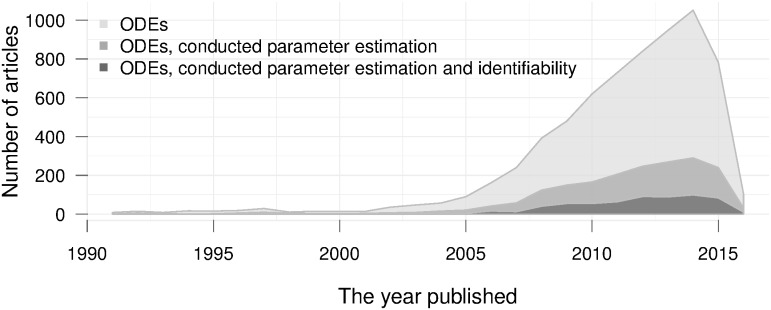
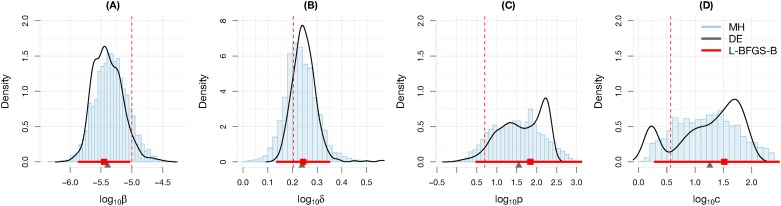
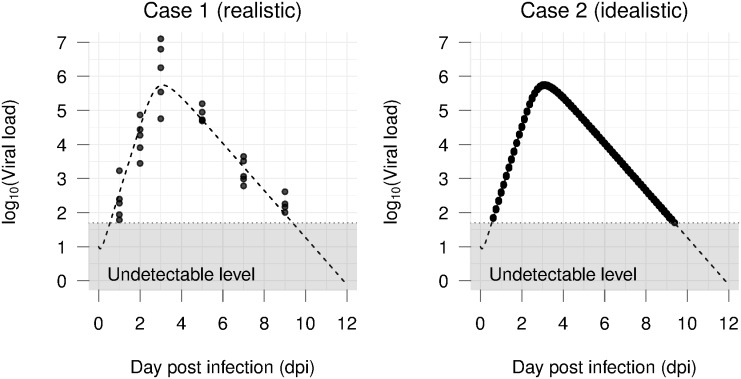
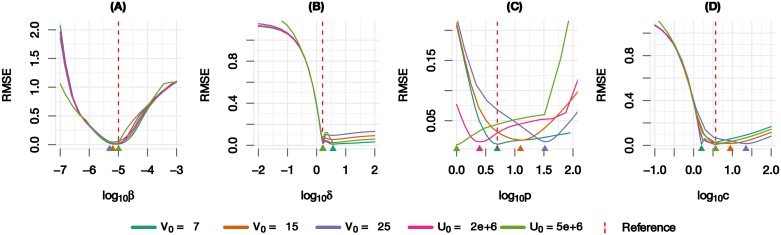
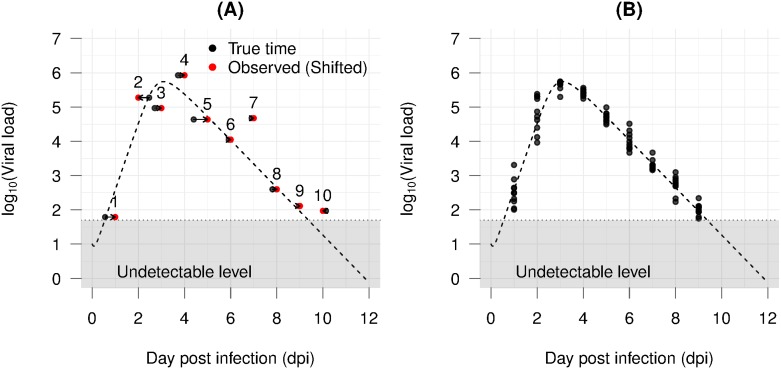
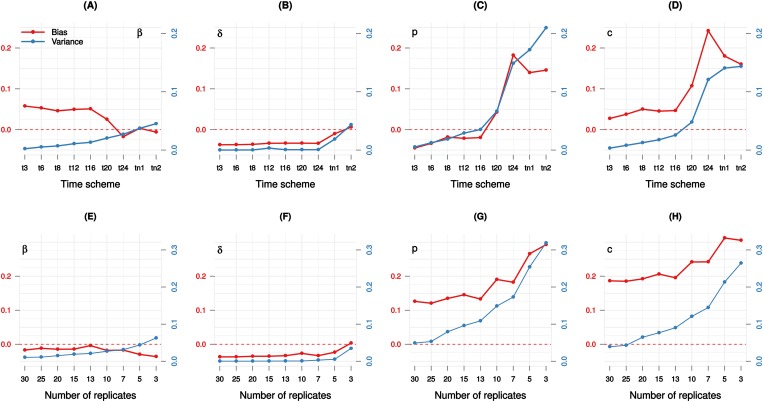
Mathematical modelling approaches have granted a significant contribution to life sciences and beyond to understand experimental results. However, incomplete and inadequate assessments in parameter estimation practices hamper the parameter reliability, and consequently the insights that ultimately could arise from a mathematical model. To keep the diligent works in modelling biological systems from being mistrusted, potential sources of error must be acknowledged. Employing a popular mathematical model in viral infection research, existing means and practices in parameter estimation are exemplified. Numerical results show that poor experimental data is a main source that can lead to erroneous parameter estimates despite the use of innovative parameter estimation algorithms. Arbitrary choices of initial conditions as well as data asynchrony distort the parameter estimates but are often overlooked in modelling studies. This work stresses the existence of several sources of error buried in reports of modelling biological systems, voicing the need for assessing the sources of error, consolidating efforts in solving the immediate difficulties, and possibly reconsidering the use of mathematical modelling to quantify experimental data.
数学建模方法为生命科学及其他领域理解实验结果做出了重大贡献。然而,参数估计实践中不完整和不充分的评估妨碍了参数的可靠性,进而影响了最终可能从数学模型中获得的见解。为了避免对生物系统建模的辛勤工作产生不信任,必须认识到潜在的误差来源。以病毒感染研究中常用的数学模型为例,阐述了参数估计的现有方法和实践。数值结果表明,尽管使用了创新的参数估计算法,但实验数据质量差是导致参数估计错误的主要原因。初始条件的随意选择以及数据异步会扭曲参数估计,但在建模研究中往往被忽视。这项工作强调了生物系统建模报告中存在多种误差来源,表明需要评估误差来源,集中精力解决当前的困难,并可能重新考虑使用数学建模来量化实验数据。