Sun Ting, Hu Jingchao, Yin Zhaofang, Xu Zuojun, Zhang Liang, Fan Li, Zhuo Yang, Wang Changqian
Department of Cardiology, Shanghai Ninth People's Hospital, Shanghai JiaoTong University School of Medicine, Shanghai 200025, China.
Oncotarget. 2017 Mar 21;8(12):19443-19454. doi: 10.18632/oncotarget.14305.
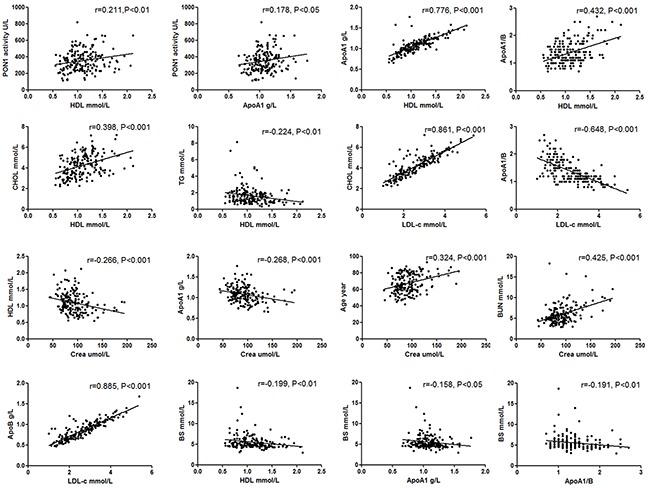
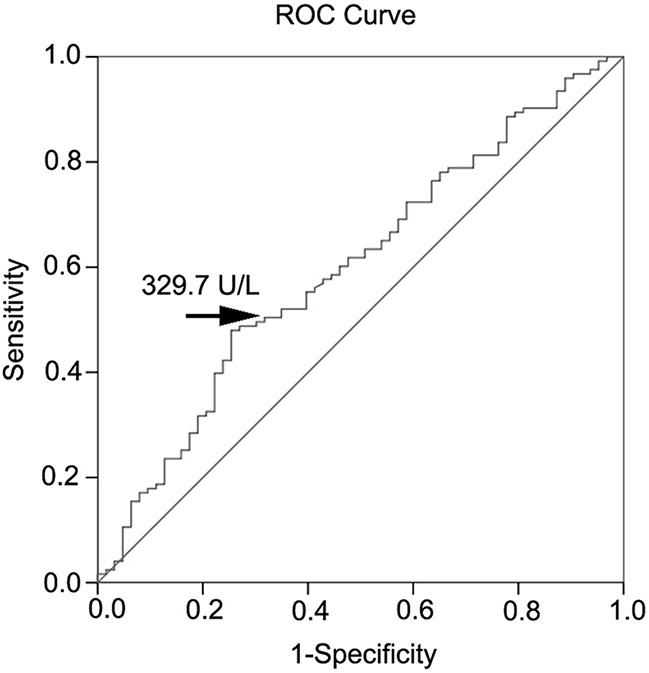
Paraoxonase1 (PON1) activity is closely related to coronary artery disease (CAD). However, whether PON1 activity can predict the degree of coronary stenosis remains unknown. In the present study, the serum PON1 activity and related factors that influence PON1 activity were analyzed in 186 patients with diagnostic coronary angiography. The serum PON1 activity was determined using a spectrophotometry-based assay in 186 patients with diagnostic coronary angiography, in which coronary stenosis severity was graded and clinically defined as single- or multi-vessel stenosis >50%. Target lesion stenosis was quantified via quantitative coronary angiography (QCA). The serum PON1 activity was significantly decreased in the CAD group, the multiple coronary stenosis subgroup, and the diabetes mellitus subgroup compared with each control group. The PON1 activity was positively correlated with the High density lipoprotein cholesterol (HDL-C) and Apolipoprotein A1 (ApoA1). Males, smoking, diabetes, and heart failure were identified as factors that influenced PON1 activity. Furthermore, a Receiver Operating Characteristic Curve (ROC) analysis indicated that a PON1 activity cut-off point of 330 U/L could predict CAD with a sensitivity of 52% and a specificity of 65%. In conclusion, low PON1 activity predicted the degree of coronary lesion, particularly in multiple vessel lesions, smokers, and diabetes, which may represent a biochemical marker for the severity of CAD.
对氧磷酶1(PON1)活性与冠状动脉疾病(CAD)密切相关。然而,PON1活性是否能够预测冠状动脉狭窄程度仍不清楚。在本研究中,对186例接受诊断性冠状动脉造影的患者的血清PON1活性及影响PON1活性的相关因素进行了分析。采用基于分光光度法的检测方法测定了186例接受诊断性冠状动脉造影患者的血清PON1活性,其中冠状动脉狭窄严重程度进行了分级,临床上定义为单支或多支血管狭窄>50%。通过定量冠状动脉造影(QCA)对目标病变狭窄进行量化。与各对照组相比,CAD组、多支冠状动脉狭窄亚组和糖尿病亚组的血清PON1活性显著降低。PON1活性与高密度脂蛋白胆固醇(HDL-C)和载脂蛋白A1(ApoA1)呈正相关。男性、吸烟、糖尿病和心力衰竭被确定为影响PON1活性的因素。此外,受试者工作特征曲线(ROC)分析表明,PON1活性截断点为330 U/L时可预测CAD,灵敏度为52%,特异性为65%。总之,低PON1活性可预测冠状动脉病变程度,尤其是在多支血管病变、吸烟者和糖尿病患者中,这可能代表了CAD严重程度的一种生化标志物。