Zhang Xiao-Wei, Mi Su, Li Zhe, Zhou Ji-Chao, Xie Jing, Hua Fang, Li Ke, Cui Bing, Lv Xiao-Xi, Yu Jiao-Jiao, Hu Zhuo-Wei
Molecular Immunology and Pharmacology Group, State Key Laboratory of Bioactive Substances and Functions of Natural Medicines, Institute of Materia Medica, Chinese Academy of Medical Sciences & Peking Union Medical College, Beijing, China.
Institute of Medicinal Biotechnology, Chinese Academy of Medical Sciences & Peking Union Medical College, Beijing, China.
Oncotarget. 2017 Feb 7;8(6):9922-9934. doi: 10.18632/oncotarget.14266.
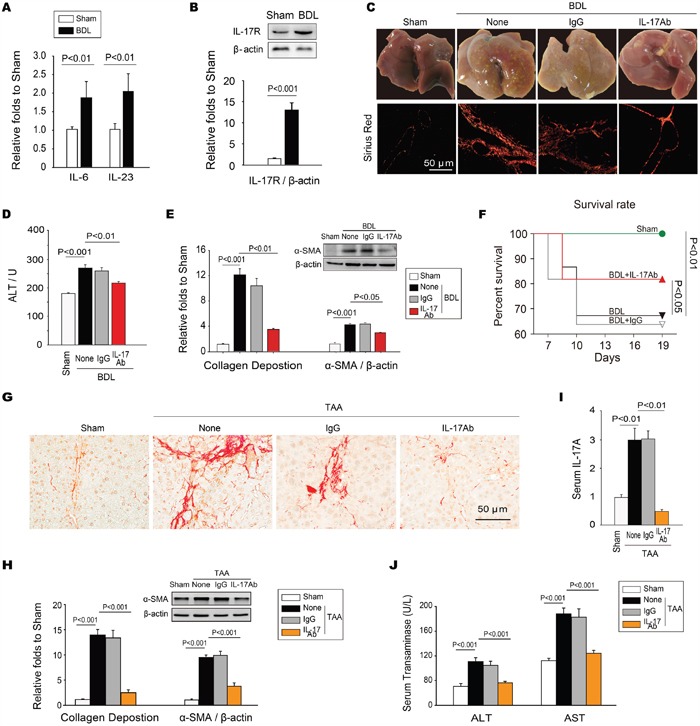
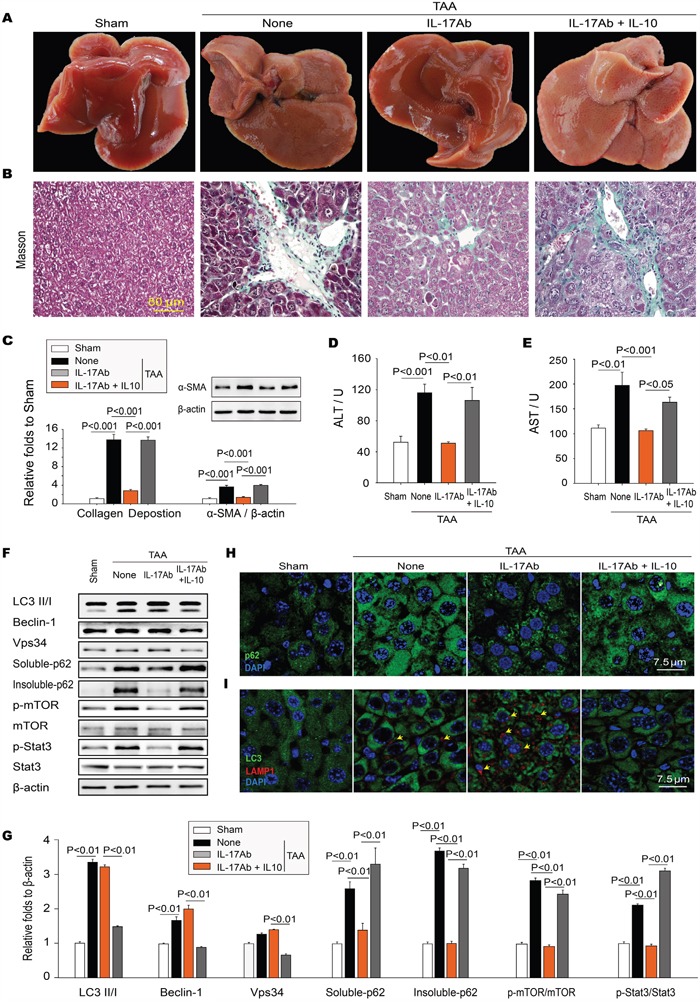
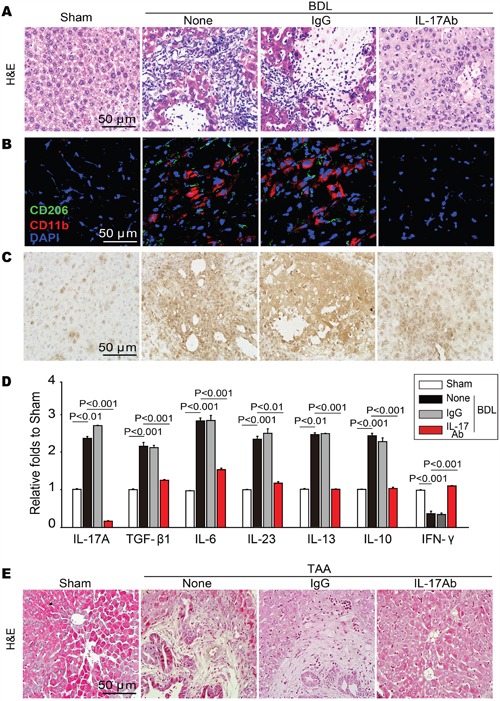
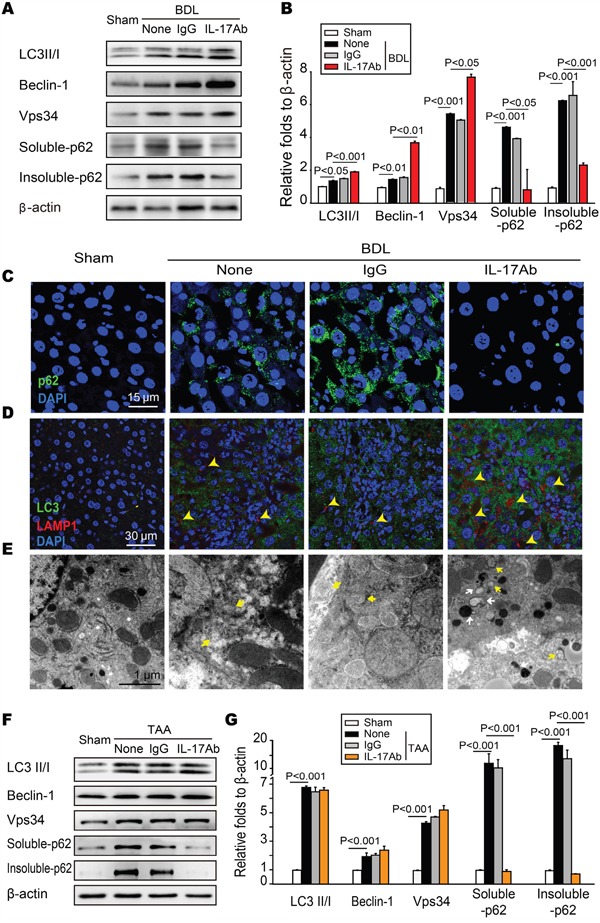
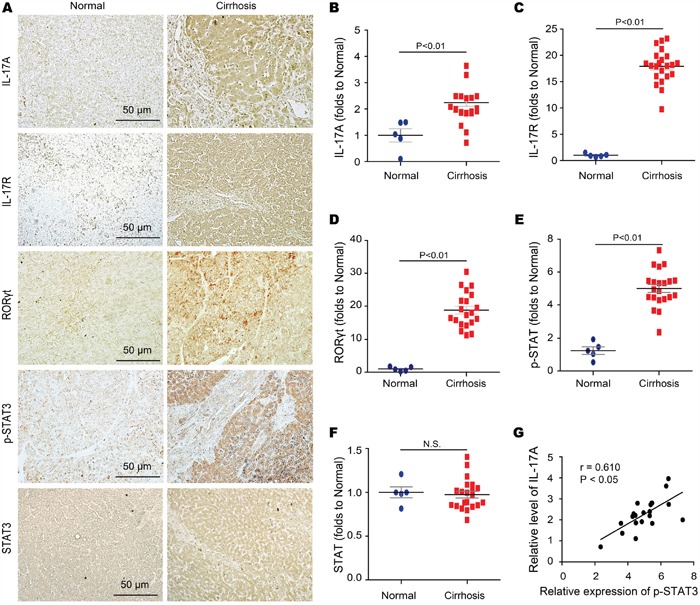
Interleukin-17A has been identified as a driver of hepatic stellate cell activation and plays a critical role in the pathogenesis of hepatic fibrosis. However, the underlining fibrosis-promoting mechanism of IL-17A is far from understood. Here we aimed to define whether hepatocytes directly respond to IL-17A stimulation and are associated with the development of hepatic fibrosis. The functional significance of IL-17A was evaluated in bile duct ligation (BDL) or thioacetamide (TAA) injection-induced mouse models of hepatic fibrosis. Human cirrhosis and control tissues were obtained from the patients with cirrhosis who received an open surgical repair process. Neutralizing IL-17A promoted the resolution of BDL or TAA-induced acute or chronic inflammation and fibrosis, resulted in a shift of the suppressive immune response in fibrotic liver toward a Th1-type immune response, and restored autophagy activity in both cholestatic and hepatotoxic liver injury induced fibrotic liver tissues, which was accompanied by a significant inhibition of STAT3 phosphorylation. Moreover, we found that IL-17A stimulated the concentration-and time-dependent phosphorylation of STAT3 in AML-12 liver cells. Blocking STAT3 with a specific inhibitor STATTIC or STAT3 siRNA protected from the IL-17A-induced autophagy suppression in AML-12 cells, indicating that STAT3 mediates IL-17A-suppressed autophagy. Administration of IL-10, which activated STAT3 and inhibited autophagy, reversed the therapeutic effect of IL-17A antagonism in vivo. Our study suggests that the IL-17A/STAT3 signaling pathway plays a crucial role in the pathogenesis of hepatic fibrosis through suppressing hepatocellular autophagy and that blocking this pathway may provide therapeutic benefits for the treatment of hepatic fibrosis.
白细胞介素-17A已被确定为肝星状细胞激活的驱动因素,并在肝纤维化的发病机制中起关键作用。然而,IL-17A促进纤维化的潜在机制仍远未明确。在此,我们旨在确定肝细胞是否直接对IL-17A刺激作出反应,并与肝纤维化的发展相关。在胆管结扎(BDL)或硫代乙酰胺(TAA)注射诱导的小鼠肝纤维化模型中评估了IL-17A的功能意义。从接受开放性手术修复的肝硬化患者中获取人肝硬化组织和对照组织。中和IL-17A可促进BDL或TAA诱导的急性或慢性炎症及纤维化的消退,导致纤维化肝脏中的抑制性免疫反应向Th1型免疫反应转变,并恢复胆汁淤积性和肝毒性肝损伤诱导的纤维化肝组织中的自噬活性,同时伴随着STAT3磷酸化的显著抑制。此外,我们发现IL-17A在AML-12肝细胞中刺激STAT3的浓度和时间依赖性磷酸化。用特异性抑制剂STATTIC或STAT3 siRNA阻断STAT3可保护AML-12细胞免受IL-17A诱导的自噬抑制,表明STAT3介导IL-17A抑制的自噬。给予激活STAT3并抑制自噬的IL-10可逆转IL-17A拮抗剂在体内的治疗效果。我们的研究表明,IL-17A/STAT3信号通路通过抑制肝细胞自噬在肝纤维化的发病机制中起关键作用,阻断该通路可能为肝纤维化的治疗提供益处。