Leboulanger Christophe, Agogué Hélène, Bernard Cécile, Bouvy Marc, Carré Claire, Cellamare Maria, Duval Charlotte, Fouilland Eric, Got Patrice, Intertaglia Laurent, Lavergne Céline, Le Floc'h Emilie, Roques Cécile, Sarazin Gérard
UMR MARBEC, Institut de Recherche pour le Développement, Sète-Montpellier, France.
UMR LIENSs, Centre National de la Recherche Scientifique, La Rochelle, France.
PLoS One. 2017 Jan 3;12(1):e0168879. doi: 10.1371/journal.pone.0168879. eCollection 2017.
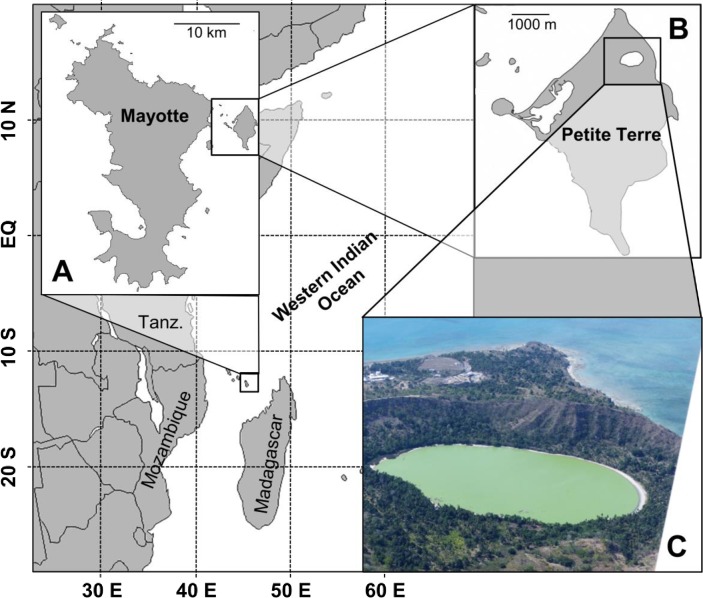
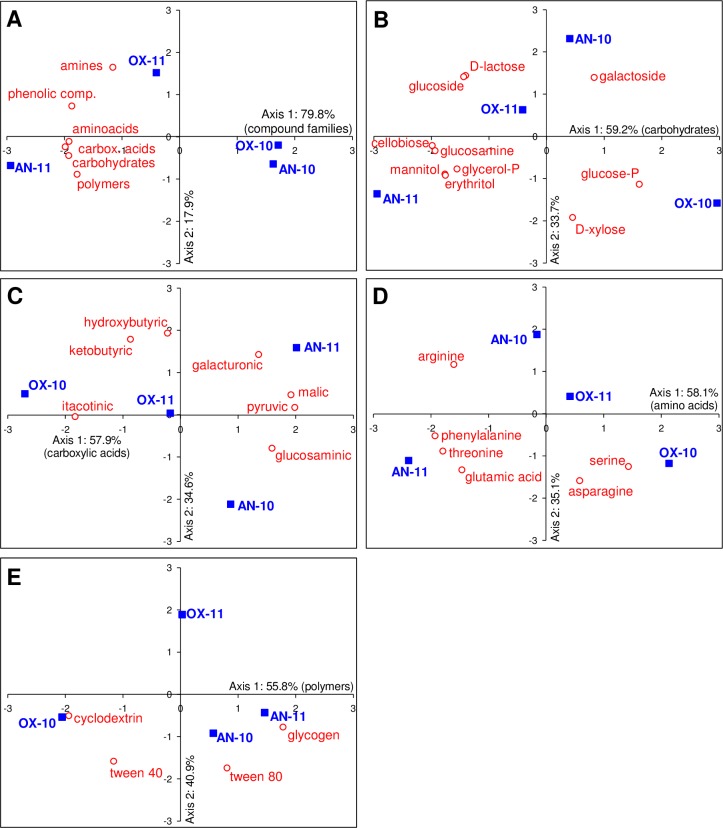
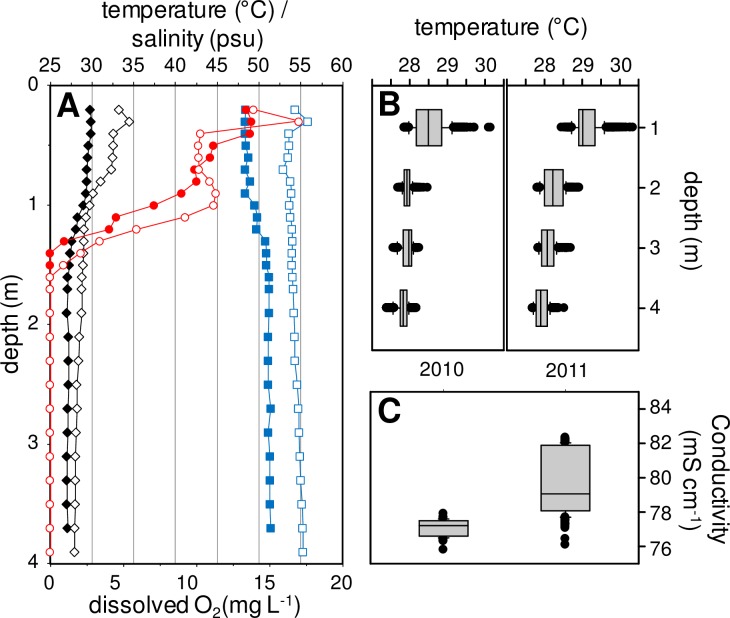
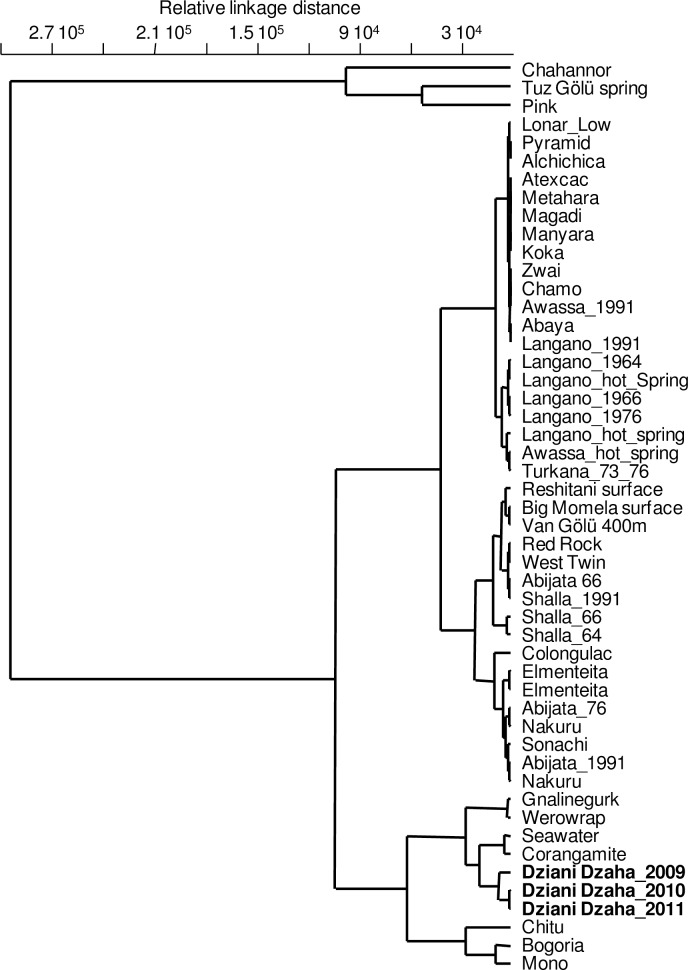
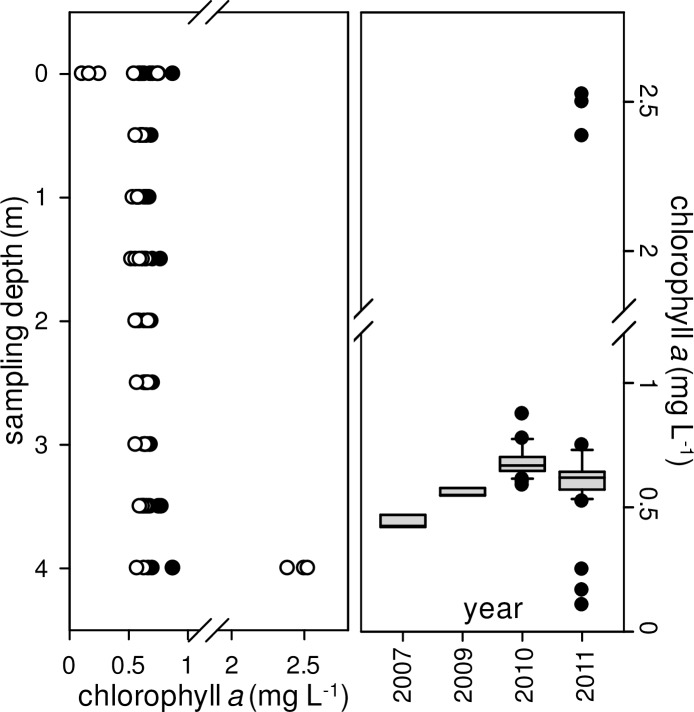
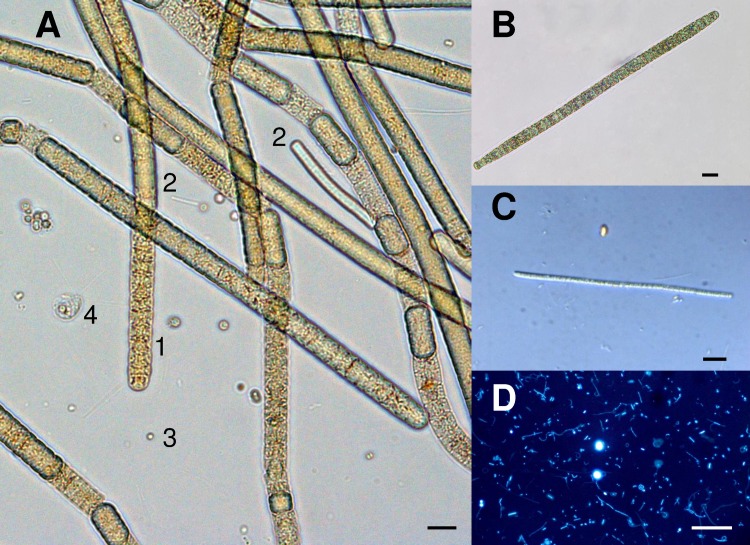
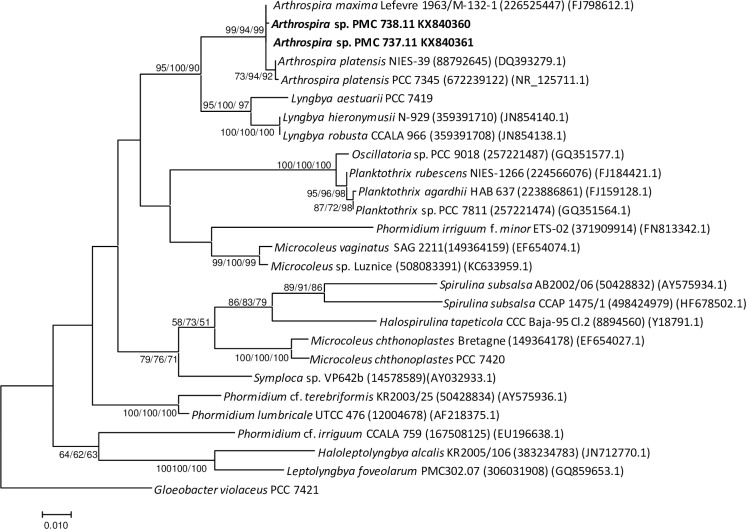
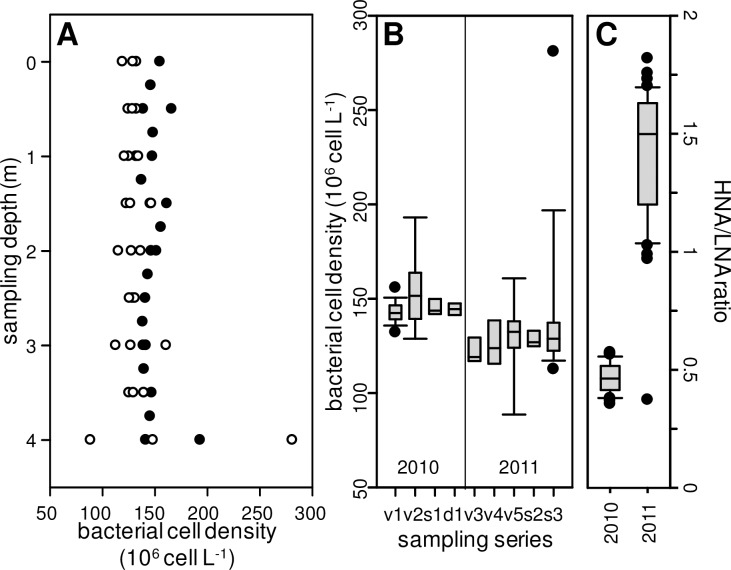
This study describes, for the first time, the water chemistry and microbial diversity in Dziani Dzaha, a tropical crater lake located on Mayotte Island (Comoros archipelago, Western Indian Ocean). The lake water had a high level of dissolved matter and high alkalinity (10.6-14.5 g L-1 eq. CO32-, i.e. 160-220 mM compare to around 2-2.5 in seawater), with salinity up to 52 psu, 1.5 higher than seawater. Hierarchical clustering discriminated Dziani Dzaha water from other alkaline, saline lakes, highlighting its thalassohaline nature. The phytoplankton biomass was very high, with a total chlorophyll a concentration of 524 to 875 μg chl a L-1 depending on the survey, homogeneously distributed from surface to bottom (4 m). Throughout the whole water column the photosynthetic biomass was dominated (>97% of total biovolume) by the filamentous cyanobacteria Arthrospira sp. with a straight morphotype. In situ daily photosynthetic oxygen production ranged from 17.3 to 22.2 g O2 m-2 d-1, consistent with experimental production / irradiance measurements and modeling. Heterotrophic bacterioplankton was extremely abundant, with cell densities up to 1.5 108 cells mL-1 in the whole water column. Isolation and culture of 59 Eubacteria strains revealed the prevalence of alkaliphilic and halophilic organisms together with taxa unknown to date, based on 16S rRNA gene analysis. A single cloning-sequencing approach using archaeal 16S rDNA gene primers unveiled the presence of diverse extremophilic Euryarchaeota. The water chemistry of Dziani Dzaha Lake supports the hypothesis that it was derived from seawater and strongly modified by geological conditions and microbial activities that increased the alkalinity. Dziani Dzaha has a unique consortium of cyanobacteria, phytoplankton, heterotrophic Eubacteria and Archaea, with very few unicellular protozoa, that will deserve further deep analysis to unravel its uncommon diversity. A single taxon, belonging to the genus Arthrospira, was found responsible for almost all photosynthetic primary production.
本研究首次描述了位于马约特岛(科摩罗群岛,西印度洋)的热带火山口湖贾尼贾哈湖的水化学和微生物多样性。湖水溶解物质含量高,碱度高(10.6 - 14.5克/升当量碳酸根离子,即160 - 220毫摩尔,相比海水约2 - 2.5毫摩尔),盐度高达52实用盐度单位,比海水高1.5倍。层次聚类分析将贾尼贾哈湖的水与其他碱性盐湖区分开来,突出了其海源盐碱性的性质。浮游植物生物量非常高,根据调查,叶绿素a总浓度为524至875微克叶绿素a/升,从表层到4米深处均匀分布。在整个水柱中,光合生物量主要由丝状蓝藻节旋藻属的直形态型主导(占总生物量的>97%)。原位每日光合产氧量在17.3至22.2克氧气/平方米·天之间,与实验产氧量/辐照度测量和模型一致。异养细菌浮游生物极其丰富,整个水柱中的细胞密度高达1.5×10⁸个细胞/毫升。对59株真细菌菌株的分离和培养显示,基于16S rRNA基因分析,嗜碱和嗜盐生物以及迄今未知的分类群占优势。使用古菌16S rDNA基因引物的单克隆测序方法揭示了多种极端嗜热广古菌的存在。贾尼贾哈湖的水化学支持了其源自海水并受到地质条件和微生物活动强烈影响从而增加碱度的假设。贾尼贾哈湖有一个独特的蓝藻、浮游植物、异养真细菌和古菌群落,单细胞原生动物很少,值得进一步深入分析以揭示其罕见的多样性。发现一个属于节旋藻属的单一分类群几乎负责了所有的光合初级生产。