Crefcoeur Remco P, Zgheib Omar, Halazonetis Thanos D
Department of Molecular Biology, University of Geneva, Geneva, Switzerland.
PLoS One. 2017 Jan 3;12(1):e0169126. doi: 10.1371/journal.pone.0169126. eCollection 2017.
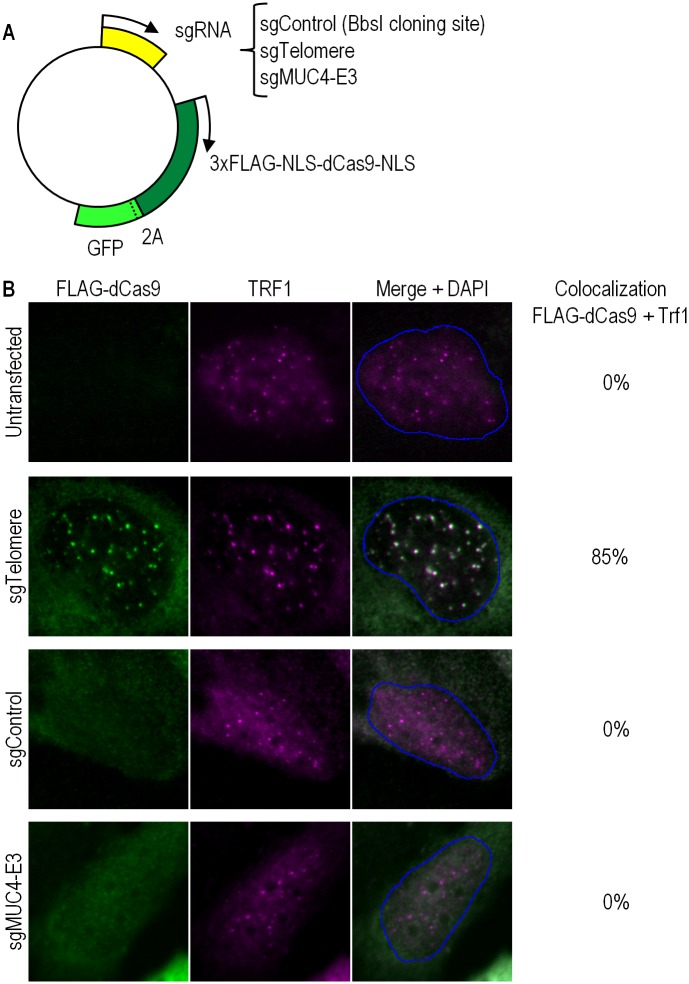
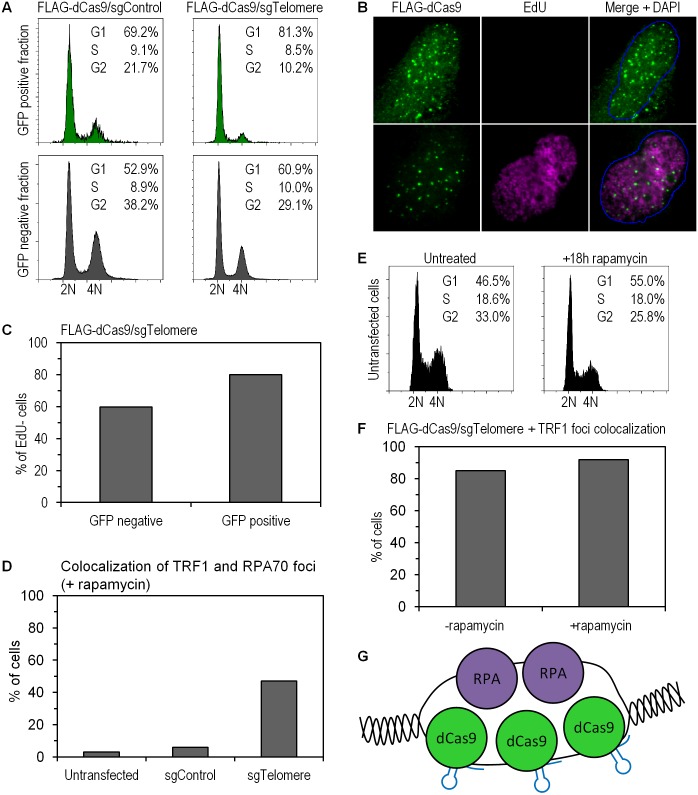
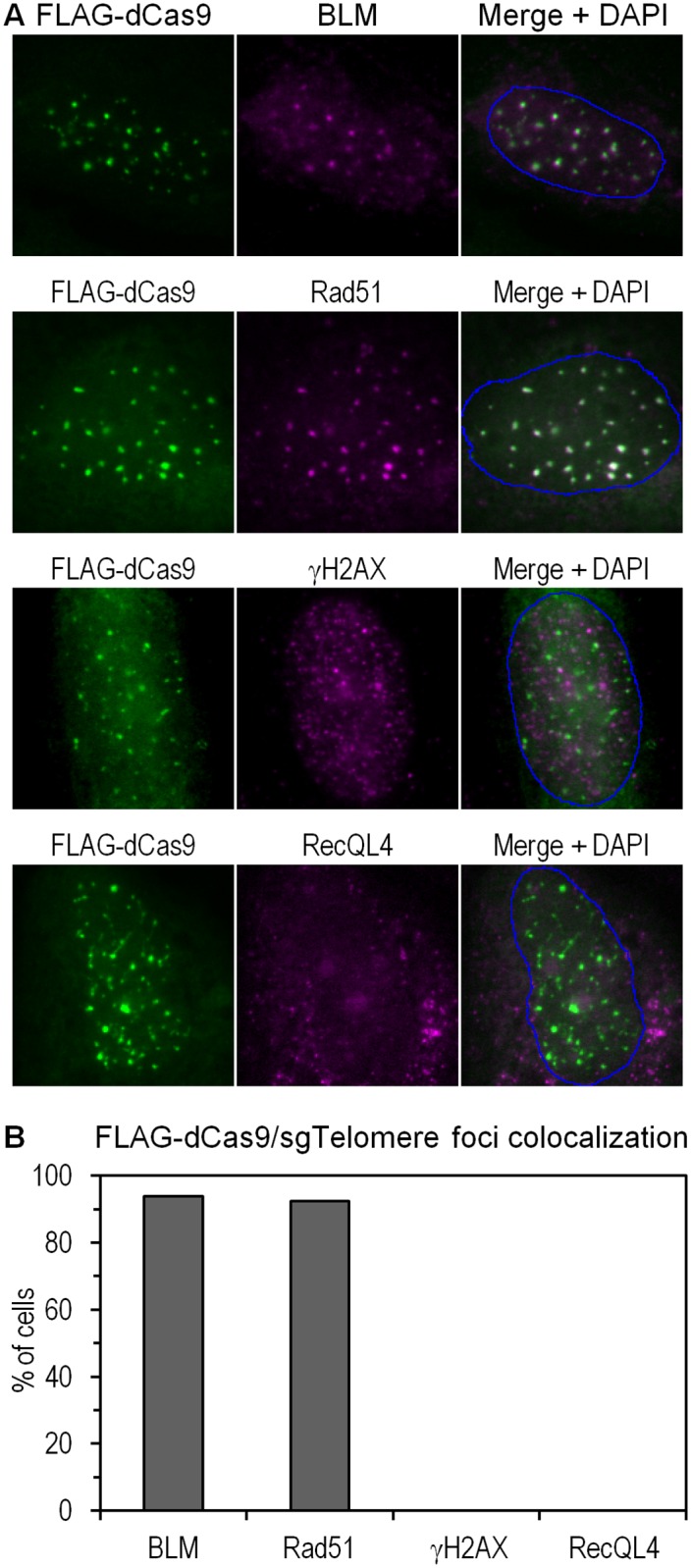
DNA replication stress has the potential to compromise genomic stability and, therefore, cells have developed elaborate mechanisms to detect and resolve problems that may arise during DNA replication. The presence of single-stranded DNA (ssDNA) is often associated with DNA replication stress and serves as a signal for both checkpoint and repair responses. In this study, we exploited a CRISPR-Cas9 system to induce regions of ssDNA in the genome. Specifically, single-guide RNAs bearing sequence complementarity to human telomeric repeats, were used to target nuclease-deficient Cas9 (dCas9) to telomeres. Such targeting was associated with the formation of DNA-RNA hybrids, leaving one telomeric DNA strand single-stranded. This ssDNA then recruited DNA repair and checkpoint proteins, such as RPA, ATRIP, BLM and Rad51, at the telomeres. Interestingly, targeting of all these proteins to telomeric ssDNA was observed even in cells that were in the G1 phase of the cell cycle. Therefore, this system has the potential to serve as a platform for further investigation of DNA replication stress responses at specific loci in the human genome and in all phases of the cell cycle.
DNA复制应激有可能损害基因组稳定性,因此,细胞已经发展出复杂的机制来检测和解决DNA复制过程中可能出现的问题。单链DNA(ssDNA)的存在通常与DNA复制应激相关,并作为检查点和修复反应的信号。在本研究中,我们利用CRISPR-Cas9系统在基因组中诱导ssDNA区域。具体而言,与人类端粒重复序列具有序列互补性的单向导RNA被用于将核酸酶缺陷型Cas9(dCas9)靶向端粒。这种靶向与DNA-RNA杂交体的形成有关,使一条端粒DNA链保持单链状态。然后,这种ssDNA在端粒处募集DNA修复和检查点蛋白,如RPA、ATRIP、BLM和Rad51。有趣的是,即使在处于细胞周期G1期的细胞中,也观察到所有这些蛋白被靶向端粒ssDNA。因此,该系统有潜力作为一个平台,用于进一步研究人类基因组中特定位点以及细胞周期所有阶段的DNA复制应激反应。