Department of Pharmaceutical Chemistry, University of California, San Francisco, San Francisco, CA 94158, USA.
Department of Cellular and Molecular Pharmacology, University of California, San Francisco, San Francisco, CA 94158, USA; Center for RNA Systems Biology, Berkeley, CA 94720, USA.
Cell. 2013 Dec 19;155(7):1479-91. doi: 10.1016/j.cell.2013.12.001.
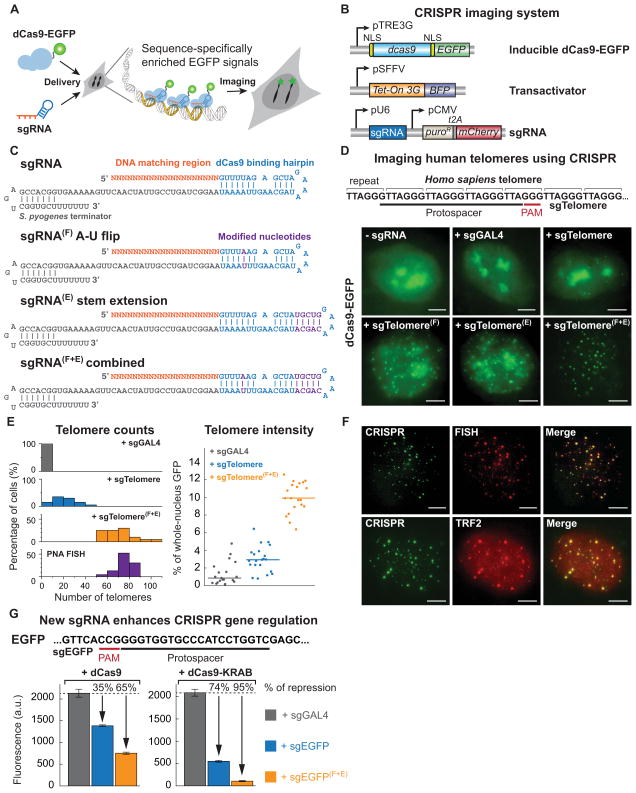
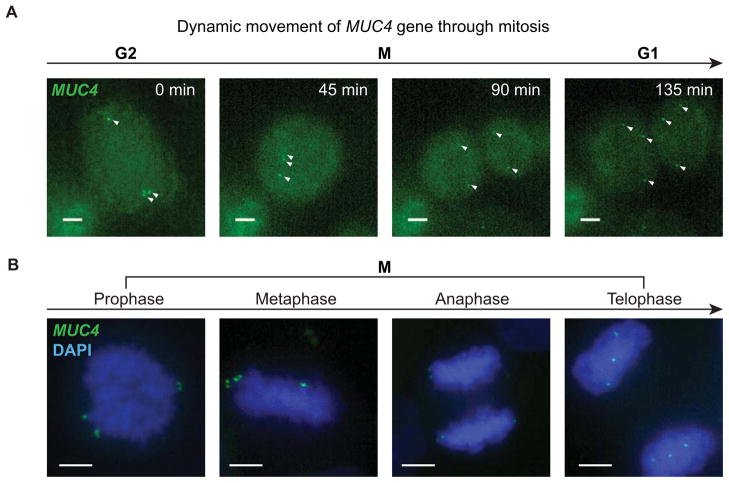
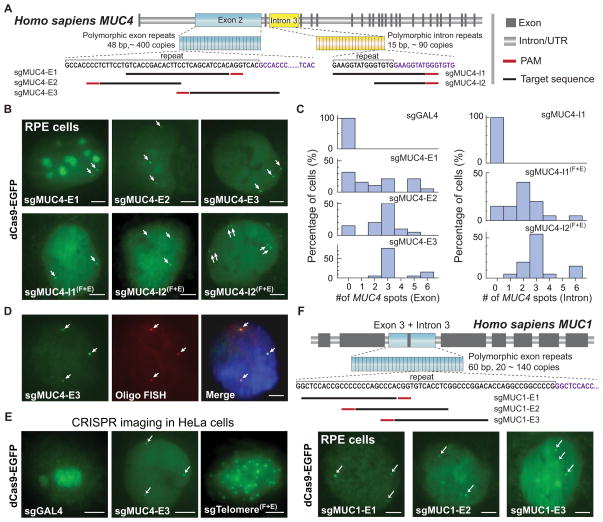
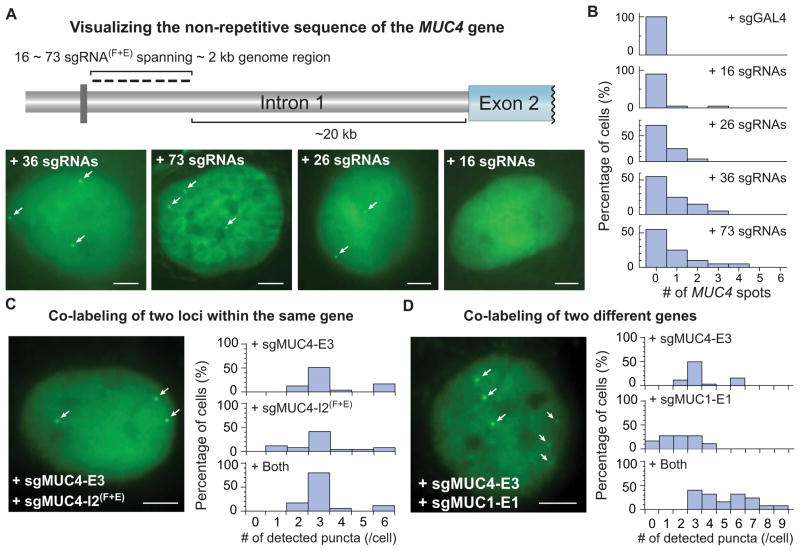
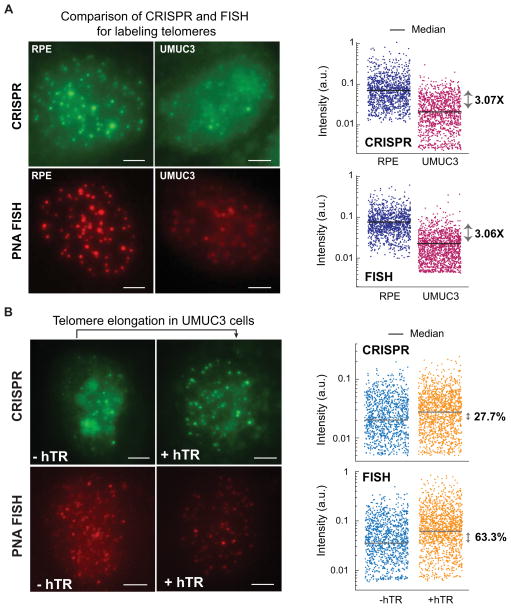
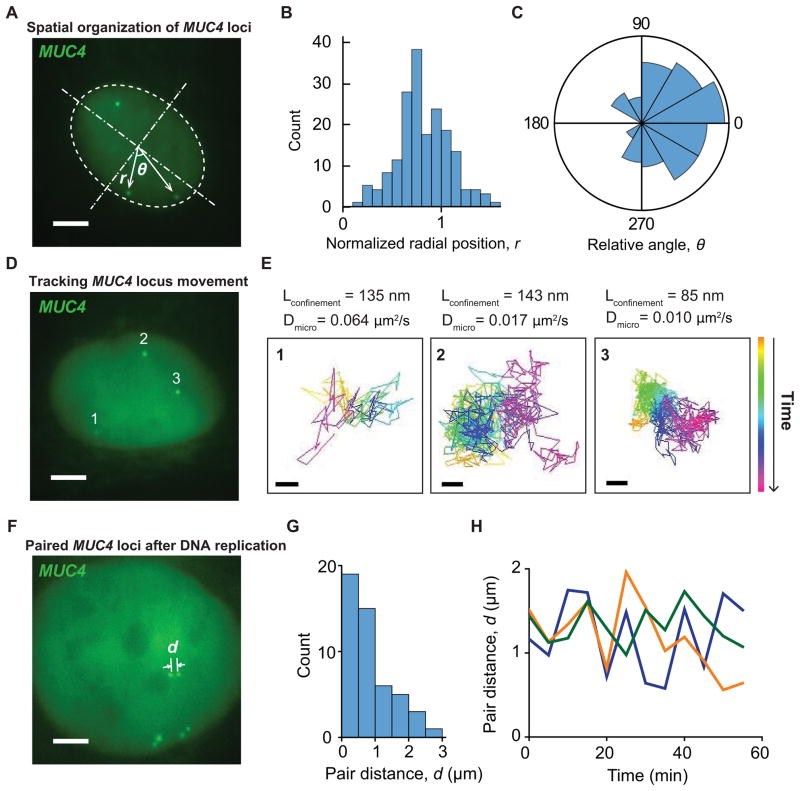
The spatiotemporal organization and dynamics of chromatin play critical roles in regulating genome function. However, visualizing specific, endogenous genomic loci remains challenging in living cells. Here, we demonstrate such an imaging technique by repurposing the bacterial CRISPR/Cas system. Using an EGFP-tagged endonuclease-deficient Cas9 protein and a structurally optimized small guide (sg) RNA, we show robust imaging of repetitive elements in telomeres and coding genes in living cells. Furthermore, an array of sgRNAs tiling along the target locus enables the visualization of nonrepetitive genomic sequences. Using this method, we have studied telomere dynamics during elongation or disruption, the subnuclear localization of the MUC4 loci, the cohesion of replicated MUC4 loci on sister chromatids, and their dynamic behaviors during mitosis. This CRISPR imaging tool has potential to significantly improve the capacity to study the conformation and dynamics of native chromosomes in living human cells.
染色质的时空组织和动态在调节基因组功能方面起着关键作用。然而,在活细胞中可视化特定的内源性基因组位点仍然具有挑战性。在这里,我们通过重新利用细菌 CRISPR/Cas 系统来展示这种成像技术。我们使用带有 EGFP 标签的内切酶缺陷型 Cas9 蛋白和结构优化的小向导 (sg) RNA,在活细胞中对端粒中的重复元件和编码基因进行了强大的成像。此外,沿着靶标位点排列的 sgRNA 阵列可实现非重复基因组序列的可视化。使用这种方法,我们研究了端粒在伸长或破坏过程中的动态、MUC4 基因座的亚核定位、复制的 MUC4 基因座在姐妹染色单体上的黏附以及它们在有丝分裂过程中的动态行为。这种 CRISPR 成像工具有可能显著提高在活的人类细胞中研究天然染色体构象和动态的能力。