Elmi Asha A, Bansal Devendra, Acharya Anushree, Skariah Sini, Dargham Soha R, Abu-Raddad Laith J, Mohamed-Nady Nady, Amuna Paul, Al-Thani Asma A J, Sultan Ali A
Department of Microbiology and Immunology, Weill Cornell Medicine-Qatar, Cornell University, Qatar Foundation-Education City, Doha, Qatar.
Infectious Disease Epidemiology Group, Weill Cornell Medicine-Qatar, Cornell University, Qatar Foundation-Education City, Doha, Qatar.
PLoS One. 2017 Jan 3;12(1):e0169197. doi: 10.1371/journal.pone.0169197. eCollection 2017.
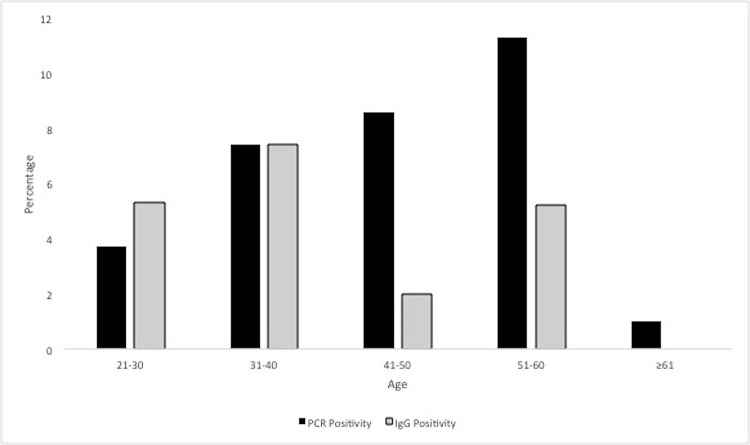
Human Papillomavirus (HPV) infections are known to cause cervical cancer worldwide, however, limited information is currently available on prevalence, types distribution and risk factors for HPV infection in the Arab countries. We conducted a cross-sectional observational study exclusively of women of Arabic origin residing in Qatar (n = 406) who were selected from the Women's Hospital at Hamad Medical Corporation (HMC) and Health Centers of the Primary Health Care Corporation in Doha, Qatar over the period March 2013 to August 2014. Socio-demographic, behavioral and clinical data were collected. Four hundred and six cervical smears and 292 blood samples were included in the study. HPV typing was done using HPV type-specific primers-based real-time PCR, and Sanger sequencing. HPV-IgG and IgM were quantified using ELISA assays. The prevalence of HPV infection amongst Qatari and non-Qatari Arab women were 9.8% and 6.1%, respectively and 7.6% and 16.7% in women with normal and abnormal cytology, respectively. HPV 81 was the most commonly found genotype in women with normal cytology (34.5%), whereas HPV 81, 16 and 59 in women with abnormal cytology (25.0% each). All the HPV DNA positive women were seronegative and HPV-IgG prevalence was higher in Qatari women than in non-Qatari Arab women. None of the studied factors had any significant association with HPV-DNA positivity or HPV-IgG seropositivity. The overall identified HPV DNA prevalence and HPV seroprevalence among Arab women in Qatar were on the low side compared to global levels.
人乳头瘤病毒(HPV)感染在全球范围内可引发宫颈癌,然而,目前关于阿拉伯国家HPV感染的患病率、类型分布及危险因素的信息有限。我们开展了一项横断面观察性研究,专门针对居住在卡塔尔的阿拉伯裔女性(n = 406),她们于2013年3月至2014年8月期间从哈马德医疗公司(HMC)的妇女医院以及卡塔尔多哈的初级卫生保健公司健康中心选取。收集了社会人口学、行为学和临床数据。该研究纳入了406份宫颈涂片和292份血液样本。使用基于HPV型特异性引物的实时PCR和桑格测序法进行HPV分型。采用酶联免疫吸附测定法对HPV-IgG和IgM进行定量。卡塔尔和非卡塔尔阿拉伯女性中HPV感染的患病率分别为9.8%和6.1%,细胞学正常和异常的女性中分别为7.6%和16.7%。HPV 81是细胞学正常女性中最常见的基因型(34.5%),而细胞学异常女性中最常见的基因型为HPV 81、16和59(各占25.0%)。所有HPV DNA阳性女性均为血清学阴性,卡塔尔女性的HPV-IgG患病率高于非卡塔尔阿拉伯女性。所研究的因素均与HPV-DNA阳性或HPV-IgG血清学阳性无显著关联。与全球水平相比,卡塔尔阿拉伯女性中总体确定HPV DNA患病率和HPV血清学患病率处于较低水平。