Kinosada Haruka, Yasunaga Jun-Ichirou, Shimura Kazuya, Miyazato Paola, Onishi Chiho, Iyoda Tomonori, Inaba Kayo, Matsuoka Masao
Laboratory of Virus Control, Institute for Virus Research, Kyoto University, Sakyo-ku, Kyoto, Japan.
Department of Mammalian Regulatory Network, Graduate School of Biostudies, Kyoto University, Sakyo-ku, Kyoto, Japan.
PLoS Pathog. 2017 Jan 3;13(1):e1006120. doi: 10.1371/journal.ppat.1006120. eCollection 2017 Jan.
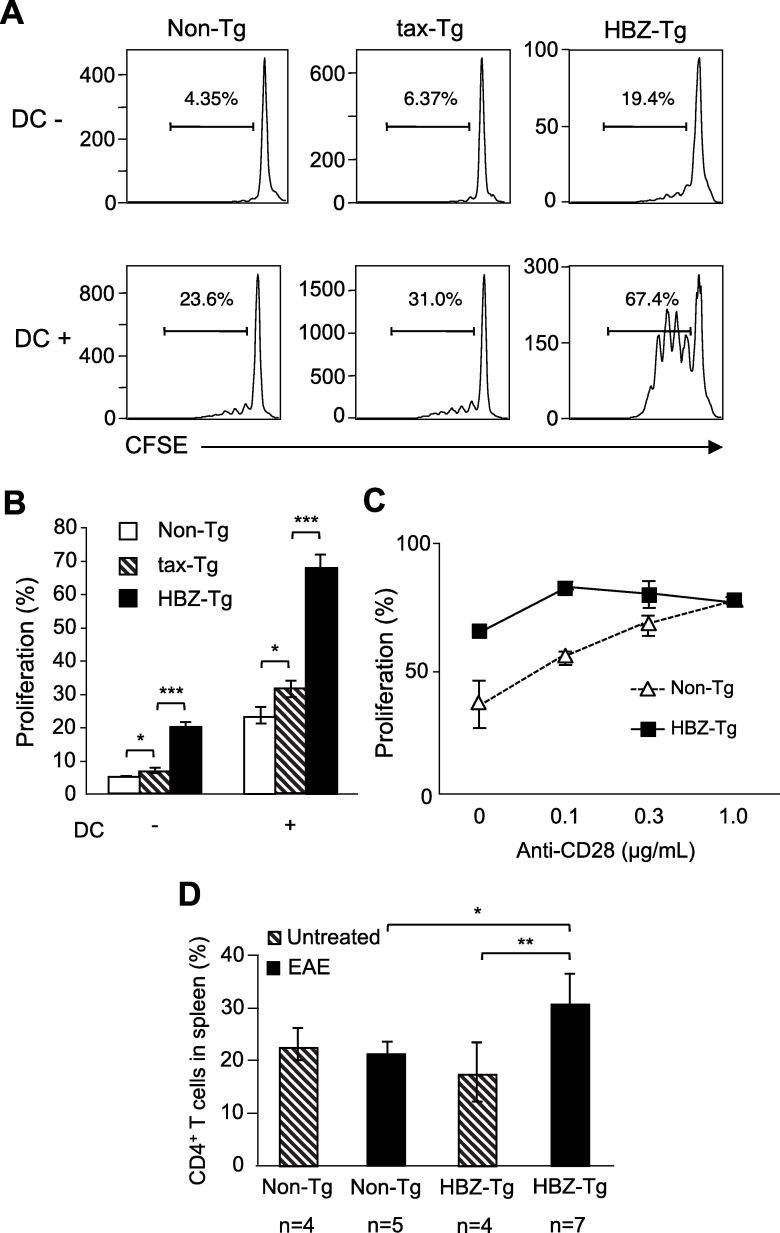
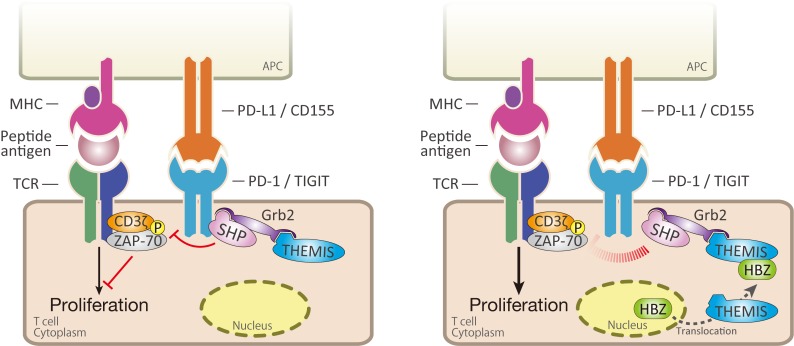
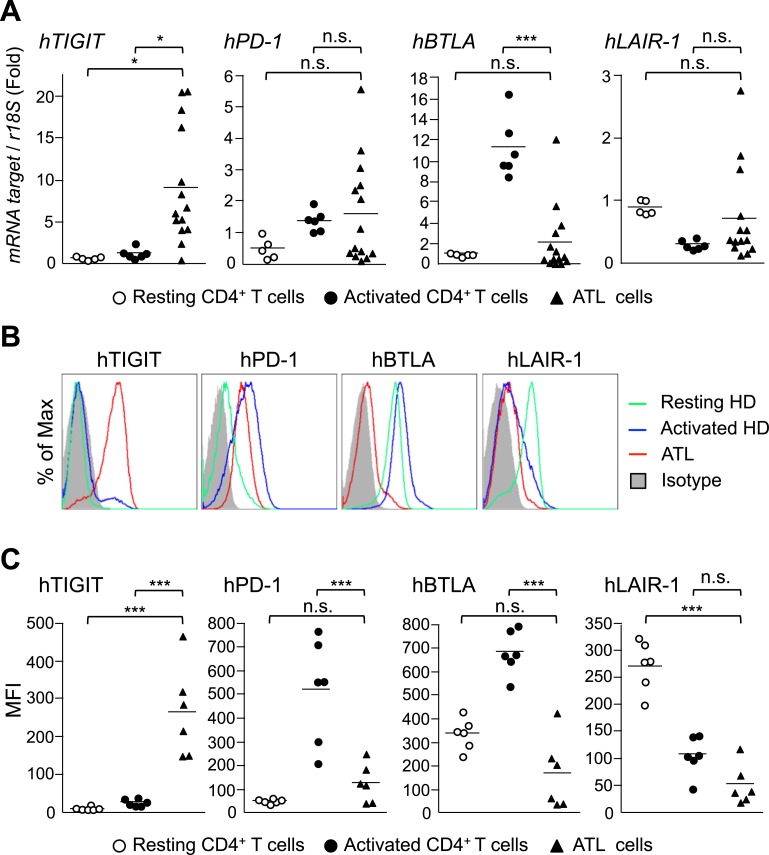
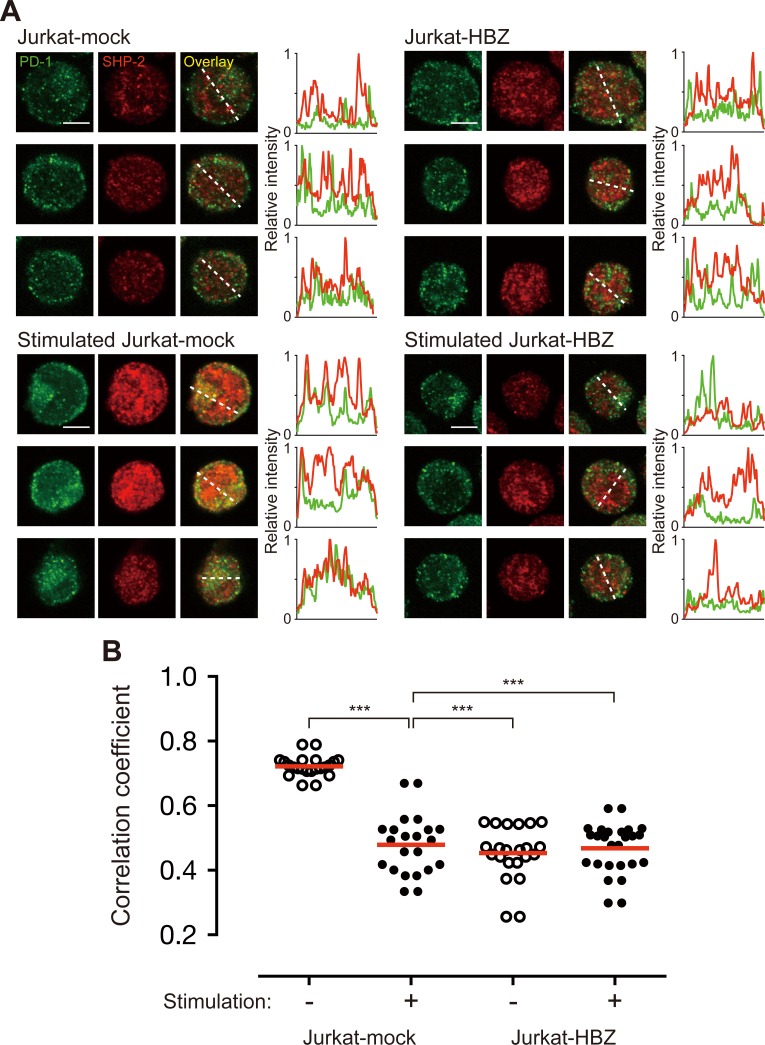
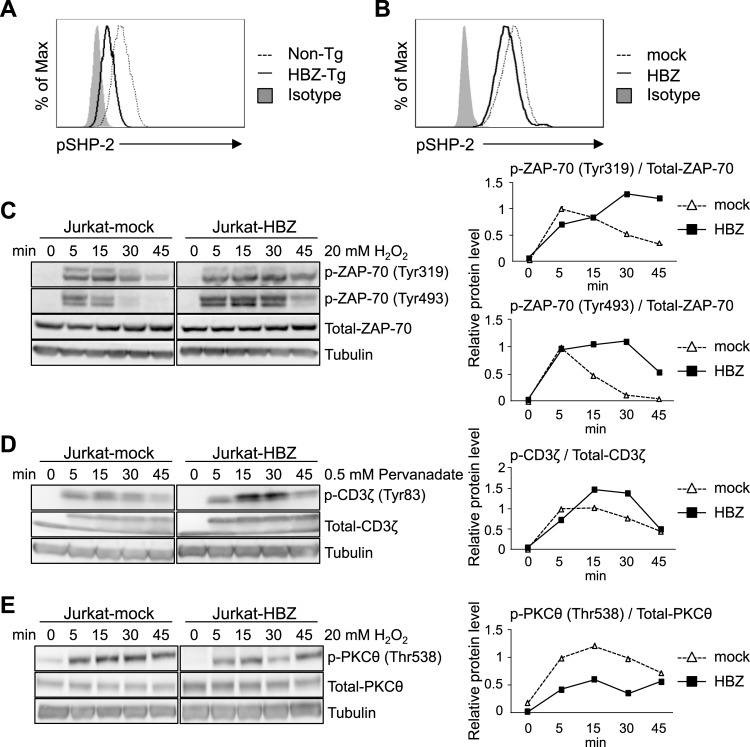
Human T-cell leukemia virus type 1 (HTLV-1) causes adult T-cell leukemia-lymphoma (ATL) and inflammatory diseases. To enhance cell-to-cell transmission of HTLV-1, the virus increases the number of infected cells in vivo. HTLV-1 bZIP factor (HBZ) is constitutively expressed in HTLV-1 infected cells and ATL cells and promotes T-cell proliferation. However, the detailed mechanism by which it does so remains unknown. Here, we show that HBZ enhances the proliferation of expressing T cells after stimulation via the T-cell receptor. HBZ promotes this proliferation by influencing the expression and function of multiple co-inhibitory receptors. HBZ suppresses the expression of BTLA and LAIR-1 in HBZ expressing T cells and ATL cells. Expression of T cell immunoglobulin and ITIM domain (TIGIT) and Programmed cell death 1 (PD-1) was enhanced, but their suppressive effect on T-cell proliferation was functionally impaired. HBZ inhibits the co-localization of SHP-2 and PD-1 in T cells, thereby leading to impaired inhibition of T-cell proliferation and suppressed dephosphorylation of ZAP-70 and CD3ζ. HBZ does this by interacting with THEMIS, which associates with Grb2 and SHP-2. Thus, HBZ interacts with the SHP containing complex, impedes the suppressive signal from PD-1 and TIGIT, and enhances the proliferation of T cells. Although HBZ was present in both the nucleus and the cytoplasm of T cells, HBZ was localized largely in the nucleus by suppressed expression of THEMIS by shRNA. This indicates that THEMIS is responsible for cytoplasmic localization of HBZ in T cells. Since THEMIS is expressed only in T-lineage cells, HBZ mediated inhibition of the suppressive effects of co-inhibitory receptors accounts for how HTLV-1 induces proliferation only of T cells in vivo. This study reveals that HBZ targets co-inhibitory receptors to cause the proliferation of infected cells.
人类嗜T细胞病毒1型(HTLV-1)可引发成人T细胞白血病淋巴瘤(ATL)和炎症性疾病。为增强HTLV-1的细胞间传播,该病毒会增加体内受感染细胞的数量。HTLV-1碱性亮氨酸拉链因子(HBZ)在HTLV-1感染细胞和ATL细胞中持续表达,并促进T细胞增殖。然而,其具体作用机制尚不清楚。在此,我们表明HBZ可增强经T细胞受体刺激后表达T细胞的增殖。HBZ通过影响多种共抑制受体的表达和功能来促进这种增殖。HBZ抑制表达HBZ的T细胞和ATL细胞中BTLA和LAIR-1的表达。T细胞免疫球蛋白和ITIM结构域(TIGIT)以及程序性细胞死亡蛋白1(PD-1)的表达增强,但其对T细胞增殖的抑制作用在功能上受损。HBZ抑制T细胞中SHP-2和PD-1的共定位,从而导致对T细胞增殖的抑制受损以及ZAP-70和CD3ζ的去磷酸化受到抑制。HBZ通过与THEMIS相互作用来实现这一点,THEMIS与Grb2和SHP-2相关联。因此,HBZ与含SHP的复合物相互作用,阻碍来自PD-1和TIGIT的抑制信号,并增强T细胞的增殖。尽管HBZ存在于T细胞的细胞核和细胞质中,但通过shRNA抑制THEMIS的表达后,HBZ主要定位于细胞核。这表明THEMIS负责HBZ在T细胞中的细胞质定位。由于THEMIS仅在T系细胞中表达,HBZ介导的对共抑制受体抑制作用的抑制解释了HTLV-1如何仅在体内诱导T细胞增殖。这项研究揭示HBZ靶向共抑制受体导致受感染细胞增殖。