Cummings Christopher L, Kuzma Jennifer
Wee Kim Wee School of Communication and Information, Nanyang Technological University, Singapore.
School of Public and International Affairs, North Carolina State University, Raleigh, North Carolina, United States.
PLoS One. 2017 Jan 4;12(1):e0168564. doi: 10.1371/journal.pone.0168564. eCollection 2017.
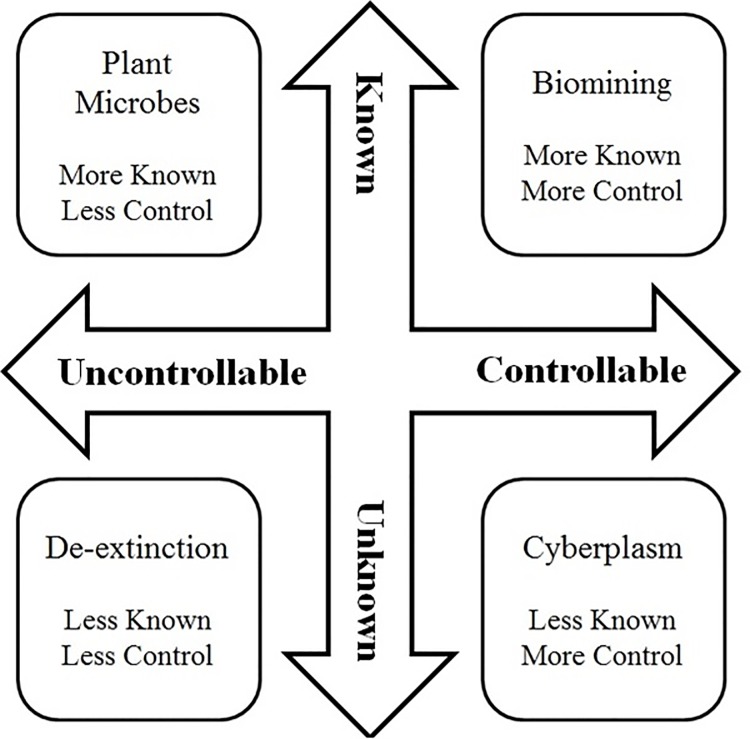
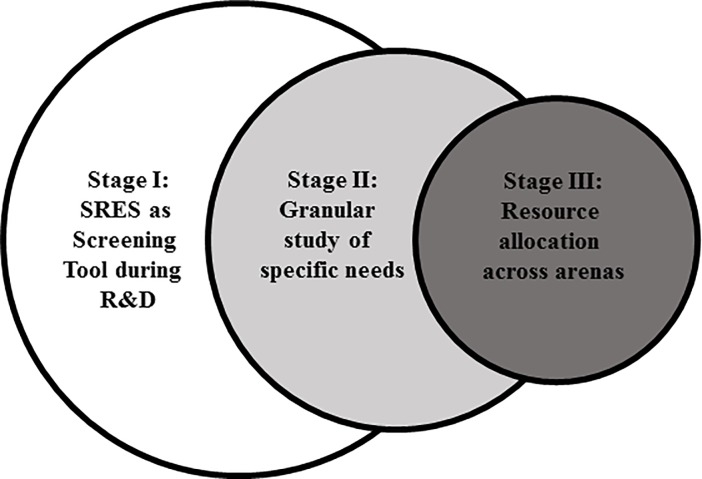
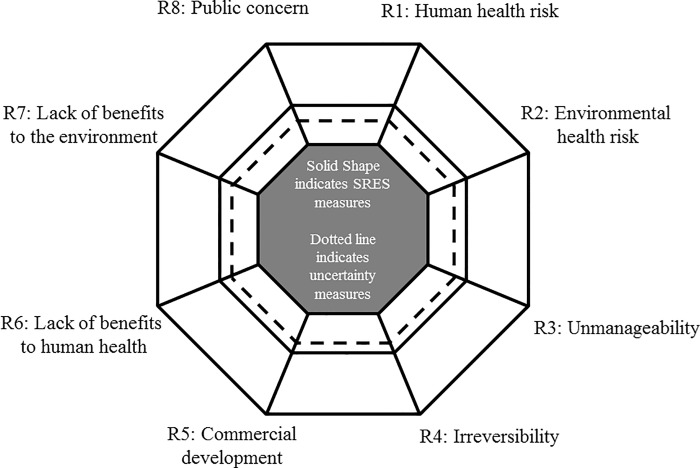
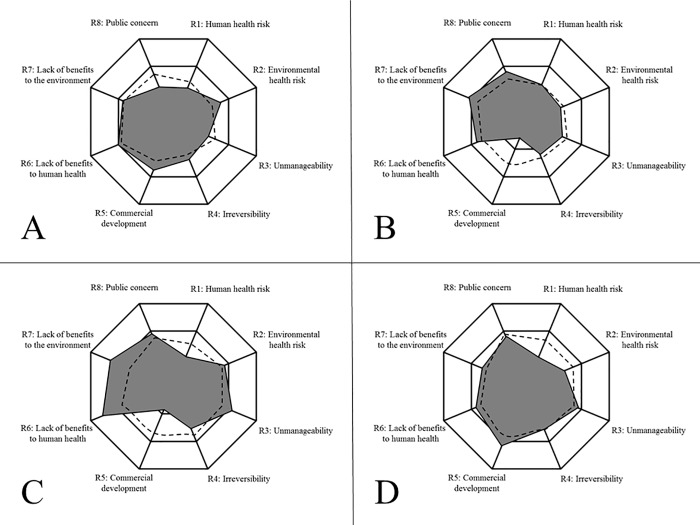
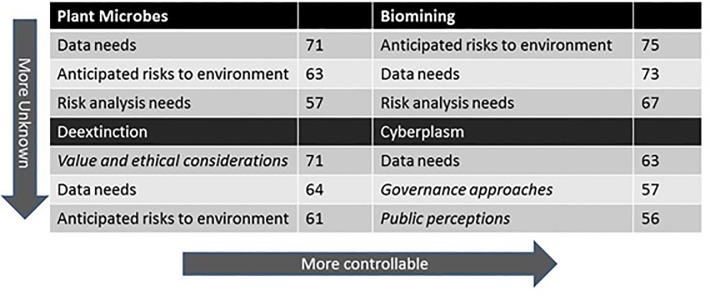
Synthetic biology (SB) applies engineering principles to biology for the construction of novel biological systems designed for useful purposes. From an oversight perspective, SB products come with significant uncertainty. Yet there is a need to anticipate and prepare for SB applications before deployment. This study develops a Societal Risk Evaluation Scheme (SRES) in order to advance methods for anticipatory governance of emerging technologies such as SB. The SRES is based upon societal risk factors that were identified as important through a policy Delphi study. These factors range from those associated with traditional risk assessment, such as health and environmental consequences, to broader features of risk such as those associated with reversibility, manageability, anticipated levels of public concern, and uncertainty. A multi-disciplinary panel with diverse perspectives and affiliations assessed four case studies of SB using the SRES. Rankings of the SRES components are compared within and across the case studies. From these comparisons, we found levels of controllability and familiarity associated with the cases to be important for overall SRES rankings. From a theoretical standpoint, this study illustrates the applicability of the psychometric paradigm to evaluating SB cases. In addition, our paper describes how the SRES can be incorporated into anticipatory governance models as a screening tool to prioritize research, information collection, and dialogue in the face of the limited capacity of governance systems. To our knowledge, this is the first study to elicit data on specific cases of SB with the goal of developing theory and tools for risk governance.
合成生物学(SB)将工程原理应用于生物学,以构建旨在实现有用目的的新型生物系统。从监管角度来看,合成生物学产品存在重大不确定性。然而,有必要在部署前对合成生物学的应用进行预测和准备。本研究制定了社会风险评估方案(SRES),以推进对合成生物学等新兴技术的前瞻性治理方法。SRES基于通过政策德尔菲研究确定为重要的社会风险因素。这些因素范围从与传统风险评估相关的因素,如健康和环境后果,到更广泛的风险特征,如与可逆性、可管理性、预期公众关注水平和不确定性相关的特征。一个具有不同观点和背景的多学科小组使用SRES对四个合成生物学案例研究进行了评估。在案例研究内部和之间比较了SRES各组成部分的排名。通过这些比较,我们发现与案例相关的可控性和熟悉程度水平对SRES的总体排名很重要。从理论角度来看,本研究说明了心理测量范式在评估合成生物学案例中的适用性。此外,我们的论文描述了如何将SRES作为一种筛选工具纳入前瞻性治理模型,以便在治理系统能力有限的情况下,对研究、信息收集和对话进行优先排序。据我们所知,这是第一项以开发风险治理理论和工具为目标,获取合成生物学具体案例数据的研究。