Department of Psychology, University of Cambridge, Cambridge, CB2 3EB, UK.
Biological, Earth and Environmental Sciences, University College Cork, Ireland.
Sci Rep. 2017 Jan 5;7:40062. doi: 10.1038/srep40062.
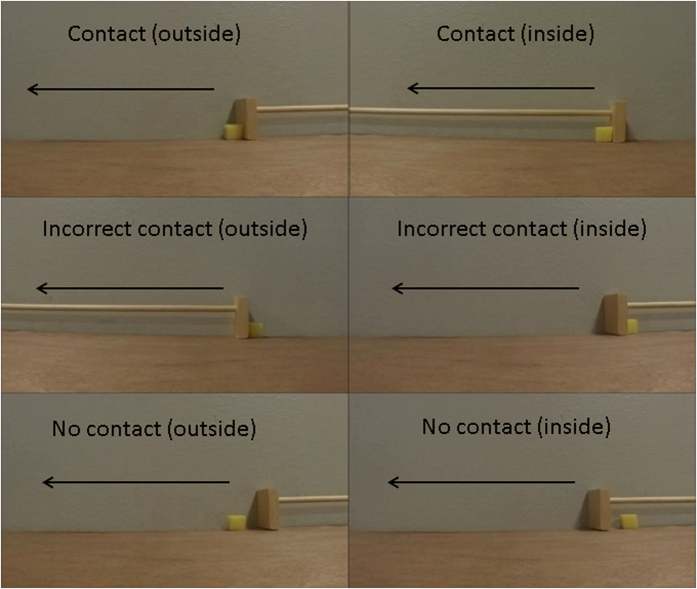
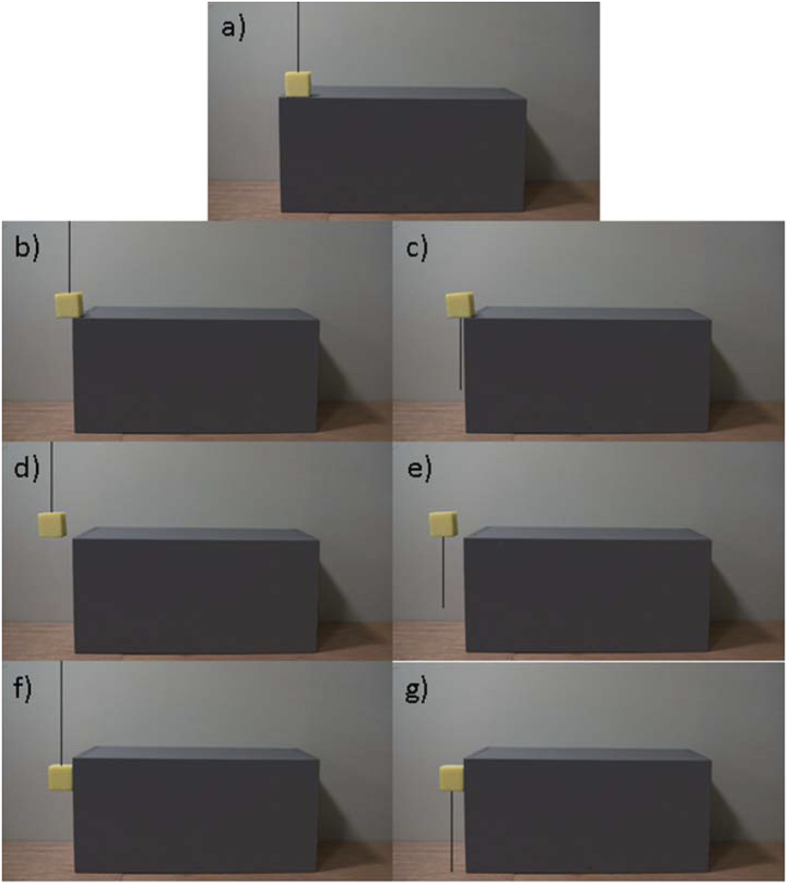
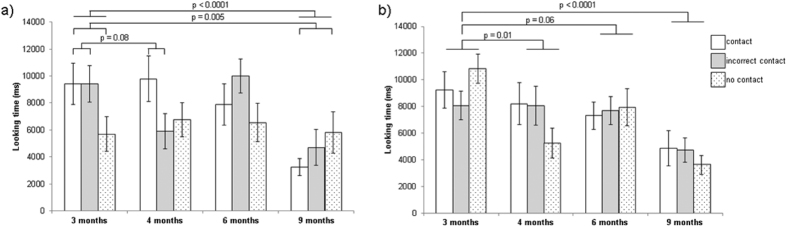
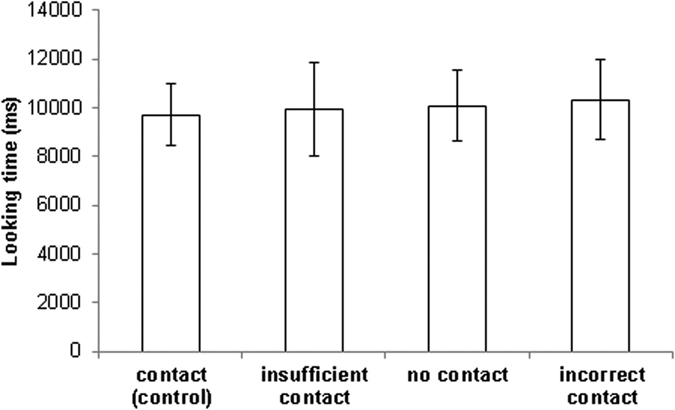
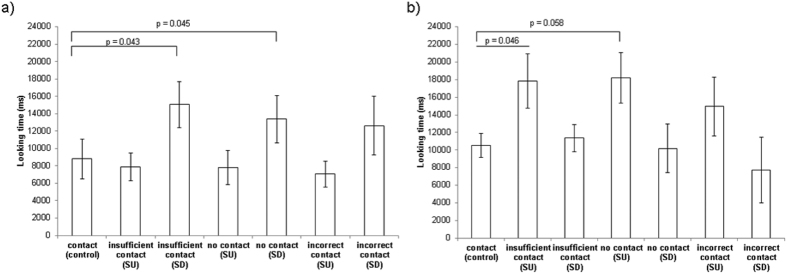
Knowledge about the causal relationship between objects has been studied extensively in human infants, and more recently in adult animals using differential looking time experiments. How knowledge about object support develops in non-human animals has yet to be explored. Here, we studied the ontogeny of support relations in Eurasian jays (Garrulus glandarius), a bird species known for its sophisticated cognitive abilities. Using an expectancy violation paradigm, we measured looking time responses to possible and impossible video and image stimuli. We also controlled for experience with different support types to determine whether the emergence of support intuitions is dependent upon specific interactions with objects, or if reasoning develops independently. At age 9 months, birds looked more at a tool moving a piece of cheese that was not in contact than one that was in direct contact. By the age of 6 months, birds that had not experienced string as a support to hold up objects looked more at impossible images with string hanging from below (unsupported), rather than above (supported). The development of support intuitions may be independent of direct experience with specific support, or knowledge gained from interactions with other objects may be generalised across contexts.
关于物体因果关系的知识在人类婴儿中得到了广泛研究,最近在成年动物中也通过差异注视时间实验进行了研究。然而,非人类动物对物体支撑关系的认识是如何发展的,还需要进一步探索。在这里,我们研究了松鸦( Garrulus glandarius )(一种以复杂认知能力而闻名的鸟类)的支撑关系的发生。使用期望违反范式,我们测量了对可能和不可能的视频和图像刺激的注视时间反应。我们还控制了不同支撑类型的经验,以确定支撑直觉的出现是否取决于与物体的特定相互作用,或者推理是否独立发展。在 9 个月大时,鸟类会更多地注视正在移动一块没有接触奶酪的工具,而不是直接接触奶酪的工具。到 6 个月大时,没有体验过绳子作为支撑物来支撑物体的鸟类会更多地注视悬挂在下方(未支撑)而不是上方(支撑)的不可能图像。支撑直觉的发展可能独立于与特定支撑的直接经验,或者从与其他物体的相互作用中获得的知识可能会在不同情境中推广。