State Key Laboratory for Agrobiotechnology, College of Biological Sciences, China Agricultural University, Beijing 100193, China.
Department of Obstetrics and Gynecology, Reproductive Medical Center, Peking University Third Hospital, Beijing 100191, China.
Sci Rep. 2017 Jan 5;7:39711. doi: 10.1038/srep39711.
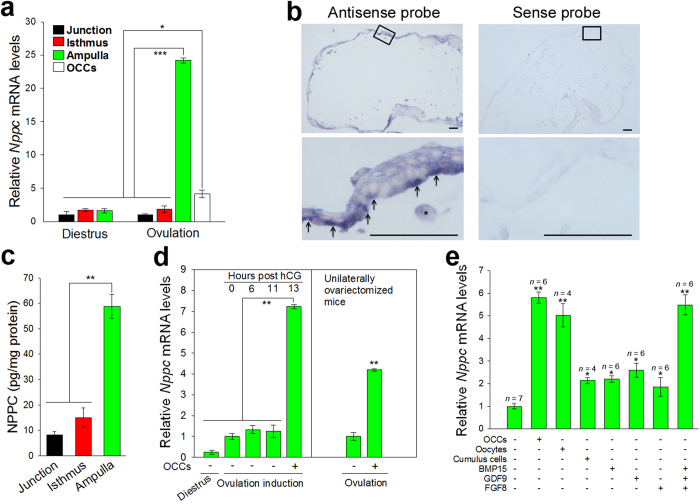
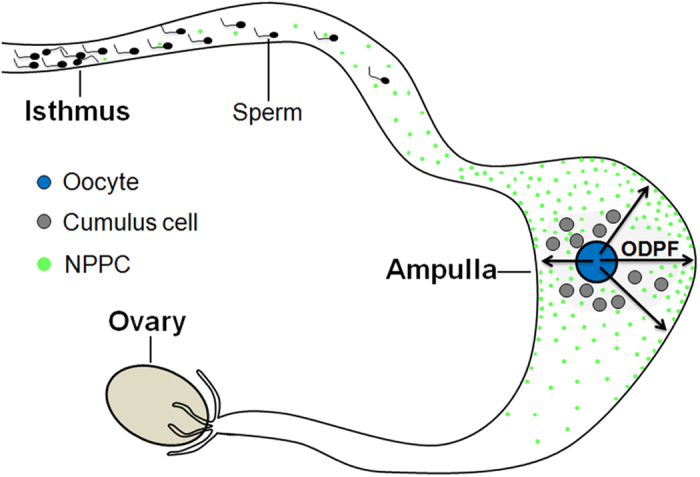
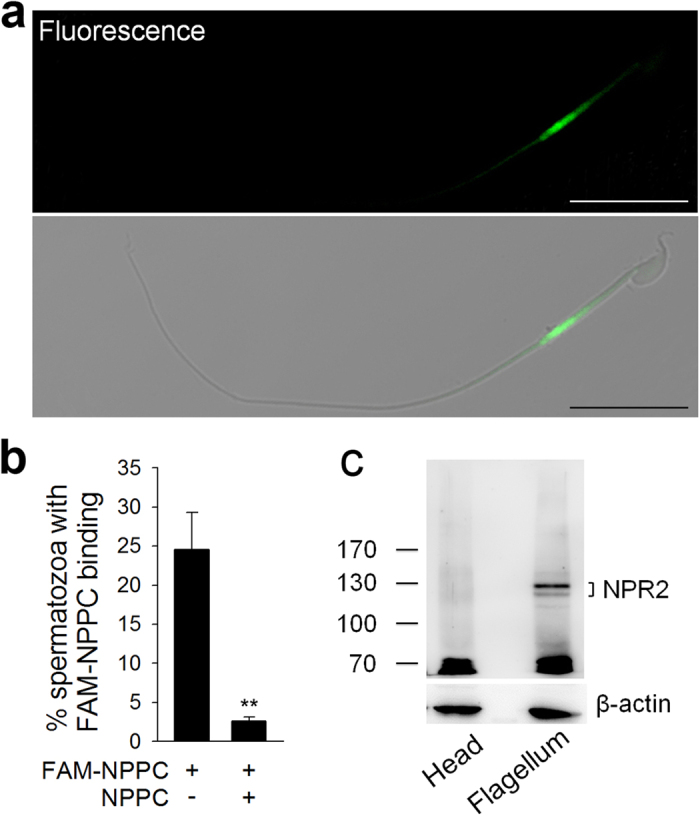
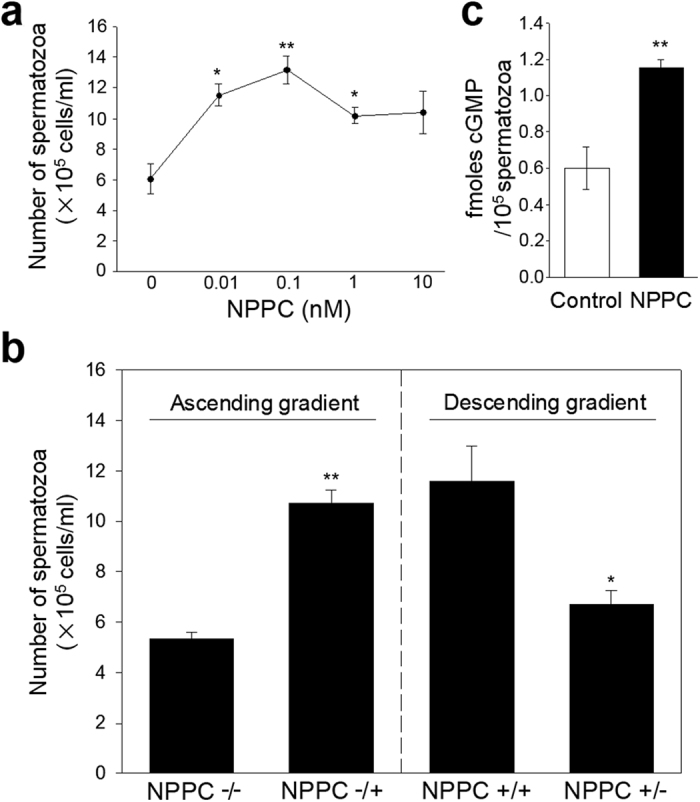
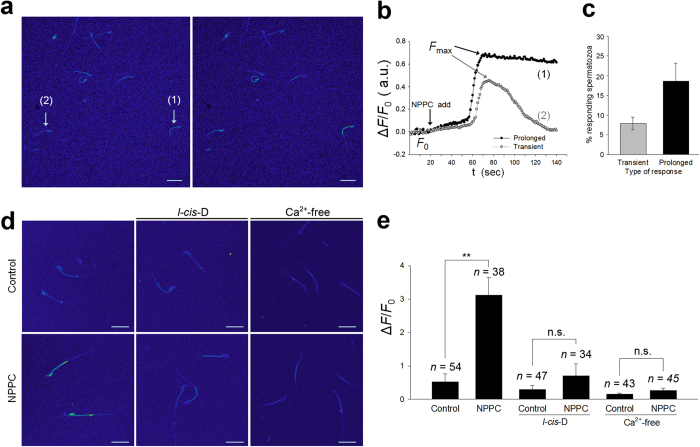
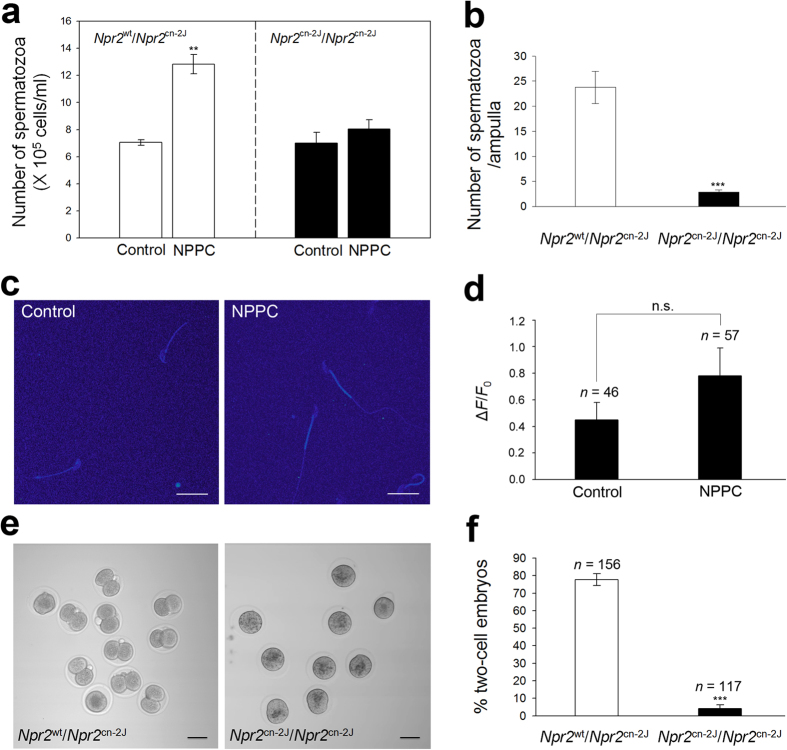
Mammalian spermatozoa undergo selective movement along the isthmus of the oviduct to the ampulla during ovulation, which is a prerequisite for fertilization. The factor(s) that involves in selective spermatozoa movement is still unknown. In this study, we found that the oviductal epithelium in mouse ampulla expressed high levels of natriuretic peptide type C (NPPC) in the presence of ovulated oocyte-cumulus complexes (OCCs). Spermatozoa expressed NPPC receptor natriuretic peptide receptor 2 (NPR2, a guanylyl cyclase) on the midpiece of flagellum. NPPC increased intracellular levels of cGMP and Ca of spermatozoa, and induced sperm accumulation in the capillary by attraction. Importantly, spermatozoa from Npr2 mutant mice were not attracted by NPPC, preventing fertilization in vivo. Oocyte-derived paracrine factors promoted the expression of Nppc mRNA in the ampulla. Therefore, NPPC secreted by oviductal ampulla attracts spermatozoa towards oocytes, which is essential for fertilization.
哺乳动物精子在排卵期间沿着输卵管的峡部向输卵管壶腹选择性移动,这是受精的前提条件。参与选择性精子运动的因素尚不清楚。在这项研究中,我们发现,在存在排卵的卵丘卵母细胞复合物(OCC)的情况下,小鼠输卵管壶腹部的输卵管上皮表达高水平的利钠肽 C(NPPC)。精子在鞭毛中段表达 NPPC 受体利钠肽受体 2(NPR2,一种鸟苷酸环化酶)。NPPC 增加精子细胞内 cGMP 和 Ca 的水平,并通过吸引力诱导精子在毛细血管中聚集。重要的是,来自 Npr2 突变小鼠的精子不受 NPPC 的吸引,从而阻止了体内受精。卵源性旁分泌因子促进了输卵管壶腹部 Nppc mRNA 的表达。因此,输卵管壶腹部分泌的 NPPC 吸引精子向卵母细胞移动,这对受精至关重要。